Maximize Your 401(k) Matching: 2025 Guide to 15% Extra Employer Contributions

Anúncios
Maximizing 401(k) matching involves understanding your employer’s contribution formula, consistently contributing enough to receive the full match, and staying informed about plan changes to effectively boost your retirement savings.
Are you leaving free money on the table? In 2025, understanding how to maximize your 401(k) matching can significantly boost your retirement savings, potentially unlocking an extra 15% or more in employer contributions. This guide will walk you through the essential strategies and insights needed to ensure you’re getting every dollar your employer offers, transforming your financial future one contribution at a time.
Anúncios
Understanding Your Employer’s 401(k) Match in 2025
The employer match is essentially free money offered by your company to help you save for retirement. It’s a powerful incentive, yet many employees fail to take full advantage of it. For 2025, understanding the nuances of your specific plan is the first crucial step.
Anúncios
Employer matching formulas can vary widely, from a dollar-for-dollar match up to a certain percentage of your salary, to a 50-cent-on-the-dollar match. Knowing your company’s exact policy is paramount to maximizing your contributions. This often requires a deep dive into your plan documents or a conversation with your HR department.
Common Matching Formulas
- Dollar-for-Dollar Match: For every dollar you contribute, your employer contributes a dollar, up to a specific percentage of your salary (e.g., 6%).
- Percentage Match: Your employer matches a percentage of your contribution (e.g., 50 cents on the dollar), up to a certain limit.
- Tiered Match: Some companies use a combination, matching 100% on the first 3% and 50% on the next 2%, for instance.
It’s not just about the percentage; the cap on matching contributions is equally important. Many employers will match up to a certain percentage of your annual salary, such as 3% or 6%. If you contribute less than this percentage, you’re missing out on the full potential of their generosity. Conversely, if you contribute more, your employer’s match won’t exceed their set limit, though contributing more to your 401(k) is still generally a wise decision for your long-term savings.
In conclusion, knowing your company’s 401(k) match structure for 2025 is the foundational element to ensuring you capitalize on this significant employee benefit. Without this clarity, you might inadvertently be leaving valuable retirement funds on the table.
Navigating Vesting Schedules and Their Impact on Your Match
Beyond simply receiving an employer match, understanding when that money truly becomes yours is critical. This is where vesting schedules come into play. A vesting schedule dictates the timeline over which you gain full ownership of your employer’s contributions to your 401(k). Until those contributions are fully vested, they are not entirely yours.
There are generally two main types of vesting schedules: cliff vesting and graded vesting. Each has distinct implications for how long you need to remain with an employer to retain their contributions.
Types of Vesting Schedules
- Cliff Vesting: With cliff vesting, you become 100% vested after a specific period, such as three years. If you leave before that period, you forfeit all employer contributions.
- Graded Vesting: Graded vesting allows you to gradually vest over time. For example, you might be 20% vested after two years, 40% after three, and so on, until you reach 100% after five or six years.
It is imperative to review your plan’s specific vesting schedule. This information is typically outlined in your plan documents or can be obtained from your HR department. Understanding this schedule is particularly important if you anticipate changing jobs in the near future. Leaving an employer before you are fully vested means you could lose a significant portion, or even all, of the money they contributed to your retirement account.
The impact of vesting on your overall retirement strategy cannot be overstated. It directly affects the true value of your employer’s match. Always factor your vesting schedule into any career decisions, ensuring you maximize not just the contributions, but also your ownership of those funds.
Strategies to Maximize Your 401(k) Contributions in 2025
To truly maximize your 401(k) matching in 2025, a proactive approach to your contributions is essential. Simply contributing something isn’t enough; you must strategize to capture every available dollar from your employer. This involves understanding contribution limits and optimizing your contribution rate throughout the year.
The IRS sets annual contribution limits for 401(k) plans, which are subject to change each year. For 2025, it’s crucial to be aware of these limits, both for employee contributions and for the combined employee and employer contributions. Staying within these limits while still maximizing your match requires careful planning.
Contribution Optimization Tips
- Contribute at Least the Match Maximum: Always contribute at least the percentage of your salary that your employer will match. This is the simplest way to ensure you’re not leaving free money on the table.
- Consider “Catch-Up” Contributions: If you’re age 50 or older, you’re eligible for additional “catch-up” contributions, allowing you to save even more beyond the standard limit.
- Automate Your Contributions: Set up automatic payroll deductions to ensure consistent contributions. This makes saving effortless and reduces the risk of forgetting to contribute.
Another key strategy is to avoid “matching out” too early in the year. Some plans have a per-pay-period match, meaning if you hit the annual contribution limit early, you might miss out on employer contributions for the rest of the year. If your plan has this feature, it’s often better to spread your contributions evenly across all pay periods to ensure you receive the full match throughout the year. Consult your plan administrator to understand how your specific plan handles contributions and matching. This ensures you’re consistently receiving the employer match and not inadvertently losing out on valuable funds.
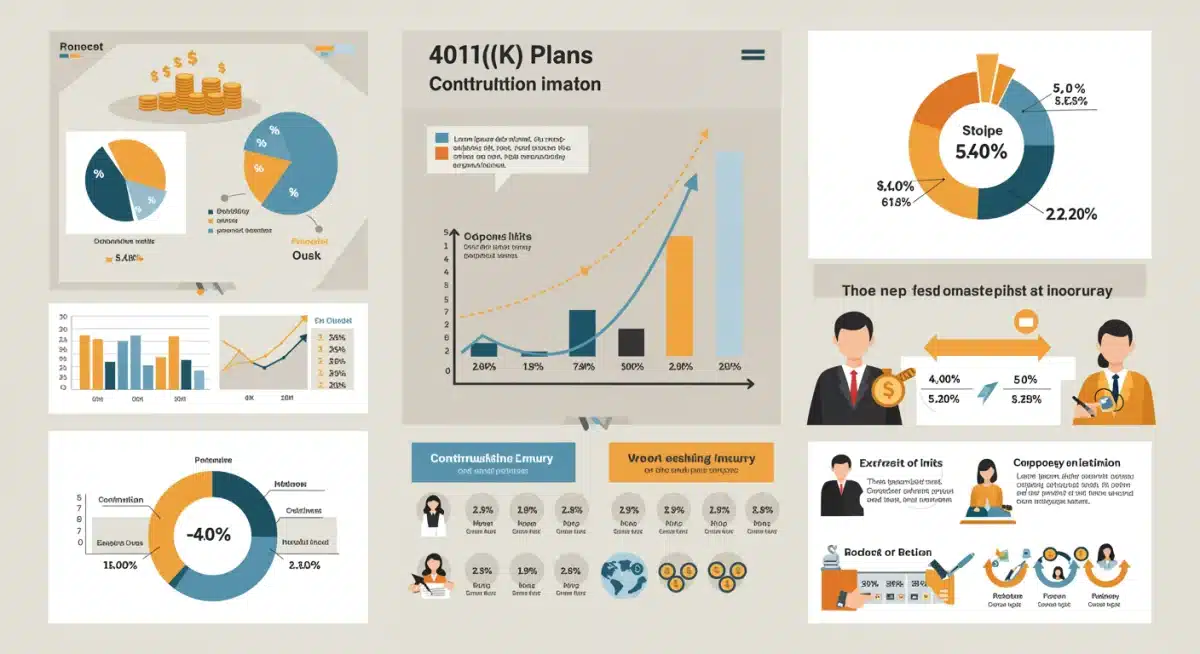
By diligently adhering to these strategies, you can significantly enhance your 401(k) balance, ensuring you leverage every opportunity to save for a comfortable retirement. Proactive planning and continuous monitoring of your contributions are key to unlocking the full potential of your employer’s generosity.
Understanding the Tax Implications of 401(k) Contributions
Beyond the immediate benefit of employer matching, understanding the tax implications of your 401(k) contributions is crucial for long-term financial planning. The tax treatment of 401(k)s can significantly impact your current and future tax liability, making it an integral part of your strategy to maximize your retirement savings.
Most 401(k) plans offer two primary contribution options: traditional and Roth. Each comes with distinct tax advantages that cater to different financial situations and future expectations regarding tax rates. Choosing the right option can lead to substantial tax savings over the course of your career and into retirement.
Traditional vs. Roth 401(k)
- Traditional 401(k): Contributions are made with pre-tax dollars, reducing your taxable income in the current year. Taxes are paid upon withdrawal in retirement.
- Roth 401(k): Contributions are made with after-tax dollars, meaning your withdrawals in retirement are tax-free, provided certain conditions are met.
- Employer Match: Regardless of whether you contribute to a traditional or Roth 401(k), employer matching contributions are always made on a pre-tax basis and are subject to taxes upon withdrawal.
The decision between a traditional and Roth 401(k) largely depends on your current income level and your anticipated income in retirement. If you expect to be in a higher tax bracket now than in retirement, a traditional 401(k) might be more advantageous. Conversely, if you expect to be in a higher tax bracket during retirement, a Roth 401(k) could offer greater long-term tax savings. It’s often beneficial to consult a financial advisor to determine which option best suits your individual circumstances.
Moreover, understanding the tax implications extends to withdrawals. Early withdrawals from a 401(k) before age 59½ are generally subject to income tax and a 10% penalty, with some exceptions. This reinforces the importance of viewing your 401(k) as a long-term retirement vehicle.
In summary, a comprehensive understanding of your 401(k)’s tax structure, including the differences between traditional and Roth options, is vital for optimizing your retirement savings and minimizing your tax burden both now and in the future.
Avoiding Common Pitfalls and Mistakes
Even with the best intentions, it’s easy to fall into common traps that can prevent you from fully maximizing your 401(k) matching benefits. Being aware of these pitfalls in 2025 can help you navigate your retirement savings journey more effectively and ensure you don’t leave any money on the table.
One of the most frequent mistakes is not contributing enough to receive the full employer match. This is, quite literally, giving up free money. Many employees contribute a flat amount or a percentage that falls short of what their employer is willing to match. Regularly reviewing your contribution rate against your employer’s match formula is essential to avoid this oversight.
Key Mistakes to Avoid
- Not Contributing to the Match Maximum: Failing to contribute at least the percentage your employer matches is the most significant missed opportunity.
- Ignoring Vesting Schedules: Leaving a job before employer contributions are fully vested means you forfeit that money.
- Setting and Forgetting: Your financial situation and employer’s plan can change. Regularly review and adjust your contributions and investment choices.
- Early Withdrawals: Taking money out of your 401(k) before retirement can incur significant taxes and penalties, severely impacting your long-term growth.
Another common error is failing to adjust contributions as your salary increases. As your income grows, the percentage you need to contribute to get the full match might also increase, or you might have more capacity to save beyond the match. Failing to adjust means you could be missing out on additional employer contributions or simply not saving as aggressively as you could.
Finally, neglecting to review your investment options within your 401(k) plan is a subtle but significant mistake. While maximizing the match is crucial, ensuring your contributions are invested wisely is equally important for growth. Many plans offer target-date funds or a variety of other investment choices; understanding these and selecting options that align with your risk tolerance and timeline can profoundly impact your retirement nest egg.
By actively avoiding these common pitfalls, you can ensure your 401(k) contributions and employer match are working as hard as possible for your future retirement security.
Advanced Strategies for Boosting Your Retirement Savings
Once you’ve mastered the basics of maximizing your 401(k) match, consider implementing advanced strategies to further boost your retirement savings. These approaches go beyond simply meeting the employer match and can significantly accelerate your financial growth toward retirement.
One powerful advanced strategy is to contribute beyond the employer match, up to the annual IRS maximum. While the employer match is free money, contributing more of your own funds allows your retirement savings to grow even faster, thanks to compounding interest and tax advantages. This is particularly effective if you have the financial capacity to do so after covering other essential financial goals.
Beyond the Match: Supercharging Your 401(k)
- Max Out Employee Contributions: Contribute the maximum allowed by the IRS for your age group, even if it exceeds your employer’s match percentage.
- Utilize “Mega Backdoor” Roth (if available): If your plan allows after-tax 401(k) contributions, you might be able to convert them to a Roth IRA, sidestepping income limits.
- Diversify with Other Retirement Accounts: Consider supplementing your 401(k) with an IRA (Traditional or Roth), especially if your 401(k) investment options are limited.
Another often-overlooked strategy is to periodically review and rebalance your 401(k) investments. As markets change and your retirement timeline shortens, your investment mix should adapt. Regularly rebalancing ensures your portfolio remains aligned with your risk tolerance and long-term goals, optimizing growth potential while managing risk. This isn’t a one-time task but an ongoing process that can significantly impact your final retirement balance.
Finally, consider the impact of healthcare costs in retirement and how your 401(k) can help. While not a direct contribution strategy, understanding potential medical expenses can influence how aggressively you save. Some individuals might also consider a Health Savings Account (HSA) in conjunction with their 401(k), as HSAs offer a triple tax advantage that can complement your retirement savings beautifully.
By implementing these advanced strategies, you move beyond merely participating in your 401(k) to actively building a robust and resilient financial future, maximizing every opportunity for growth and security.
Future-Proofing Your 401(k) for 2025 and Beyond
As we look towards 2025 and the years to follow, proactively future-proofing your 401(k) is essential for long-term financial security. This involves staying informed about potential regulatory changes, economic shifts, and adapting your strategy accordingly to ensure your retirement savings remain on track.
Staying updated on legislative changes is paramount. Retirement plan rules, contribution limits, and tax laws can evolve, directly impacting your 401(k). Subscribing to financial news, checking IRS updates, and consulting with financial professionals can help you anticipate and adapt to these changes, preventing any unforeseen negative impacts on your savings.
Key Aspects of Future-Proofing
- Stay Informed on Regulatory Changes: Monitor IRS announcements and financial news for updates to 401(k) contribution limits and rules.
- Regularly Review Your Investment Strategy: Periodically assess your asset allocation to ensure it still aligns with your risk tolerance and timeline.
- Adjust Contributions Annually: Increase your contribution percentage each year, even by a small amount, to accelerate savings and keep pace with inflation.
Economic fluctuations, such as inflation and market volatility, also play a significant role in your 401(k)’s performance. While you cannot control these external factors, you can control your response to them. Maintaining a diversified portfolio, avoiding emotional reactions to market downturns, and sticking to your long-term investment plan are crucial during uncertain times. A well-diversified portfolio is your best defense against market unpredictability.
Furthermore, consistently increasing your contribution rate, even by a small percentage each year, can have a dramatic effect over time due to the power of compounding. Think of it as giving yourself an annual raise for your retirement. This incremental approach makes it easier to save more without feeling a significant pinch in your current budget.
By actively engaging in these future-proofing measures, you transform your 401(k) from a static account into a dynamic, resilient savings vehicle, ready to weather economic shifts and legislative changes while steadily growing towards your retirement goals.
| Key Aspect | Brief Description |
|---|---|
| Employer Match | Contribute at least enough to get the full “free money” match from your employer. |
| Vesting Schedule | Understand when employer contributions become fully yours to avoid forfeiture. |
| Contribution Limits | Be aware of IRS annual limits and consider catch-up contributions if eligible. |
| Tax Implications | Choose between traditional and Roth 401(k) based on your tax situation. |
Frequently Asked Questions About 401(k) Matching
The first step is to thoroughly understand your employer’s specific 401(k) matching formula and their vesting schedule. This information is usually detailed in your plan documents or available through your HR department, providing the foundation for all subsequent strategies.
Even if you can’t contribute the full amount initially, aim to contribute at least enough to secure the maximum employer match. This is considered “free money” and boosts your savings significantly. Gradually increase your contribution percentage as your financial situation improves, even by 1% annually.
Vesting schedules determine when employer contributions become entirely yours. If you leave your job before you are fully vested, you might forfeit a portion or all of the money your employer contributed. Always check your plan’s specific vesting rules, whether cliff or graded.
The choice between a traditional (pre-tax) and Roth (after-tax) 401(k) depends on your current and expected future tax brackets. If you anticipate being in a higher tax bracket in retirement, Roth might be better. If you’re in a higher bracket now, traditional might offer more immediate tax savings. Employer match is always pre-tax.
Yes, beyond the match, consider contributing up to the annual IRS maximum, utilizing “catch-up” contributions if over 50, exploring “mega backdoor” Roth conversions if your plan allows, and diversifying with other retirement accounts like an IRA to maximize your overall savings.
Conclusion
Maximizing your 401(k) matching in 2025 is not merely about saving for retirement; it’s about strategically leveraging every benefit your employer offers to secure your financial future. By understanding your company’s match formula, navigating vesting schedules, and making informed decisions about your contributions and investments, you can significantly boost your retirement nest egg. Avoiding common pitfalls and embracing advanced strategies will ensure you’re not leaving valuable, free money on the table. Proactive engagement with your 401(k) plan is the key to unlocking its full potential and building a robust foundation for a comfortable retirement.