CTE Trends 2025: Shaping the Future of US Education
Anúncios
The evolving landscape of Career and Technical Education (CTE) in the US for 2025 is characterized by a strong pivot towards digital competencies, sustainable practices, and deeper industry integration to equip students effectively for the future workforce.
As we approach 2025, the world of work is transforming at an unprecedented pace, making the role of Career and Technical Education (CTE) more critical than ever. Understanding the latest trends in Career and Technical Education (CTE) for 2025 in the US is essential for educators, policymakers, students, and employers alike. This article will explore the key shifts and innovations shaping CTE, ensuring that tomorrow’s workforce is not just prepared, but poised to thrive in a dynamic global economy.
Anúncios
The Digital Transformation of CTE Programs
The pervasive influence of technology continues to reshape virtually every sector, and CTE programs are at the forefront of adapting to this digital revolution. In 2025, digital literacy and advanced technological skills are no longer supplementary but foundational components of effective CTE curricula across the United States. This includes everything from basic computer proficiency to specialized areas like artificial intelligence and cybersecurity.
Anúncios
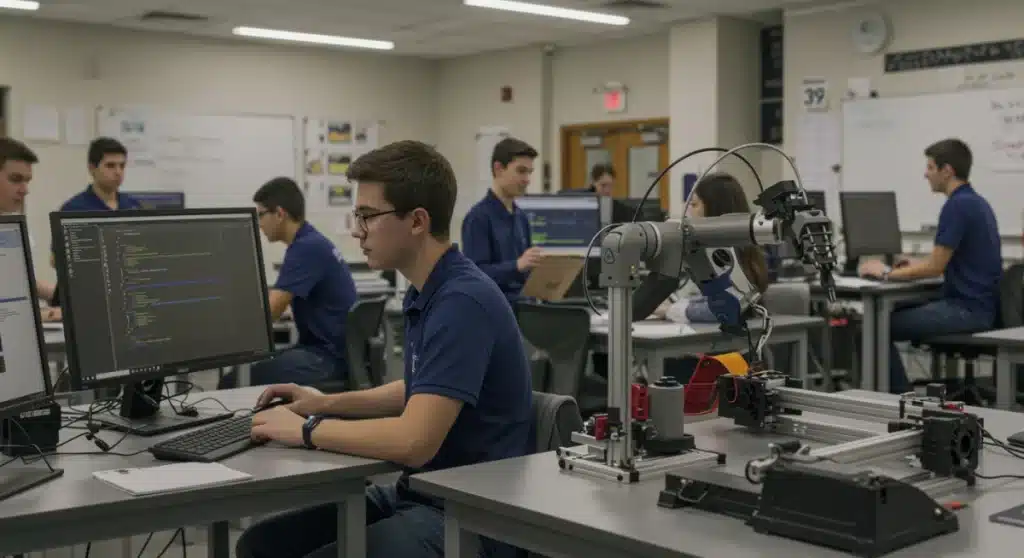
One of the primary focuses is on integrating cutting-edge digital tools and platforms directly into vocational training. Students are learning to operate sophisticated machinery, manage complex data systems, and develop software solutions relevant to their chosen fields. This hands-on experience with real-world technologies ensures they gain practical skills that are immediately applicable in the job market.
Embracing emerging technologies
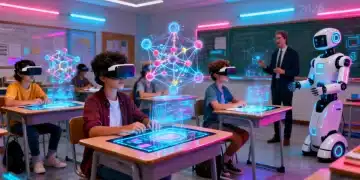
Emerging technologies like AI, machine learning, and virtual and augmented reality (VR/AR) are being woven into CTE programs. These technologies offer immersive learning experiences and prepare students for jobs that didn’t exist a decade ago.
- Artificial Intelligence (AI) and Machine Learning: Students are introduced to AI concepts, data analysis, and automation, preparing them for roles in various industries, from manufacturing to healthcare.
- Virtual and Augmented Reality (VR/AR): VR/AR simulations provide safe and cost-effective training environments for complex procedures, such as surgical training or heavy equipment operation.
- Cybersecurity: With increasing digital threats, cybersecurity programs are expanding to teach students how to protect data and systems, a skill vital across all sectors.
Furthermore, the digital transformation extends beyond just technical skills. It also encompasses the development of critical thinking, problem-solving, and adaptability – qualities that are paramount in a rapidly evolving technological landscape. CTE programs are fostering environments where students can experiment, fail safely, and learn from their experiences, mirroring the iterative nature of innovation in the digital age.
In conclusion, the digital transformation within CTE is not merely about adopting new tools, but fundamentally rethinking how education prepares individuals for a digitally-driven future. By embedding advanced digital skills and fostering a culture of technological readiness, CTE programs are ensuring students are competitive and confident in their ability to navigate the complexities of modern workplaces.
Growth of Green and Sustainable Career Pathways
The increasing global focus on environmental sustainability has spurred a significant expansion in green career pathways within CTE programs in the US. By 2025, CTE is playing a crucial role in preparing a workforce capable of addressing climate change, promoting renewable energy, and implementing sustainable practices across various industries. This shift reflects both ecological necessity and economic opportunity.
Programs are evolving to include training in renewable energy technologies, sustainable agriculture, waste management, and eco-friendly construction. This often involves interdisciplinary learning, combining traditional vocational skills with an understanding of environmental science and policy. Students are not just learning how to perform a task, but also understanding the environmental impact and sustainable alternatives.
Key areas of expansion
The demand for skilled professionals in green sectors is booming, leading CTE programs to specialize in several critical areas:
- Renewable Energy Technicians: Training for installation, maintenance, and repair of solar panels, wind turbines, and other clean energy systems.
- Sustainable Agriculture: Programs focusing on organic farming, hydroponics, and precision agriculture techniques that minimize environmental impact.
- Green Building and Construction: Education on energy-efficient building materials, sustainable design, and construction practices that reduce carbon footprints.
- Environmental Resource Management: Training in water quality management, conservation, and recycling processes to support ecological balance.
These programs often involve partnerships with local businesses and environmental organizations, providing students with practical experience and networking opportunities. Such collaborations ensure that the curriculum remains relevant to industry needs and that graduates are well-positioned for employment in emerging green jobs.
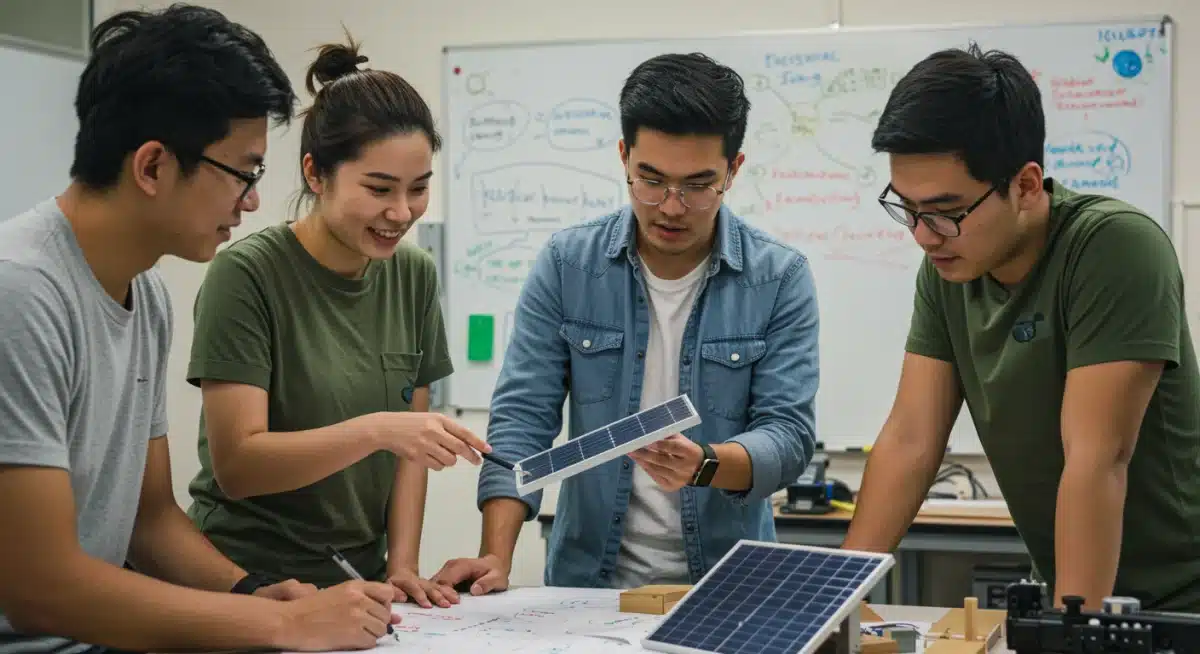
The integration of green and sustainable career pathways into CTE is a strategic move, preparing students not only for current job demands but also for future challenges. It instills a sense of environmental responsibility and equips them with the skills to contribute to a more sustainable future.
Strengthening Industry Partnerships and Apprenticeships
A cornerstone of effective CTE has always been its connection to industry, but by 2025, these partnerships are becoming even more robust and integrated. The US is seeing a significant drive to strengthen collaborations between educational institutions and businesses, ensuring that CTE programs are directly aligned with workforce needs and that students gain invaluable real-world experience through apprenticeships and internships.
These partnerships are crucial for several reasons. Firstly, they provide CTE programs with up-to-date equipment and technologies, as businesses often donate or provide access to their cutting-edge tools. Secondly, industry professionals contribute to curriculum development, ensuring that the skills taught are precisely what employers are looking for. This direct input helps bridge the gap between academic learning and practical application.
The resurgence of apprenticeships
Apprenticeships are experiencing a significant resurgence, evolving beyond traditional trades to include high-tech fields. These programs offer a powerful earn-while-you-learn model, combining classroom instruction with on-the-job training.
- Expanded Sectors: Apprenticeships are no longer limited to construction or manufacturing; they now span IT, healthcare, advanced manufacturing, and even creative industries.
- Structured Learning: Modern apprenticeships feature structured learning paths, mentorship, and often lead to industry-recognized certifications.
- Talent Pipeline: For businesses, apprenticeships serve as an effective talent pipeline, allowing them to cultivate skilled employees tailored to their specific needs.
Beyond apprenticeships, internships and externships are also gaining prominence, offering students shorter-term but equally impactful exposure to professional environments. These experiences allow students to apply classroom knowledge, develop professional networks, and explore potential career paths before committing to a full-time role.
In essence, strengthening industry partnerships and apprenticeships is about creating a symbiotic relationship where education and industry mutually benefit. Students receive unparalleled training and career opportunities, while businesses gain access to a highly skilled and adaptable workforce, ensuring the continued growth and innovation of the US economy.
Emphasis on Soft Skills and Employability
While technical proficiency remains vital, the CTE landscape in 2025 places an equally strong emphasis on the development of soft skills and overall employability. Employers consistently report that attributes like communication, critical thinking, teamwork, and adaptability are just as crucial as specific technical abilities. CTE programs are increasingly integrating these skills into their curricula, moving beyond mere technical training.
This focus acknowledges that the modern workplace demands individuals who can collaborate effectively, solve complex problems creatively, and navigate diverse social and professional environments. Students are encouraged to participate in group projects, public speaking exercises, and simulated workplace scenarios that foster these essential interpersonal and cognitive skills.
Developing adaptable professionals
The goal is to cultivate well-rounded individuals who are not only skilled technicians but also effective communicators and resilient problem-solvers. This holistic approach ensures long-term career success. Key soft skills being prioritized include:
- Communication: Both written and verbal communication are honed through presentations, reports, and team discussions.
- Critical Thinking and Problem-Solving: Students are challenged with real-world scenarios requiring analytical thinking and innovative solutions.
- Teamwork and Collaboration: Group projects and interdisciplinary activities teach students to work effectively with others towards common goals.
- Adaptability and Resilience: Programs emphasize the importance of continuous learning and adjusting to new technologies and workplace demands.
Furthermore, employability skills extend to professional etiquette, time management, and ethical decision-making. CTE programs often incorporate workshops on resume writing, interview techniques, and workplace professionalism to ensure students are fully prepared for the job search and subsequent career progression.
By prioritizing soft skills alongside technical expertise, CTE programs are creating a generation of professionals who are not only competent in their chosen fields but also possess the interpersonal and adaptive capabilities necessary to excel in any professional setting. This balanced approach ensures graduates are not just job-ready, but career-ready.
Personalized Learning and Customized Pathways
Recognizing the diverse needs and aspirations of students, CTE programs in the US are increasingly adopting personalized learning approaches and offering customized career pathways by 2025. This shift moves away from a one-size-fits-all model towards educational experiences tailored to individual learning styles, interests, and career goals. The aim is to maximize engagement and ensure every student can achieve their full potential.
Personalized learning leverages technology, such as adaptive learning platforms and data analytics, to provide students with content and instructional strategies that match their pace and preferences. This allows for differentiated instruction, where some students might delve deeper into a specific topic while others focus on foundational concepts, all within the same program framework.
Tailoring education to individual needs
Customized pathways allow students to select courses and experiences that directly align with their specific career aspirations. This flexibility is critical in a rapidly diversifying job market. Elements of this trend include:
- Individualized Education Plans (IEPs): While traditionally used for special education, the concept is expanding to guide all students in charting their CTE journey.
- Modular Learning: Breaking down complex subjects into smaller, digestible modules allows students to master specific skills at their own pace.
- Dual Enrollment and Early College: Opportunities for high school students to earn college credit or industry certifications simultaneously, accelerating their career readiness.
- Career Counseling and Mentorship: Enhanced support systems to help students identify their strengths, interests, and potential career paths.
The emphasis on personalized learning also extends to providing multiple entry and exit points within CTE programs, allowing individuals to re-skill or up-skill at various stages of their lives and careers. This flexibility is crucial for adult learners and those seeking career changes in response to economic shifts.
In conclusion, personalized learning and customized pathways are transforming CTE into a more responsive and student-centered educational model. By catering to individual needs and offering flexible routes to success, CTE programs are empowering a broader range of students to achieve their career objectives and contribute meaningfully to the workforce.
Integration of Entrepreneurship and Innovation Skills
Beyond specific vocational skills, CTE programs in the US are increasingly integrating entrepreneurship and innovation skills into their curricula by 2025. This strategic shift recognizes that many future job opportunities will arise from new ventures, and even within established companies, an entrepreneurial mindset is highly valued. The goal is to equip students not just to find jobs, but to create them.
This integration involves teaching students how to identify market needs, develop innovative solutions, create business plans, and understand the fundamentals of starting and managing a business. It moves beyond traditional academic subjects, fostering a spirit of initiative, creativity, and calculated risk-taking that is essential for success in a dynamic economy.
Fostering a creative mindset
Developing an entrepreneurial mindset means more than just learning about business; it’s about cultivating a way of thinking that embraces challenges as opportunities and promotes continuous improvement. Key components include:
- Design Thinking: Teaching students methodologies to approach problems from a human-centered perspective, leading to innovative solutions.
- Business Plan Development: Guiding students through the process of creating viable business models, including market research, financial projections, and marketing strategies.
- Pitch Competitions: Providing platforms for students to present their ideas, receive feedback, and refine their entrepreneurial ventures.
- Intellectual Property Education: Introducing concepts of patents, trademarks, and copyrights to protect innovative ideas.
Many CTE programs are establishing incubators or innovation labs where students can develop prototypes and test their ideas in a supportive environment. These hands-on experiences are invaluable for building confidence and practical skills in entrepreneurship. Mentorship from local entrepreneurs and business leaders is often a critical component, providing real-world guidance and inspiration.
By embedding entrepreneurship and innovation into CTE, educators are not only preparing students for direct employment but also empowering them to become trailblazers and job creators. This approach ensures that CTE graduates are not just participants in the economy, but active drivers of its future growth and development.
| Key Trend | Brief Description |
|---|---|
| Digital Transformation | Integration of AI, VR/AR, and cybersecurity into all CTE curricula for future-ready skills. |
| Green Careers Growth | Expansion of programs for renewable energy, sustainable agriculture, and eco-friendly construction. |
| Industry Partnerships | Stronger collaborations with businesses for curriculum development, apprenticeships, and internships. |
| Soft Skills Focus | Emphasis on communication, critical thinking, teamwork, and adaptability for holistic career readiness. |
Frequently Asked Questions about CTE Trends
The digital transformation in CTE is primarily driven by rapid technological advancements and the increasing demand from industries for a workforce proficient in digital skills. Automation, AI, and data analytics are reshaping job roles, making it essential for CTE programs to integrate these technologies to ensure student relevance and employability.
Green career pathways are significantly expanding CTE programs by introducing new specializations in renewable energy, sustainable agriculture, and eco-friendly construction. This impact is driven by environmental concerns and the growing green economy, preparing students for jobs that contribute to sustainability and resource management.
Industry partnerships are crucial because they ensure CTE curricula align directly with current workforce needs. Businesses provide insights into essential skills, offer modern equipment, and create apprenticeship opportunities, bridging the gap between education and employment while providing students with invaluable real-world experience.
Soft skills like communication, critical thinking, and teamwork are now considered as important as technical abilities in modern CTE. Employers seek well-rounded professionals who can collaborate, adapt, and solve problems effectively, making these skills essential for long-term career success and workplace harmony.
Personalized learning benefits CTE students by tailoring educational experiences to their individual needs, learning styles, and career goals. This approach maximizes engagement, allows students to progress at their own pace, and ensures they receive targeted instruction relevant to their chosen career pathways, leading to greater success and retention.
Conclusion
The evolving landscape of Career and Technical Education (CTE) in the US for 2025 is marked by dynamic shifts aimed at creating a highly skilled, adaptable, and future-ready workforce. From embracing digital transformation and fostering green career pathways to strengthening industry partnerships and prioritizing soft skills, CTE is proactively responding to the demands of a rapidly changing global economy. The emphasis on personalized learning and the integration of entrepreneurial skills further ensure that students are not only prepared for existing jobs but also empowered to innovate and create new opportunities. These trends collectively underscore CTE’s critical role in shaping the future of education and workforce development, ensuring that American students are well-equipped to navigate and thrive in the careers of tomorrow.