ESSA Reauthorization 2026: Impact on US Public Schools

Anúncios
The 2026 ESSA Reauthorization is poised to reshape public education in the United States, influencing funding, accountability, and equity initiatives across states and local school districts.
Understanding the 2026 ESSA Reauthorization: What It Means for Public Schools Nationwide is a critical discussion for educators, policymakers, parents, and students as we approach this pivotal legislative moment. The Every Student Succeeds Act (ESSA), signed into law in 2015, marked a significant shift in federal education policy, moving away from the more prescriptive No Child Left Behind Act. Now, with its scheduled reauthorization on the horizon, the education landscape is bracing for potential changes that could redefine how public schools operate, how students are assessed, and how equity is pursued across the nation.
Anúncios
The Evolution of Federal Education Policy Leading to ESSA
Before delving into the specifics of the 2026 reauthorization, it’s essential to understand the historical context of federal involvement in education. For decades, the federal government has played a role in shaping educational standards and ensuring equitable opportunities, a journey marked by landmark legislation and evolving philosophies. This background provides a crucial lens through which to view the forthcoming changes.
Anúncios
The journey from the Elementary and Secondary Education Act (ESEA) of 1965 to ESSA in 2015 reflects a continuous effort to balance federal oversight with state and local control. Each reauthorization has attempted to address the challenges and lessons learned from its predecessors, striving for a system that promotes both excellence and equity.
From ESEA to No Child Left Behind
The original ESEA aimed to provide additional resources for disadvantaged students. Over time, it underwent several reauthorizations, but none as impactful as the No Child Left Behind (NCLB) Act of 2002. NCLB introduced stringent accountability measures, requiring states to test students annually and imposing sanctions on schools that failed to meet Adequate Yearly Progress (AYP).
- Standardized Testing: NCLB mandated annual standardized tests in reading and math for grades 3-8 and once in high school.
- Accountability: Schools faced increasing pressure to improve test scores, with consequences ranging from public identification as “failing” to restructuring.
- Teacher Quality: The act emphasized highly qualified teachers, requiring all teachers to be fully certified and demonstrate subject matter competency.
The Shift to ESSA
NCLB, while well-intentioned, faced significant criticism for its over-reliance on standardized tests, its narrow focus on test scores, and its often-punitive approach. These criticisms ultimately paved the way for ESSA, which sought to address these shortcomings by granting states more flexibility in designing their accountability systems.
ESSA aimed to restore a greater degree of local control, allowing states to create their own accountability frameworks, setting their own goals, and determining how to intervene in struggling schools. This shift was widely welcomed by educators and policymakers alike, who felt NCLB had become too prescriptive.
Key Provisions of the Current ESSA Framework
To fully grasp the implications of the 2026 reauthorization, it’s vital to review the core tenets of the current Every Student Succeeds Act. ESSA fundamentally reshaped the federal role in education, empowering states and local districts with more authority while maintaining a focus on accountability and equity.
The act outlines specific areas where states must establish plans and report on progress, ensuring that federal funds are used effectively to support all students, particularly those from disadvantaged backgrounds. Understanding these provisions is key to anticipating future directions.
State-Led Accountability Systems
One of ESSA’s most significant departures from NCLB was its emphasis on state-designed accountability systems. States are required to develop comprehensive plans that include multiple indicators of student success, moving beyond just test scores.
- Academic Indicators: Must include proficiency on state assessments, academic growth, and graduation rates.
- Non-Academic Indicators: States can incorporate measures like student engagement, school climate, and access to advanced coursework.
- Targeted Support: Schools identified for comprehensive or targeted support must implement evidence-based interventions.
Funding and Resource Allocation
ESSA continues to provide federal funding to states and districts through various programs, with a particular focus on supporting students from low-income families, students with disabilities, and English learners. The act also includes provisions aimed at promoting equitable access to resources.
The distribution of these funds is often tied to specific requirements, ensuring that resources are directed towards improving educational outcomes for all students. This includes programs for teacher professional development, early childhood education, and school improvement grants.
Support for Educators and School Improvement
The act places a strong emphasis on supporting educators, recognizing their crucial role in student success. This includes provisions for professional development, teacher preparation, and the equitable distribution of effective teachers.
Furthermore, ESSA requires states to identify and support struggling schools, providing resources and technical assistance to help them improve. This shift from punitive measures to a more supportive approach is a hallmark of the legislation.
Anticipating the 2026 ESSA Reauthorization: Potential Areas of Focus
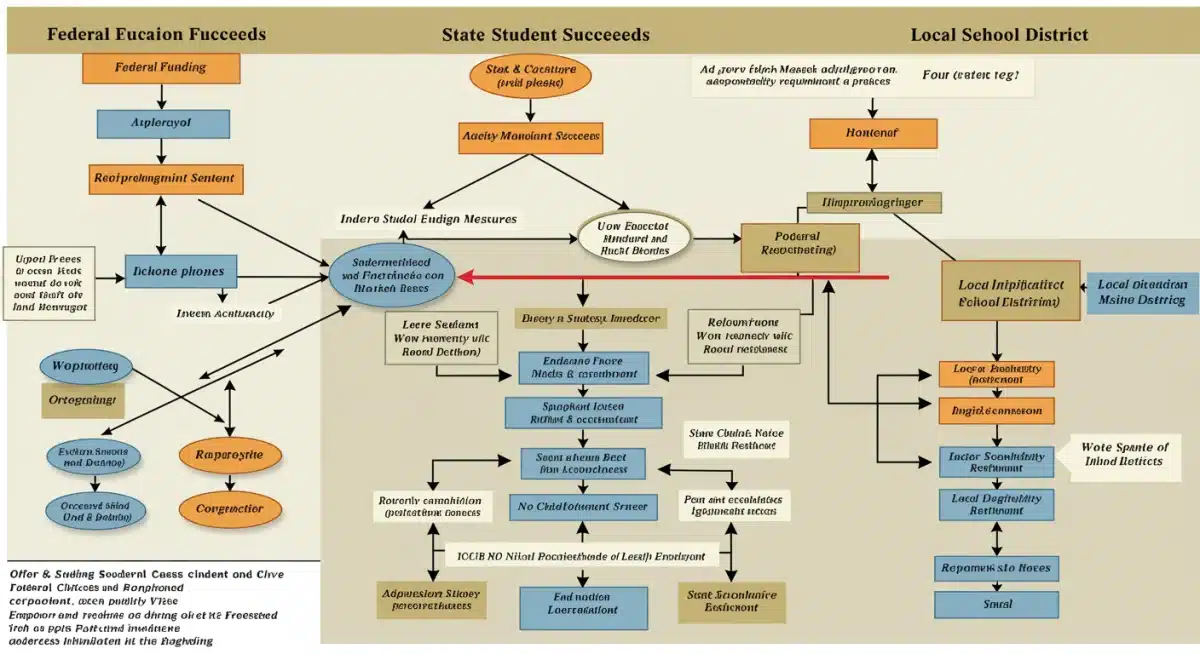
As the 2026 deadline approaches, discussions are already underway about what the next iteration of ESSA might entail. The political climate, evolving educational research, and the lingering effects of recent global challenges will undoubtedly shape the priorities of the reauthorization. Stakeholders are keen to see how current policy gaps might be addressed.
Potential areas of focus include refining accountability systems, addressing long-standing equity issues, and adapting to new educational technologies and learning environments. The aim will likely be to build upon ESSA’s strengths while addressing its perceived weaknesses.
Refining Accountability and Assessment
While ESSA granted states more flexibility, there remains a debate about the effectiveness of current accountability systems. Some argue that more robust measures are needed to ensure all students are making adequate progress, particularly those in underserved communities. The future might see a push for:
- Data Transparency: Enhanced reporting requirements to provide clearer insights into student performance and resource allocation.
- Multiple Measures: A continued emphasis on a diverse range of indicators beyond standardized test scores, but with clearer guidelines for their implementation.
- Equity in Assessment: Ensuring assessments are culturally and linguistically appropriate for all student populations.
Addressing Educational Equity and Opportunity Gaps
Despite ESSA’s focus on equity, significant achievement and opportunity gaps persist. The 2026 reauthorization is expected to renew efforts to address these disparities, potentially through targeted funding and stronger mandates for equitable resource distribution.
This could involve new initiatives aimed at supporting students experiencing homelessness, foster youth, and students from diverse linguistic backgrounds. The goal is to ensure that every student, regardless of their background, has access to a high-quality education.
Teacher Workforce and Professional Development
The quality of the teaching workforce is consistently cited as a critical factor in student success. The reauthorization might introduce new provisions to attract, retain, and develop highly effective teachers, especially in high-need schools and subject areas.
This could include increased funding for teacher residency programs, mentorship initiatives, and ongoing professional learning tailored to the evolving needs of educators. Addressing teacher shortages and burnout will likely be a significant concern.
Potential Impact on State and Local Education Agencies
The reauthorization of ESSA will have direct and significant implications for State Education Agencies (SEAs) and Local Education Agencies (LEAs) across the United States. These bodies are on the front lines of implementing federal education policy, and any changes will require careful adaptation and strategic planning.
States and districts will need to review their current plans, policies, and resource allocations to align with the new federal guidelines. This often involves extensive stakeholder engagement and a thorough understanding of the legislative nuances.
Changes to State Plans and Reporting Requirements
If the reauthorization brings significant changes to accountability metrics or equity provisions, states will likely need to revise their ESSA state plans. This process can be complex, involving public comment periods and approval from the U.S. Department of Education.
New reporting requirements could also emerge, demanding more detailed data on specific student subgroups or program outcomes. This increased data collection and analysis will be crucial for demonstrating compliance and effectiveness.
Funding Implications for Districts
Federal funding, particularly Title I funds for disadvantaged students, forms a substantial part of many school district budgets. Any shifts in funding formulas, eligibility criteria, or allowable uses of funds under the reauthorization could have a profound impact on local resource allocation.
Districts will need to closely monitor these changes to ensure they can continue to provide essential programs and services. This may involve re-prioritizing initiatives or seeking alternative funding sources to fill potential gaps.
Operational and Programmatic Adjustments
Beyond funding, the reauthorization could necessitate operational and programmatic adjustments at the district level. This might include changes to curriculum development, professional development offerings, or student support services to align with new federal priorities.
For example, if there’s an increased emphasis on early literacy or career and technical education, districts may need to invest in new resources or expand existing programs to meet these expectations.
The Role of Stakeholders in Shaping the Reauthorization
The process of reauthorizing federal education law is not solely a legislative undertaking; it involves a broad spectrum of stakeholders who advocate for their interests and contribute to the policy discourse. Understanding these different perspectives is crucial for anticipating the final shape of the 2026 ESSA Reauthorization.
From national education organizations to local parent groups, each voice plays a role in highlighting challenges, proposing solutions, and influencing the legislative agenda. Engaging with these groups offers insights into the diverse needs and priorities within the education community.
Educator Associations and Unions
Organizations representing teachers, administrators, and other school staff are powerful advocates in education policy. They often champion issues related to teacher pay, working conditions, professional autonomy, and support for vulnerable student populations.
Their input is vital in ensuring that new legislative provisions are practical and beneficial for those on the front lines of education. They bring invaluable experience and expertise to the policy debate.
Parent and Student Advocacy Groups
Parent and student advocacy groups play a critical role in bringing the perspectives of families and learners to the forefront. They often focus on issues such as equitable access to resources, student well-being, and the effectiveness of accountability measures.
These groups ensure that policy decisions are informed by the real-world experiences of those most directly affected by the education system. Their advocacy often highlights the need for policies that truly serve all students.
Civil Rights and Equity Organizations
Civil rights and equity organizations are central to ensuring that federal education policy continues to address historical and systemic inequalities. They advocate for provisions that protect vulnerable student populations and promote equitable opportunities for all.
Their focus often includes issues related to disaggregated data, resource equity, and culturally responsive teaching practices. Their continued vigilance is essential for advancing the cause of educational justice.
Preparing for the Future: What Schools Can Do Now
While the specifics of the 2026 ESSA Reauthorization are still taking shape, public schools nationwide can begin to prepare for potential changes by focusing on best practices and fostering a culture of adaptability. Proactive engagement and strategic planning can help mitigate uncertainty.
By strengthening foundational programs, investing in professional development, and fostering strong community partnerships, schools can position themselves to navigate any new federal mandates effectively. Preparing now means being resilient later.
Strengthening Data Collection and Analysis
Regardless of what changes the reauthorization brings, a robust system for collecting, analyzing, and using student data will remain paramount. Schools should ensure they have reliable data systems that can track student progress, identify achievement gaps, and inform instructional decisions.
This includes not only academic data but also information on student attendance, behavior, and access to support services. Comprehensive data provides a clear picture of school performance and student needs.
Investing in Professional Development
Continuous professional development for educators is crucial for adapting to evolving educational standards and pedagogical approaches. Schools should prioritize training that equips teachers with the skills to address diverse student needs and implement evidence-based practices.
This includes training on new technologies, culturally responsive teaching, and strategies for supporting students with learning disabilities or those who are English learners. A well-trained staff is a school’s greatest asset.
Fostering Community and Stakeholder Engagement
Building strong relationships with parents, community organizations, and local businesses can provide invaluable support for schools. Engaged stakeholders can advocate for resources, provide volunteers, and offer partnerships that enrich the educational experience for students.
Open communication channels and collaborative decision-making processes can help ensure that school initiatives are aligned with community needs and priorities, creating a more cohesive and supportive educational environment.
The Long-Term Vision for Public Education in a Reauthorized ESSA
Looking beyond the immediate legislative process, the 2026 ESSA Reauthorization represents an opportunity to articulate a long-term vision for public education in the United States. This vision must consider the evolving demands of the 21st century, the diverse needs of students, and the aspirations of communities.
The reauthorization should aim to create a framework that is flexible enough to accommodate innovation while maintaining a steadfast commitment to equity and excellence for all. It’s about building a sustainable and adaptable education system for future generations.
Promoting Innovation and Flexibility
A key aspect of a forward-looking ESSA would be to encourage innovation at the state and local levels. This could involve supporting pilot programs for new teaching methodologies, assessment models, or school structures that are responsive to local contexts.
Providing states with the flexibility to experiment and learn from different approaches can lead to more effective and engaging educational experiences. This balance between oversight and autonomy is critical for progress.
Ensuring Sustainable Funding and Resources
The reauthorization should also address the perennial challenge of sustainable and equitable funding for public education. This includes exploring mechanisms to ensure that all schools, particularly those in high-need areas, have the resources necessary to provide a high-quality education.
Discussions around funding might include proposals for increased federal investment, more equitable distribution formulas, and support for initiatives that address the root causes of educational disparities. Financial stability is foundational to educational success.
Cultivating a Holistic Approach to Student Success
Finally, the long-term vision for public education under a reauthorized ESSA should embrace a holistic approach to student success. This means looking beyond academic metrics to consider students’ social, emotional, and physical well-being.
Policies could emphasize comprehensive support services, mental health resources, and opportunities for students to develop critical life skills alongside academic knowledge. A well-rounded education prepares students for success in all aspects of life.
| Key Aspect | Brief Description |
|---|---|
| Accountability Systems | States design their own systems with multiple indicators, moving beyond just test scores. |
| Funding Allocation | Federal funds target disadvantaged students, students with disabilities, and English learners. |
| Educator Support | Emphasis on professional development, teacher preparation, and equitable teacher distribution. |
| Equity Focus | Aims to address opportunity gaps and ensure fair access to quality education for all students. |
Frequently Asked Questions About ESSA Reauthorization
The primary goal is to update and refine the federal law governing K-12 public education, building on the current ESSA framework. It aims to address emerging challenges, enhance accountability, promote equity, and ensure all students have access to a high-quality education nationwide.
While federal law mandates annual testing, the reauthorization might allow for greater flexibility in how states administer and use these results. There could be a continued push for states to incorporate multiple measures of student success beyond just test scores into their accountability systems.
It’s possible. The reauthorization could adjust funding formulas, eligibility criteria, or the types of programs federal funds can support. Schools and districts should monitor legislative developments closely to understand potential shifts in resource allocation and financial support.
States are crucial stakeholders. They provide input on the effectiveness of current policies and propose changes. Once reauthorized, states will be responsible for developing or revising their state plans to align with the new federal guidelines, maintaining significant control over implementation.
Parents and educators can engage by contacting their elected officials, participating in public forums, and joining advocacy groups. Their voices are vital in shaping policies that directly affect students and schools, ensuring that diverse perspectives are considered during the legislative process.
Conclusion
The 2026 ESSA Reauthorization stands as a critical juncture for public education in the United States. It offers an invaluable opportunity to reflect on past successes and challenges, and to forge a path forward that ensures every child has access to a high-quality, equitable education. While the specific details will unfold in the coming months, the overarching themes of accountability, equity, and support for educators are likely to remain central. By understanding the historical context, engaging with the current framework, and anticipating future directions, stakeholders can collectively contribute to a reauthorization that truly serves the needs of all students and strengthens our public school system nationwide.