Digital Accessibility Bill 2027: New US Standard

Anúncios
A new bill introduced in Congress aims to standardize digital accessibility requirements by 2027, seeking to create a uniform framework for online content and services, thereby ensuring greater inclusivity for individuals with disabilities across the United States.
Anúncios
A significant legislative effort is underway in the United States, poised to reshape how digital content and services are delivered. The newly introduced bill in Congress aims to standardize digital accessibility requirements by 2027, promising a more inclusive online landscape for all Americans.
Anúncios
The Impetus Behind Standardizing Digital Accessibility
The digital realm has become an indispensable part of daily life, yet for millions of Americans with disabilities, navigating this space can be fraught with barriers. From inaccessible websites to non-compliant mobile applications, the current patchwork of guidelines and legal interpretations often leaves individuals excluded. This new legislative push seeks to rectify these inconsistencies, establishing a clear and enforceable standard.
For years, the Americans with Disabilities Act (ADA) has served as the cornerstone of disability rights, but its application to the rapidly evolving digital world has been a subject of ongoing debate and litigation. Without explicit federal mandates for digital accessibility, businesses and organizations have often found themselves in a reactive position, responding to lawsuits rather than proactively implementing inclusive design principles.
Current Landscape and Challenges
The existing legal framework, primarily relying on interpretations of the ADA, has led to a fragmented approach to digital accessibility. This lack of clear, universal standards creates uncertainty for businesses and a suboptimal experience for users with disabilities.
- Inconsistent Compliance: Many organizations struggle to understand and meet accessibility expectations, leading to varied levels of digital access.
- Legal Ambiguity: The absence of specific federal digital accessibility laws has resulted in a surge of lawsuits, creating a climate of legal uncertainty.
- Patchwork of Standards: Reliance on voluntary guidelines like WCAG (Web Content Accessibility Guidelines) without federal enforcement means adoption is not universal.
The proposed bill aims to provide the clarity and uniformity that both businesses and individuals with disabilities have long sought. By setting a definitive deadline of 2027, it signals a serious commitment to achieving widespread digital inclusivity.
This legislative initiative represents a pivotal moment, moving beyond reactive measures to establish a proactive and comprehensive national strategy for digital accessibility. The goal is to ensure that digital platforms are designed with everyone in mind from the outset, fostering an environment where access is a given, not an afterthought.
Key Provisions of the Proposed Digital Accessibility Bill
The new bill introduced in Congress is comprehensive, outlining several key provisions designed to create a robust framework for digital accessibility across the United States. Understanding these elements is crucial for businesses, developers, and the public alike, as they will dictate the future of online interactions.
One of the central tenets of the proposed legislation is the adoption of a uniform set of technical standards. While the bill does not explicitly name WCAG 2.1 AA as the definitive standard, it strongly alludes to a framework consistent with internationally recognized best practices. This move aims to eliminate the ambiguity that currently exists, providing clear, actionable guidelines for compliance.
Mandatory Compliance and Enforcement Mechanisms
The bill proposes mandatory compliance for a broad range of entities, extending beyond traditional government agencies to include private businesses that serve the public. This broad scope signals a commitment to ensuring that digital accessibility is not just a niche concern but a fundamental aspect of all online services and information.
- Broad Scope: Applies to public-facing websites, mobile applications, software, and other digital content from both public and private sector entities.
- Technical Standards: Establishes a federal standard, likely based on or heavily influenced by WCAG 2.1 AA or a successor version.
- Enforcement: Outlines mechanisms for oversight, potential penalties for non-compliance, and pathways for individuals to seek recourse.
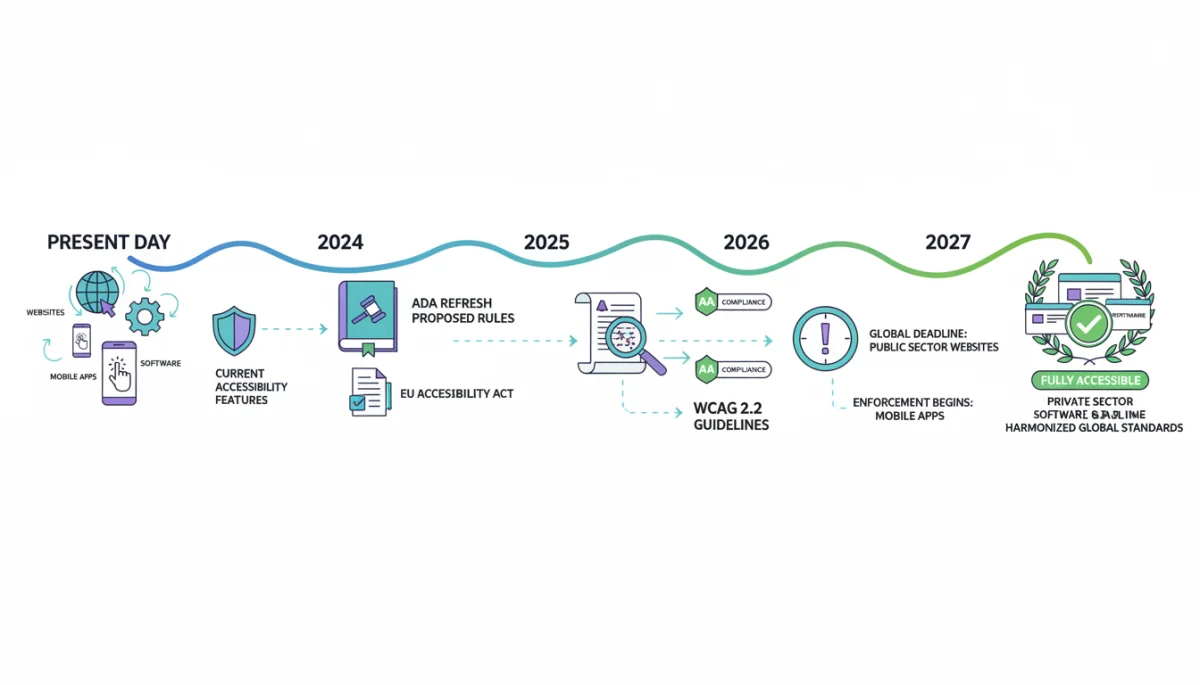
- Timeline: Sets a firm deadline of 2027 for full compliance, allowing a transitional period for organizations to adapt.
Furthermore, the legislation is expected to include provisions for ongoing review and updates to the technical standards. This foresight acknowledges the dynamic nature of technology, ensuring that accessibility guidelines can evolve alongside new innovations and digital platforms.
The bill also emphasizes the importance of training and education, recognizing that successful implementation requires more than just mandates. It is likely to include initiatives to support organizations in developing the necessary expertise to design, develop, and maintain accessible digital environments. These provisions collectively aim to create a truly accessible digital ecosystem, moving beyond mere compliance to foster genuine inclusion.
Who Will Be Affected by the New Digital Accessibility Requirements?
The scope of the proposed bill is intentionally broad, designed to impact nearly every entity that operates in the digital space and serves the American public. This means that a wide array of organizations will need to assess their current digital offerings and plan for compliance well in advance of the 2027 deadline.
From multinational corporations to small local businesses, any entity with a public-facing website, mobile application, or other digital service will likely fall under the purview of this legislation. The goal is to ensure that access is universal, regardless of the size or sector of the organization providing the digital content.
Key Stakeholders and Industries
While the exact definitions and exemptions (if any) will be detailed in the final legislative text, several key sectors are almost certain to be significantly impacted. Proactive planning within these industries will be paramount to avoid disruption and ensure a smooth transition to full compliance.
- E-commerce and Retail: Online stores, booking platforms, and customer service portals.
- Financial Institutions: Banking apps, investment platforms, and online account management.
- Healthcare Providers: Patient portals, telehealth services, and informational websites.
- Educational Institutions: University websites, online learning platforms, and digital course materials.
- Government Agencies: All federal, state, and local government websites and digital services.
- Media and Entertainment: Streaming services, news websites, and digital content publishers.
Beyond these direct entities, the bill will also have a ripple effect on technology vendors, web developers, and digital content creators. These professionals will need to ensure their products and services are built with accessibility in mind from the ground up, or risk their offerings becoming non-compliant for their clients.
Ultimately, the legislation aims to create a level playing field, ensuring that individuals with disabilities have equal access to the same digital opportunities as everyone else. This broad impact underscores the transformative potential of the bill, pushing for a more inclusive digital future across all sectors of society.
Preparing for the 2027 Digital Accessibility Deadline
With a 2027 deadline on the horizon, organizations have a critical window to prepare for the upcoming digital accessibility requirements. Proactive planning and strategic investment now can prevent costly remediation efforts and potential legal challenges down the line. The transition will require a multi-faceted approach, integrating accessibility into every stage of digital development and maintenance.
The first step for many will be to conduct comprehensive accessibility audits of their existing digital assets. This involves evaluating websites, mobile apps, and other platforms against established guidelines, likely those mirroring WCAG 2.1 AA, to identify current barriers and areas of non-compliance.

Strategies for Achieving Compliance
Achieving compliance by 2027 will not be a one-time fix but an ongoing commitment. Organizations should adopt a holistic strategy that embeds accessibility into their culture and operational processes.
- Conduct Audits: Regularly assess digital properties for accessibility gaps using automated tools and manual testing with assistive technologies.
- Prioritize Remediation: Address critical accessibility issues identified in audits, focusing on high-impact areas first.
- Train Staff: Educate developers, designers, content creators, and quality assurance teams on accessibility best practices.
- Integrate Accessibility: Incorporate accessibility into the entire development lifecycle, from conception and design to testing and deployment.
- User Testing: Engage individuals with disabilities in user testing to gain valuable insights and ensure real-world usability.
Beyond technical adjustments, organizations should also review their procurement processes to ensure that any third-party software or digital services they acquire are also accessible. This includes vetting vendors for their commitment to accessibility standards and requesting accessibility conformance reports (e.g., VPATs).
By taking these steps now, businesses and organizations can not only meet the upcoming legal requirements but also unlock the benefits of a more inclusive digital presence, reaching a broader audience and enhancing their brand reputation.
The Broader Impact of Standardized Digital Accessibility
The standardization of digital accessibility requirements by 2027 promises far-reaching benefits that extend well beyond legal compliance. This legislative push is poised to catalyze a more inclusive digital society, fostering innovation and creating new opportunities for individuals with disabilities.
One of the most significant impacts will be the enhanced participation of people with disabilities in all aspects of life. When digital services are accessible, individuals can more easily access education, employment opportunities, healthcare information, civic engagement, and entertainment. This leads to greater independence, economic empowerment, and social inclusion.
Economic and Social Benefits
The move towards universal digital accessibility is not just a matter of social justice; it also presents substantial economic advantages. Businesses that embrace accessibility often find themselves tapping into new markets and improving their overall user experience for everyone.
- Expanded Market Reach: Accessible products and services can reach the millions of individuals with disabilities and their families.
- Improved SEO: Many accessibility best practices, such as semantic HTML and clear content structures, also enhance search engine optimization.
- Reduced Legal Risk: Proactive compliance significantly lowers the risk of costly accessibility-related lawsuits.
- Enhanced Brand Reputation: Companies known for their commitment to inclusivity often enjoy stronger brand loyalty and a positive public image.
- Innovation: Designing for accessibility often sparks innovative solutions that benefit all users, not just those with disabilities.
Furthermore, a standardized approach will simplify the development process for businesses. Instead of navigating a complex web of varying guidelines and legal interpretations, companies will have a clear roadmap to follow, fostering consistency and reducing development costs in the long run.
Ultimately, this legislative update represents a crucial step towards building a truly equitable digital landscape. It underscores the principle that access to information and services in the digital age is a fundamental right, driving a shift towards a more inclusive and innovative future for all Americans.
Potential Challenges and Future Outlook
While the introduction of a bill to standardize digital accessibility requirements by 2027 is a significant step forward, its implementation will not be without challenges. Organizations, particularly smaller businesses, may face hurdles in adapting to the new standards, requiring thoughtful strategies and support mechanisms to ensure a smooth transition.
One primary concern is the potential cost associated with remediation and maintaining compliance. For businesses with extensive legacy digital systems, updating these platforms to meet new federal standards could require substantial investment in time, resources, and expertise. There will be a need for clear guidance and perhaps even financial incentives or support programs to help smaller entities achieve compliance without undue burden.
Navigating Implementation and Evolving Technology
The digital landscape is constantly evolving, presenting a continuous challenge for any fixed set of regulations. The bill will need to incorporate mechanisms for updating standards to remain relevant as new technologies emerge, from virtual reality to advanced AI interfaces.
- Resource Allocation: Businesses will need to allocate sufficient budgets and personnel for accessibility audits, remediation, and ongoing maintenance.
- Skill Gap: A potential shortage of skilled accessibility professionals could arise, necessitating increased training and education initiatives.
- Technological Evolution: The standards must be flexible enough to adapt to new digital platforms and user interfaces that emerge before and after 2027.
- Enforcement Consistency: Ensuring consistent and fair enforcement across diverse industries and organization sizes will be critical.
Looking ahead, the success of this legislation will depend not only on its passage but also on effective implementation and ongoing adaptation. Educational campaigns will be vital to raise awareness and provide practical guidance for compliance. Collaboration between government, industry, and disability advocacy groups will be essential to address unforeseen challenges and refine the framework as needed.
Despite these potential obstacles, the long-term outlook for standardized digital accessibility is overwhelmingly positive. It represents a commitment to a future where digital exclusion is minimized, and the vast opportunities of the online world are truly available to everyone.
| Key Aspect | Description |
|---|---|
| Bill’s Goal | Standardize digital accessibility requirements across the US by 2027. |
| Target Date | Full compliance expected by the year 2027. |
| Impacted Entities | Broad scope including public and private sector websites, apps, and software. |
| Key Benefit | Ensures greater inclusivity and equal access to digital services for all. |
Frequently Asked Questions About Digital Accessibility Legislation
The bill aims to establish uniform federal standards for digital accessibility across the United States. This will ensure that websites, mobile applications, and other digital content are accessible to individuals with disabilities, reducing current inconsistencies and legal ambiguities.
The proposed legislation sets a target date of 2027 for full compliance. This gives organizations a few years to assess their current digital assets, implement necessary changes, and train staff to meet the upcoming federal standards.
The bill is expected to have a broad reach, impacting both public and private sector entities that offer digital content or services to the public. This includes e-commerce businesses, financial institutions, educational bodies, healthcare providers, and government agencies.
While not explicitly stated, the bill is expected to align with internationally recognized guidelines, likely based on or heavily influenced by the Web Content Accessibility Guidelines (WCAG) 2.1 AA or a similar successor framework, providing clear technical specifications.
Organizations should begin by conducting accessibility audits of their digital platforms, prioritizing remediation of identified issues, training their teams on accessibility best practices, and integrating accessibility into their development lifecycles to ensure ongoing compliance.
Conclusion
The introduction of a new bill in Congress to standardize digital accessibility requirements by 2027 marks a pivotal moment for inclusivity in the United States. This legislation promises to create a more equitable digital landscape, ensuring that millions of Americans with disabilities can fully participate in the online world. While challenges in implementation and adaptation will undoubtedly arise, the long-term benefits of a universally accessible digital environment—ranging from enhanced social participation to economic growth—underscore the vital importance of this legislative effort. Proactive engagement from all stakeholders will be key to realizing a truly inclusive digital future.