Disability Benefits 2026: Navigating SSI and SSDI Changes

Anúncios
Understanding the anticipated adjustments and enhancements to the SSI and SSDI programs in 2026 is essential for individuals seeking or receiving disability benefits, ensuring they can effectively navigate these changes for sustained support.
Are you wondering what the future holds for disability support? The landscape of Disability Benefits 2026 is set to evolve, bringing with it potential changes to both Supplemental Security Income (SSI) and Social Security Disability Insurance (SSDI) programs. Staying informed about these developments is not just advised, it’s essential for individuals and families relying on these vital resources.
Anúncios
Anúncios
Understanding the Foundation: SSI and SSDI Basics
Before diving into the anticipated changes for 2026, it’s crucial to grasp the fundamental differences and purposes of the Supplemental Security Income (SSI) and Social Security Disability Insurance (SSDI) programs. These two programs, while both administered by the Social Security Administration (SSA), serve distinct populations and have different eligibility criteria.
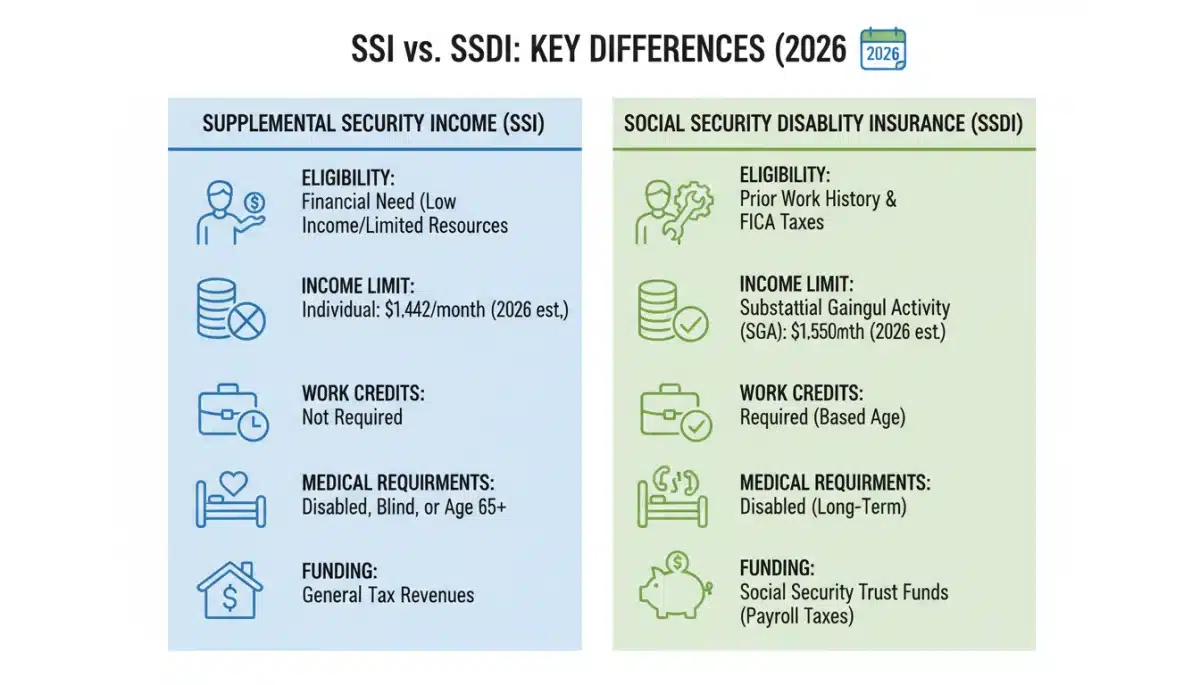
SSI is a needs-based program providing financial assistance to low-income individuals who are aged, blind, or disabled, regardless of their work history. It ensures a minimum income level for those with limited resources. SSDI, on the other hand, is an insurance program for those who have worked and paid Social Security taxes, and who have a qualifying disability that prevents them from working. Eligibility for SSDI is tied to one’s work history and earned work credits.
Key Distinctions Between SSI and SSDI
Understanding the nuances between these programs is the first step in navigating the benefits landscape effectively. While both aim to support individuals with disabilities, their structural differences impact eligibility and benefit amounts significantly.
- Funding Source: SSI is funded by general tax revenues, not Social Security taxes. SSDI is funded by Social Security taxes paid by workers, employers, and self-employed individuals.
- Work History Requirement: SSI has no work history requirement. SSDI requires a certain number of work credits, accumulated through employment, to be eligible.
- Income and Resources: SSI has strict income and resource limits, meaning beneficiaries must have very low assets and income to qualify. SSDI does not have asset limits, and while income from work can affect benefits, other income sources are generally not counted in the same way as for SSI.
These foundational differences mean that individuals may qualify for one program but not the other, or in some cases, both. As we look towards 2026, any program modifications will likely build upon these existing frameworks, potentially adjusting the thresholds or definitions within each.
Anticipated Program Changes and Legislative Outlook for 2026
The year 2026 is on the horizon, and with it comes the potential for various legislative adjustments and policy shifts impacting disability benefits. While specific details are often subject to ongoing political discourse and economic forecasts, several areas are typically under review when considering program modifications. These discussions often center on ensuring the long-term solvency of the Social Security trust funds and adapting to changing societal needs.
One primary area of focus often revolves around the cost-of-living adjustments (COLAs) for benefits. These adjustments are crucial for ensuring that the purchasing power of benefits keeps pace with inflation. Beyond COLAs, there are continuous debates about the eligibility criteria, particularly regarding the definition of disability and the process for disability determination. Streamlining these processes to reduce wait times and improve accuracy is a common objective.
Potential Legislative Reforms
Lawmakers frequently propose reforms to address the sustainability and effectiveness of disability programs. These can range from minor tweaks to more significant overhauls. Understanding these potential changes can help beneficiaries prepare.
- Trust Fund Solvency: Discussions often include measures to strengthen the Social Security trust funds, which directly impact SSDI benefits. These might involve adjustments to payroll taxes, retirement age, or benefit formulas.
- SSI Modernization: There’s often advocacy for updating SSI’s outdated income and resource limits, which have not kept pace with the cost of living. This could lead to higher limits, allowing more individuals to qualify or receive larger benefits.
- Return-to-Work Incentives: Policies aimed at encouraging beneficiaries to return to work, such as expanded trial work periods or earnings disregards, are frequently reviewed and potentially enhanced to support greater economic independence.
The legislative landscape is dynamic, and beneficiaries should remain vigilant for official announcements from the Social Security Administration and congressional updates. These changes, once enacted, could significantly alter how benefits are calculated, received, and managed. Staying informed through reliable sources is key to navigating these evolving policies effectively.
Eligibility Criteria and Application Process Updates
Navigating the eligibility criteria and application process for SSI and SSDI can be complex, and these areas are often subject to periodic review and potential updates. For 2026, individuals applying for or receiving benefits should be aware that modifications to these processes could impact their claims. The Social Security Administration (SSA) continuously seeks to refine its procedures to improve efficiency and fairness, which sometimes leads to changes in documentation requirements, medical evaluation protocols, or the overall application pathway.
One area of perennial discussion is the medical criteria used to define disability. While the core definition is unlikely to change drastically, the specific conditions and evidence required to prove disability can be updated to reflect advancements in medical understanding and treatment. Furthermore, the SSA may introduce new digital tools or streamline existing online application portals, which could simplify the initial steps for many applicants.
Streamlining the Application Journey
The application process, historically known for its length and complexity, is a frequent target for improvements. Any changes for 2026 could aim to reduce bottlenecks and enhance the applicant experience.
- Digital Submission Enhancements: Expect continued enhancements to online application systems, potentially allowing for easier submission of medical records and other supporting documents electronically.
- Revised Medical Review Procedures: The SSA may update the guidelines for medical reviews, possibly requiring different types of evidence or emphasizing certain diagnostic tests to expedite determinations.
- Interview Process Adjustments: There might be changes to how initial interviews are conducted, with a greater emphasis on virtual options or more structured in-person meetings to gather information more efficiently.
Applicants must ensure their medical records are comprehensive and up-to-date, as this remains a cornerstone of any disability claim. Being proactive in gathering all necessary documentation and understanding the specific requirements for 2026 will be crucial for a successful application. Keeping an eye on official SSA announcements will provide the most accurate and timely information regarding any procedural shifts.
Maximizing Your Benefits: Strategies for 2026
For individuals currently receiving or planning to apply for disability benefits, strategic planning is essential to maximize support, especially with potential program changes in 2026. Understanding how to navigate the system, utilize available resources, and proactively manage your claim can make a significant difference in the financial stability and overall well-being of beneficiaries. This involves staying informed about policy updates, understanding your rights, and effectively communicating with the Social Security Administration.
One crucial strategy is to maintain thorough and organized records of all medical treatments, doctor visits, and related expenses. This documentation is invaluable both during the initial application process and for any subsequent reviews of your disability status. Additionally, exploring all potential avenues of support, such as state-specific programs or other federal aid, can help create a more comprehensive safety net.
Key Strategies for Beneficiaries
Proactive engagement and informed decision-making are vital for optimizing disability benefits. These strategies can help ensure you receive the maximum support you are entitled to.
- Regular Medical Documentation: Consistently update your medical records with your healthcare providers, ensuring they accurately reflect your current condition and its impact on your daily life.
- Understanding Work Incentives: If you are able to work part-time, familiarize yourself with the SSA’s work incentives, such as the Trial Work Period and Impairment Related Work Expenses (IRWEs), which allow you to earn income without immediately losing benefits.
- Seeking Professional Advice: Consider consulting with a disability advocate or attorney, especially if your application is denied or if you need assistance navigating complex appeals processes. Their expertise can be invaluable.
By adopting these strategies, beneficiaries can better position themselves to adapt to any changes in the SSI and SSDI programs for 2026. Staying engaged with your case and utilizing all available support systems are fundamental steps towards securing and sustaining your deserved benefits.
Impact of Economic Factors on Disability Benefits in 2026
The broader economic climate plays a significant role in shaping the landscape of disability benefits, and 2026 will be no exception. Economic factors such as inflation, unemployment rates, and wage growth can directly influence the cost-of-living adjustments (COLAs) that apply to benefits, as well as the financial health of the Social Security trust funds. A strong economy typically means more contributions to these funds through payroll taxes, while high inflation can erode the purchasing power of fixed benefits.
Furthermore, economic conditions can affect the political will to enact certain legislative changes. For instance, during periods of economic uncertainty, there might be greater scrutiny on program expenditures and increased pressure to find ways to ensure long-term sustainability. Conversely, a robust economy might allow for enhancements to benefits or more generous eligibility criteria.
Economic Influences on Benefit Adjustments
Several economic indicators directly feed into how disability benefits are calculated and adjusted each year. Understanding these connections can help beneficiaries anticipate changes.
- Inflation Rates: High inflation often leads to higher COLAs for both SSI and SSDI, designed to help beneficiaries maintain their living standards. These adjustments are typically announced late in the year for the following year.
- Wage Growth: Average wage growth affects the maximum amount of earnings subject to Social Security taxes, which in turn influences the solvency of the SSDI program and the calculation of future benefits.
- Cost of Healthcare: Rising healthcare costs can indirectly impact benefits by increasing the financial burden on individuals with disabilities, potentially leading to calls for increased benefit amounts or enhanced medical coverage.
Beneficiaries should pay close attention to economic forecasts and official announcements regarding COLAs from the Social Security Administration. These annual adjustments are a direct reflection of prevailing economic conditions and are vital for planning personal finances in the coming year. Staying informed about these broader trends can provide valuable context for understanding specific program changes.
Resources and Support Systems for Beneficiaries in 2026
Navigating the complexities of disability benefits in 2026 requires access to reliable resources and robust support systems. The Social Security Administration (SSA) itself is the primary source of information, offering a wealth of guides, online tools, and direct assistance. However, a variety of other organizations, both governmental and non-profit, also play crucial roles in helping beneficiaries understand their rights, apply for aid, and manage their benefits effectively.
These support systems can range from legal aid services specializing in disability law to community-based organizations that offer assistance with financial planning, employment search, and access to other social services. Leveraging these resources can significantly alleviate the burden on individuals and families dealing with disability, ensuring they receive comprehensive support beyond just financial benefits.
Essential Support Networks
A multi-faceted approach to support can empower beneficiaries to overcome challenges and thrive. Knowing where to turn for help is a critical component of successful benefits management.
- Social Security Administration (SSA) Offices: Direct contact with SSA representatives can clarify specific case details, application statuses, and program rules. Their website is also a comprehensive resource.
- Disability Advocacy Groups: Organizations like the National Council on Disability or state-specific disability rights groups offer advocacy, information, and often connect beneficiaries with legal or community support.
- Legal Aid and Disability Attorneys: For complex cases, appeals, or denials, a lawyer specializing in Social Security disability can provide invaluable assistance, significantly improving the chances of a favorable outcome.
By proactively engaging with these resources, individuals can ensure they are well-equipped to handle any changes to the SSI and SSDI programs in 2026. Building a strong support network is not just about addressing immediate needs but also about fostering long-term stability and well-being for those living with disabilities.
| Key Point | Brief Description |
|---|---|
| SSI vs. SSDI | SSI is needs-based with no work history; SSDI requires work credits and is insurance-based. |
| 2026 Program Changes | Anticipate legislative adjustments, COLA updates, and potential SSI modernization for 2026. |
| Eligibility & Application | Criteria and processes may be streamlined, emphasizing digital tools and updated medical evidence. |
| Maximizing Benefits | Maintain records, understand work incentives, and seek professional advice for optimal support. |
Frequently Asked Questions About Disability Benefits 2026
SSI (Supplemental Security Income) is a needs-based program for low-income individuals, regardless of work history. SSDI (Social Security Disability Insurance) requires a work history with paid Social Security taxes. Both provide support for individuals with qualifying disabilities, but their funding and eligibility criteria differ significantly.
While the core definition of disability is unlikely to change drastically, the specific medical evidence and criteria used to determine eligibility may be updated in 2026 to reflect medical advancements and streamline evaluation processes. Official SSA announcements will provide clarity on any modifications.
To prepare, maintain comprehensive and up-to-date medical records, stay informed through official SSA channels, and consider consulting with a disability advocate or attorney. Understanding work incentives and exploring additional support resources can also be beneficial in 2026.
Economic factors like inflation and wage growth will likely influence Cost-of-Living Adjustments (COLAs) for benefits in 2026. Higher inflation typically leads to larger COLAs, aiming to preserve the purchasing power of beneficiaries. The overall economy also affects trust fund solvency.
The Social Security Administration (SSA) website and local offices are primary resources. Additionally, disability advocacy groups, legal aid organizations, and specialized disability attorneys offer valuable information, guidance, and representation for beneficiaries. Utilize these support systems.
Conclusion
As we approach 2026, the landscape of disability benefits in the United States, encompassing both SSI and SSDI programs, is poised for potential adjustments. These changes, driven by legislative discussions, economic factors, and ongoing efforts to modernize the system, underscore the importance of continuous vigilance and proactive engagement from beneficiaries. Understanding the fundamental differences between SSI and SSDI, staying informed about anticipated policy shifts, and strategically utilizing available resources are paramount. By doing so, individuals with disabilities can effectively navigate the evolving support systems, ensuring they continue to receive the crucial assistance needed for their well-being and financial stability. Preparing for these future changes today will empower beneficiaries to adapt and thrive in the years to come.