Fed Rate Hikes 2025: Mortgage & Savings Impact Explained
Anúncios
A 0.25% Fed rate hike in 2025 would likely increase variable mortgage rates and loan costs, while potentially boosting savings account yields and CD returns for consumers.
Understanding the latest Fed rate hikes: how a 0.25% increase impacts your mortgage and savings in 2025 is crucial for every American household. As the Federal Reserve considers its next moves, even a seemingly small adjustment can ripple through your personal finances, affecting everything from your monthly mortgage payments to the returns on your savings accounts. Are you prepared for these potential shifts?
Anúncios
Understanding the Federal Reserve’s Role
The Federal Reserve, often referred to as the Fed, is the central banking system of the United States. Its primary mandate involves maintaining maximum employment, stable prices, and moderate long-term interest rates. To achieve these goals, the Fed utilizes various monetary policy tools, with interest rate adjustments being one of the most prominent.
Anúncios
When the Fed raises or lowers its benchmark interest rate, known as the federal funds rate, it influences lending costs across the entire economy. This rate dictates what banks charge each other for overnight borrowing. Consequently, changes here cascade down to affect consumer loans, mortgages, and even the interest you earn on your deposits.
The federal funds rate and its influence
The federal funds rate is a critical lever for the Fed to manage economic activity. A higher rate makes borrowing more expensive, which can cool down an overheating economy by discouraging spending and investment. Conversely, a lower rate stimulates economic growth by making credit more affordable. The Fed’s decisions are not made in a vacuum; they consider a wide array of economic indicators, including inflation, employment figures, and global economic conditions.
- Inflation control: Raising rates helps combat inflation by reducing the money supply.
- Economic growth: Lowering rates encourages borrowing and spending, boosting economic activity.
- Market expectations: The Fed’s guidance heavily influences market sentiment and future rate projections.
The implications of a 0.25% increase, while seemingly minor, can be significant when considering the vast scale of the U.S. economy and the cumulative effect on individual financial obligations. As we look towards 2025, understanding these fundamentals becomes even more vital for prudent financial planning.
In essence, the Fed acts as the orchestrator of the nation’s monetary policy, and its decisions directly shape the financial landscape for millions of Americans. Being informed about these mechanisms is the first step in navigating potential changes to your personal economic situation.
Direct Impact on Mortgage Rates
A 0.25% increase in the federal funds rate in 2025 will undoubtedly send ripples through the mortgage market. While the federal funds rate doesn’t directly dictate mortgage rates, it heavily influences the prime rate and other short-term lending rates, which in turn affect how lenders price their mortgage products. Homebuyers and existing homeowners with variable-rate mortgages will feel this impact most acutely.
For those considering a new home purchase or refinancing, even a modest rate hike can translate into higher monthly payments over the life of a loan. Lenders adjust their offerings based on their cost of borrowing, which increases when the Fed tightens monetary policy. This means that securing a fixed-rate mortgage before potential hikes can be a strategic move for stability.
Variable-rate mortgages and ARM adjustments
Homeowners with adjustable-rate mortgages (ARMs) are particularly vulnerable to Fed rate increases. ARMs typically have an initial fixed-rate period, after which the interest rate adjusts periodically based on an index, often tied to the prime rate or LIBOR (though LIBOR is being phased out in favor of SOFR). A 0.25% increase in the federal funds rate will likely cause these indexes to rise, leading to higher interest rates on ARMs.
- Increased monthly payments: ARM holders will see their payments go up with each adjustment cycle.
- Budget re-evaluation: It becomes crucial to reassess household budgets to accommodate higher mortgage costs.
- Refinancing considerations: Some ARM holders might consider refinancing into a fixed-rate mortgage to lock in current rates.
It’s important to remember that not all ARMs adjust immediately or by the full amount of the Fed’s hike due to caps on rate increases. However, over time, the cumulative effect can be substantial. Understanding your ARM’s specific terms, including its adjustment period and caps, is essential for predicting the impact on your finances.
Ultimately, a Fed rate hike underscores the importance of proactive financial planning, especially for those with significant debt like mortgages. Evaluating your current mortgage terms and exploring options like refinancing or making extra payments can help mitigate the effects of rising interest rates.
Effects on Savings Accounts and Certificates of Deposit
While rising interest rates often spell higher costs for borrowers, they can bring a silver lining for savers. A 0.25% increase in the federal funds rate in 2025 is generally good news for those with savings accounts, money market accounts, and certificates of deposit (CDs). Banks tend to pass on at least some of these rate increases to their depositors, albeit often with a delay and not always in full.
High-yield savings accounts, particularly those offered by online banks, are usually quicker to reflect Fed rate changes. These accounts are designed to attract deposits by offering more competitive interest rates compared to traditional brick-and-mortar banks. For individuals looking to grow their emergency funds or save for short-term goals, this could mean earning a bit more on their idle cash.
CDs and locking in higher yields
Certificates of Deposit (CDs) become particularly attractive in a rising interest rate environment. CDs allow you to lock in a specific interest rate for a predetermined period, ranging from a few months to several years. If rates are expected to climb, purchasing a CD after a Fed hike allows you to secure a higher yield for the duration of the term, offering predictable returns.
- Short-term CDs: Consider shorter-term CDs to capitalize on potential future rate increases.
- CD ladders: A CD ladder strategy involves staggering CD maturities to consistently reinvest at prevailing higher rates.
- Online bank advantages: Online banks often offer more competitive CD rates than traditional banks due to lower overheads.
However, it’s worth noting that while interest rates on savings will likely increase, they may not keep pace with inflation. It’s crucial to compare different banking products and understand the terms and conditions. The goal is to maximize your returns while ensuring your money remains accessible when needed. A 0.25% hike, though small, contributes to the overall trend of higher potential earnings for diligent savers.
In conclusion, a Fed rate hike presents an opportunity for savers to re-evaluate their banking strategies. By strategically placing funds in high-yield accounts or CDs, individuals can potentially offset some of the increased costs associated with borrowing and enhance their overall financial health.
Broader Economic Implications for 2025
A 0.25% increase in the federal funds rate in 2025 extends its influence far beyond just mortgages and savings. It has broader implications for the U.S. economy, affecting everything from consumer spending and business investment to the stock market and international trade. The Fed’s objective is to manage inflation without stifling economic growth, a delicate balancing act.
Higher interest rates mean that borrowing for businesses becomes more expensive, which can lead to a slowdown in expansion plans, hiring freezes, and reduced capital expenditures. This can, in turn, impact job growth and overall economic output. Consumers might also shy away from taking on new debt for large purchases like cars or major appliances, further dampening demand.
Inflationary pressures and consumer behavior
The primary motivation behind Fed rate hikes is often to combat inflation. By making money more expensive, the Fed aims to reduce aggregate demand, which can help bring down prices. If successful, this could mean that the purchasing power of your dollar stabilizes or even improves over time, despite the higher cost of borrowing.
- Reduced consumer spending: Higher borrowing costs can lead to less discretionary spending.
- Business investment slowdown: Companies may delay or reduce expansion projects.
- Stronger dollar: Higher rates can attract foreign investment, strengthening the dollar, which impacts imports and exports.
The stock market also reacts to Fed rate hikes. Initially, higher rates can be seen negatively by investors as they increase borrowing costs for companies and make bonds more attractive relative to stocks. However, if the hikes successfully curb inflation and lead to a more stable economic environment, the long-term outlook for equities can remain positive. The key is how the market interprets the Fed’s intent and the expected trajectory of future rate adjustments.
In summary, while a 0.25% hike might seem small, its cumulative effect on economic behavior across various sectors can be significant. It reflects the Fed’s ongoing efforts to steer the economy toward stability, impacting everyone from large corporations to individual consumers.
Strategic Planning for Homeowners and Savers
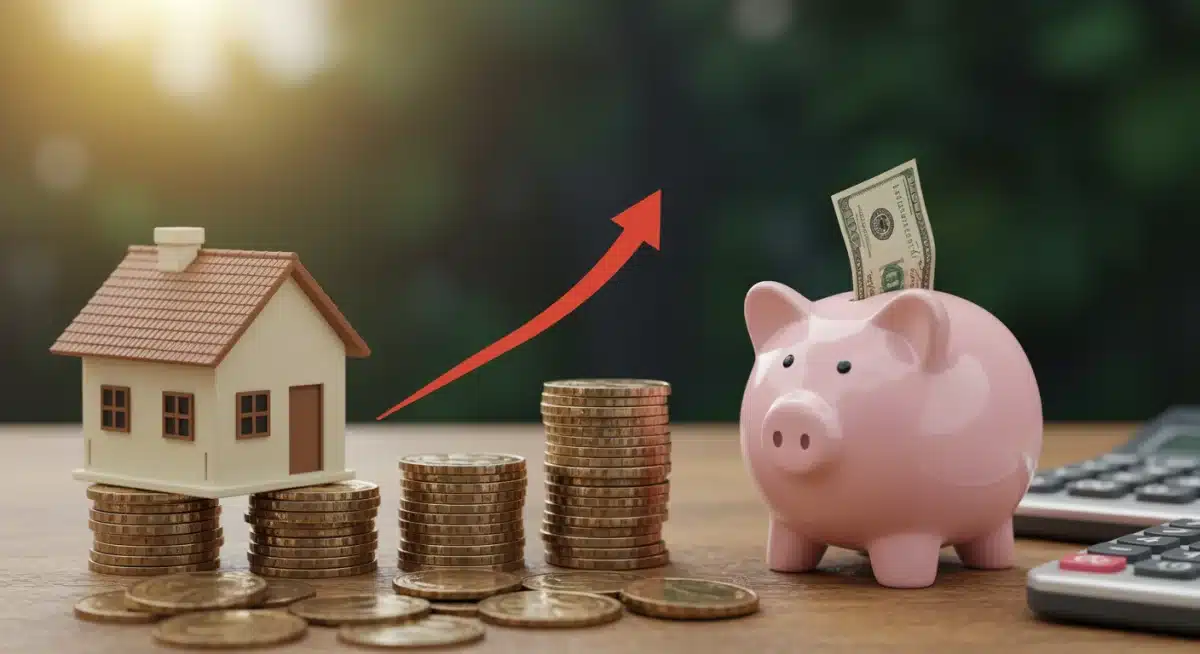
Given the potential for fed rate hikes 2025, both homeowners and savers need to consider strategic planning to optimize their financial situation. Being proactive rather than reactive can help mitigate negative impacts and capitalize on opportunities. For homeowners, this means reviewing mortgage terms and exploring options to minimize interest rate exposure.
Understanding your current mortgage is the first step. If you have a fixed-rate mortgage, a 0.25% hike won’t directly affect your monthly payment, providing stability. However, if you have an adjustable-rate mortgage (ARM), preparing for potential payment increases is crucial. This could involve setting aside extra funds or exploring refinancing options before rates climb further.
Mortgage strategies in a rising rate environment
For homeowners, several strategies can help navigate rising interest rates. Refinancing from an ARM to a fixed-rate mortgage can lock in your current payment, offering predictability. However, evaluate closing costs and ensure the long-term savings outweigh the upfront expenses. Another approach is to make additional principal payments, which reduces the loan balance faster and thus the total interest paid over time.
- Refinance considerations: Evaluate if refinancing to a fixed-rate mortgage is financially viable.
- Extra principal payments: Accelerate debt repayment to reduce overall interest costs.
- Budget adjustments: Prepare for potential increases in monthly mortgage payments if you have an ARM.
For savers, the landscape shifts in their favor. A 0.25% hike means higher potential returns. Review your existing savings accounts. If your bank isn’t offering competitive rates, consider moving funds to high-yield online savings accounts or exploring Certificate of Deposit (CD) options. CD ladders, where you invest in CDs with staggered maturity dates, allow you to capture rising rates over time.
The key is to regularly review your financial products and adjust them to align with the changing interest rate environment. This proactive approach ensures you’re not leaving money on the table in your savings and are effectively managing your debt obligations.
Impact on Other Loans and Credit
The ripple effect of a 0.25% Fed rate hike in 2025 extends beyond mortgages and savings, influencing a wide array of other consumer loans and credit products. From credit card interest rates to auto loans and personal loans, the cost of borrowing across the board is likely to increase. This means that managing existing debt and considering new borrowing will require greater scrutiny.
Credit card interest rates are often directly tied to the prime rate, which typically moves in lockstep with the federal funds rate. Therefore, a Fed hike will almost immediately translate into higher annual percentage rates (APRs) on credit card balances. This makes carrying a balance more expensive, emphasizing the importance of paying off high-interest debt quickly.
Auto loans, personal loans, and HELOCs
New auto loans and personal loans will also see their interest rates climb. While existing fixed-rate auto and personal loans won’t be affected, anyone seeking new financing will face higher borrowing costs. This could impact purchasing decisions, potentially leading consumers to opt for less expensive vehicles or delay major purchases.
- Credit card debt: Prioritize paying down balances to avoid higher interest charges.
- New auto loans: Expect higher APRs, potentially affecting monthly payments and affordability.
- HELOCs (Home Equity Lines of Credit): These are often variable-rate, so payments will likely increase.
Home Equity Lines of Credit (HELOCs) are another significant area of impact. Like ARMs, HELOCs typically have variable interest rates tied to the prime rate. A Fed hike will cause the interest rate on a HELOC to adjust upwards, increasing monthly payments for borrowers. This can add financial strain if not anticipated and budgeted for.
For those planning to take out new loans or currently holding variable-rate debt, understanding these potential increases is vital. Consolidating high-interest debt, exploring fixed-rate alternatives where possible, and maintaining a strong credit score can help mitigate the financial burden of rising interest rates. Proactive debt management becomes an even more critical component of personal finance in such an environment.
Navigating Future Fed Decisions and Your Finances
As we look towards 2025, understanding how to navigate future Fed decisions and their impact on your finances becomes paramount. The Federal Reserve’s monetary policy is dynamic, reacting to evolving economic conditions. Therefore, staying informed and adopting a flexible financial strategy is key to success in an environment of potential rate hikes.
Monitoring economic indicators, such as inflation reports, employment data, and GDP growth, can provide clues about the Fed’s likely trajectory. While predicting exact Fed moves is challenging, being aware of the general economic landscape can help you anticipate shifts and adjust your financial plans accordingly. This proactive approach allows you to make informed decisions rather than reacting to changes after they occur.
Building financial resilience
Building financial resilience is about creating a robust financial foundation that can withstand economic fluctuations, including interest rate changes. This involves several key components, from maintaining an emergency fund to diversifying investments and managing debt effectively.
- Emergency fund: Ensure you have sufficient savings to cover several months of living expenses.
- Debt management: Prioritize paying off high-interest, variable-rate debt.
- Investment diversification: Spread investments across different asset classes to mitigate risk.
For homeowners, regularly reviewing your mortgage terms and considering refinancing opportunities when rates are favorable can provide long-term stability. For savers, actively seeking out high-yield accounts and CDs allows you to maximize returns on your cash. The goal is to ensure your money is working as hard as possible for you, regardless of the Fed’s actions.
In conclusion, the prospect of a 0.25% Fed rate hike in 2025 should serve as a catalyst for a thorough review of your personal finances. By understanding the potential impacts on your mortgage, savings, and other loans, and by implementing strategic adjustments, you can position yourself to thrive in a changing economic landscape. Staying informed and financially agile will be your best defense and offense.
| Key Impact Area | Brief Description of 0.25% Rate Hike |
|---|---|
| Mortgage Rates | Variable mortgage rates and new fixed-rate mortgages likely to increase, leading to higher monthly payments. |
| Savings Accounts | Potential for higher interest earnings on high-yield savings accounts and Certificates of Deposit (CDs). |
| Other Loans | Credit card APRs, auto loan rates, and HELOC payments expected to rise. |
| Economic Outlook | Aims to curb inflation but may slow consumer spending and business investment. |
Frequently Asked Questions About Fed Rate Hikes
Mortgage rates, especially fixed rates, don’t always move immediately or in lockstep with the Fed. They are influenced more by the bond market. Variable rates on ARMs and HELOCs, however, are typically tied to the prime rate and adjust more directly and quickly after a Fed decision.
No, if you have a fixed-rate mortgage, your interest rate and monthly payments will remain unchanged by a Fed rate hike. These adjustments only impact new mortgages or existing variable-rate loans, offering stability to homeowners with fixed terms.
To maximize savings, consider high-yield online savings accounts or Certificates of Deposit (CDs). Online banks often offer better rates. Explore a CD ladder strategy to take advantage of future rate increases by staggering your CD maturities over time.
Credit card interest rates are typically variable and tied to the prime rate. A Fed hike will likely increase your credit card’s Annual Percentage Rate (APR), making any outstanding balances more expensive to carry. Prioritizing paying down high-interest debt is crucial.
The decision to buy a home involves many factors beyond interest rates, including personal financial stability and market conditions. While rising rates increase costs, waiting could mean higher home prices. Consult a financial advisor to weigh the pros and cons for your specific situation.
Conclusion
The prospect of a 0.25% Fed rate hike in 2025, while seemingly minor, holds significant implications for the financial well-being of American households. It underscores the interconnectedness of monetary policy with everyday financial decisions, from the cost of your mortgage to the returns on your savings. By staying informed about the Federal Reserve’s actions and understanding their potential ripple effects, individuals can proactively adjust their financial strategies. This includes evaluating mortgage options, optimizing savings accounts, and diligently managing other forms of debt. Ultimately, financial preparedness and informed decision-making are key to navigating the evolving economic landscape and ensuring your financial stability in the years to come.