Achieving Your GED in 6 Months: A Step-by-Step US Study Plan for 2026

Anúncios
Achieving your GED in 6 months in the US requires a disciplined approach, strategic planning, and consistent study habits to master the four core subjects effectively.
Are you ready to transform your future by earning your high school equivalency diploma? Achieving Your GED in 6 Months: A Step-by-Step US Study Plan for 2026 is not just a dream; it’s an attainable goal with the right strategy and dedication. This comprehensive guide will walk you through the essential steps, resources, and mindsets needed to conquer the GED tests within half a year, opening doors to new educational and career opportunities across the United States.
Anúncios
Understanding the GED Exam and Its Structure
Before embarking on your 6-month journey, it’s crucial to grasp what the GED exam entails. The General Educational Development (GED) test is a high school equivalency credential in the US, designed for individuals who didn’t complete traditional high school. It comprises four separate subject tests, each assessing different academic skills. Understanding the format and content of these tests is the first step toward effective preparation.
Anúncios
Each subject test is timed and computer-based, reflecting real-world digital literacy requirements. Familiarity with the test interface and question types can significantly boost your confidence and performance. Many official GED preparation materials include practice tests that simulate the actual exam experience, allowing you to gauge your readiness.
The Four Core Subjects of the GED
The GED is broken down into four distinct areas, each requiring specific knowledge and skills:
- Reasoning Through Language Arts (RLA): This section assesses reading comprehension, grammar, punctuation, and essay writing skills. It’s a combination of multiple-choice questions and an extended response (essay).
- Mathematical Reasoning: Focuses on quantitative problem-solving, including basic arithmetic, algebra, geometry, and data analysis. A calculator is provided for certain sections.
- Social Studies: Covers US history, civics and government, economics, and geography. Questions require critical thinking and interpretation of various texts and graphics.
- Science: Explores life science, physical science, and earth and space science. Expect questions that test your ability to understand scientific concepts, interpret data, and apply scientific reasoning.
Mastering these four subjects within a tight 6-month timeframe demands a strategic approach to studying, ensuring no single area is neglected. A balanced study plan will allocate sufficient time to each subject, prioritizing areas where you might need more improvement.
Crafting Your Personalized 6-Month Study Schedule
A well-structured study schedule is the backbone of achieving your GED in 6 months. This isn’t a one-size-fits-all plan; it needs to be personalized to your strengths, weaknesses, and daily commitments. Begin by assessing your current knowledge level in each subject through diagnostic tests. This initial assessment will highlight areas requiring more attention and help you allocate study time effectively.
Consider your daily routine and identify consistent blocks of time you can dedicate to studying. Whether it’s an hour before work, during lunch breaks, or a few hours in the evening, consistency is key. Break down each subject into smaller, manageable topics, and assign specific days or weeks for their review. Integrate regular review sessions and practice tests into your schedule to reinforce learning and track progress.
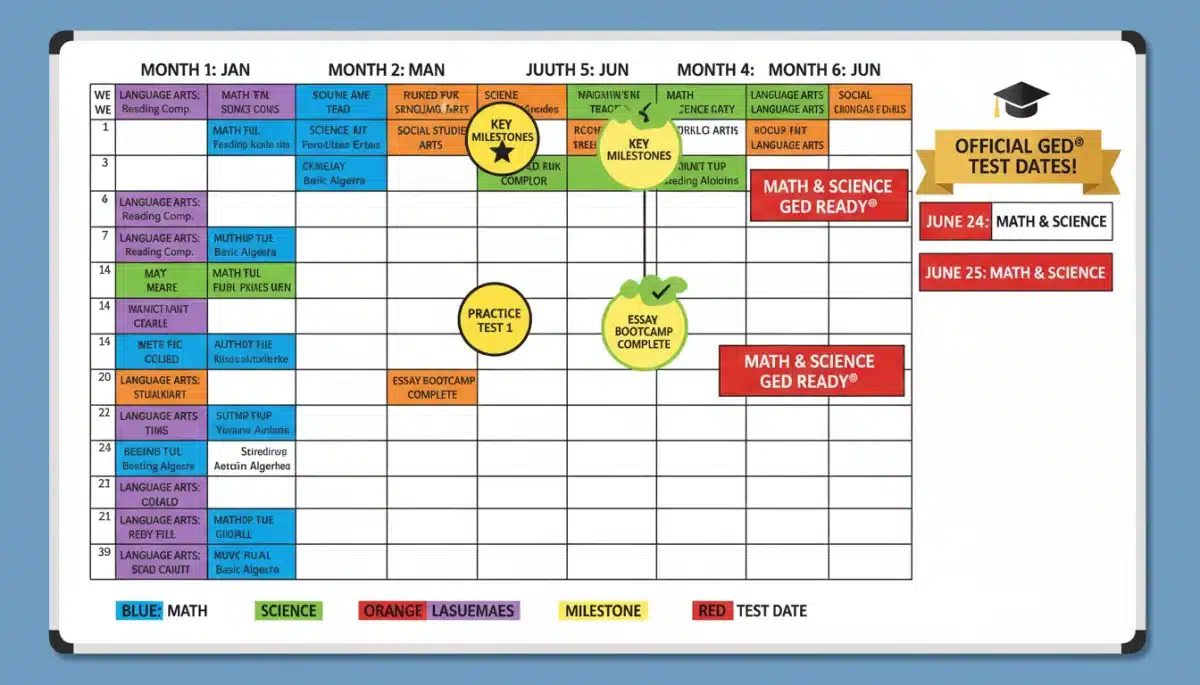
Monthly Breakdown for Focused Learning
To keep the 6-month plan manageable, consider a monthly focus:
- Months 1-2: Focus on foundational skills and identify weak areas. Dedicate these months to thoroughly reviewing Language Arts and Mathematics basics.
- Months 3-4: Dive deeper into Social Studies and Science. These subjects often require memorization of facts and understanding complex concepts.
- Months 5: Intensive review of all four subjects. This is the time for comprehensive practice tests and addressing any lingering difficulties.
- Month 6: Final preparation, mock exams, and scheduling your official tests. Aim to take one test per week if possible, starting with your strongest subject to build confidence.
Remember to build in flexibility. Life happens, and you might need to adjust your schedule. The goal is progress, not perfection. Regularly evaluate your schedule and make changes as needed to ensure it remains realistic and effective for your learning style. This systematic approach is vital for anyone serious about achieving your GED in 6 months.
Essential Resources and Study Tools for Success
Having the right resources can make a significant difference in your GED preparation. The market is flooded with study guides, online courses, and practice tests, but choosing the most effective ones is crucial. Official GED preparation materials, such as those offered by GED Testing Service, are highly recommended as they align directly with the exam content and format. These often include comprehensive textbooks, workbooks, and full-length practice tests.
Beyond official materials, numerous online platforms offer interactive lessons, video tutorials, and flashcards, catering to different learning preferences. Libraries are also excellent resources, providing free access to study guides, computers, and quiet study spaces. Don’t underestimate the power of peer support; study groups can offer motivation, shared insights, and a collaborative learning environment.
Leveraging Technology for Efficient Studying
In 2026, technology offers an array of tools to enhance your study experience:
- GED Prep Apps: Many mobile applications offer bite-sized lessons, quizzes, and flashcards, perfect for studying on the go.
- Online Tutoring: If you struggle with a particular subject, consider online tutoring services that provide personalized guidance and support.
- Educational Websites: Websites like Khan Academy, for example, offer free lessons and practice exercises in math and science that can supplement your GED studies.
- Virtual Study Groups: Connect with other GED candidates through online forums or video conferencing to share tips and motivate each other.
The strategic use of these resources ensures that every minute of your study time is productive. Remember to diversify your study methods to keep learning engaging and to reinforce concepts through different mediums. A blend of traditional textbooks and digital tools often yields the best results for a fast-paced study plan.
Strategies for Mastering Each GED Subject Test
Each of the four GED subject tests presents unique challenges, requiring specific study strategies. Understanding these nuances and tailoring your approach accordingly will be vital for achieving your GED in 6 months. It’s not just about knowing the content, but also about understanding how each test evaluates your skills.
For Reasoning Through Language Arts (RLA), focus on improving your reading speed and comprehension. Practice identifying main ideas, supporting details, and author’s purpose. For the extended response, work on structuring arguments logically, using clear evidence, and maintaining proper grammar and mechanics. Regular writing practice and feedback are indispensable.
Targeted Approaches for Math, Social Studies, and Science
- Mathematical Reasoning: Don’t just memorize formulas; understand the concepts behind them. Practice problem-solving extensively, especially with word problems. Familiarize yourself with the on-screen calculator provided during the test.
- Social Studies: This test often involves interpreting historical documents, maps, and political cartoons. Practice analyzing primary and secondary sources, understanding cause and effect, and recognizing different perspectives. Create timelines and flashcards for key historical events and figures.
- Science: Focus on understanding scientific processes, experimental design, and data interpretation. Review basic concepts in biology, chemistry, physics, and earth science. Practice reading graphs, charts, and scientific passages to extract information.
By employing these subject-specific strategies, you can optimize your study time and ensure you are adequately prepared for the unique demands of each section. Consistent practice and self-assessment will help you fine-tune your approach and build confidence across all subjects.
Overcoming Challenges and Staying Motivated
The journey to earning your GED in 6 months is demanding, and you’re likely to encounter challenges along the way. It’s normal to feel overwhelmed, frustrated, or demotivated at times. Recognizing these feelings and having strategies to overcome them is crucial for maintaining your momentum. Remember your ‘why’ – the reasons you started this journey – to reignite your motivation.
Time management is a common hurdle. If you find yourself falling behind, reassess your schedule and make realistic adjustments. Don’t be afraid to take short breaks to prevent burnout. Celebrate small victories, like mastering a difficult concept or passing a practice quiz, to keep your spirits high. Surrounding yourself with a supportive network of family, friends, or fellow students can also provide immense encouragement.
Maintaining Focus and Avoiding Burnout
To stay on track and avoid burnout, consider these tips:
- Set Realistic Goals: Break your 6-month plan into weekly or even daily mini-goals that are achievable.
- Prioritize Self-Care: Ensure you’re getting enough sleep, eating well, and exercising. A healthy body supports a healthy mind.
- Vary Your Study Methods: Switch between reading, watching videos, doing practice problems, and discussing concepts to keep learning engaging.
- Seek Help When Needed: Don’t hesitate to ask for clarification from tutors, instructors, or online communities if you’re struggling with a topic.
- Reward Yourself: Plan small, non-food rewards for reaching milestones to keep motivation high.
By proactively addressing potential obstacles and cultivating a resilient mindset, you can navigate the intensity of a 6-month GED study plan. Consistency, combined with self-compassion, will be your greatest allies in achieving this significant educational milestone.
The Final Stretch: Taking the GED Tests and Beyond
As you approach the 6-month mark, the focus shifts to taking the actual GED tests. Scheduling your exams strategically is important. Many recommend taking one test at a time, allowing you to concentrate your final review efforts on a single subject. Consider starting with the subject you feel most confident about to build momentum and reduce test anxiety. The official GED website provides detailed information on how to register, locate testing centers, and what to expect on test day.
On test day, ensure you are well-rested, have eaten a good meal, and arrive early at the testing center. Bring any required identification and follow all instructions from the test administrators. Remember to read each question carefully and manage your time effectively during the exam. If you don’t pass a section on the first attempt, don’t be discouraged; you can retake the tests after a waiting period, often with a reduced fee.
What Comes After Earning Your GED?
Achieving your GED in 6 months is a significant accomplishment that opens numerous doors:
- Higher Education: With a GED, you can apply to colleges, universities, and vocational schools to pursue further education and specialized training.
- Career Advancement: Many employers require a high school diploma or its equivalent. A GED can qualify you for better job opportunities, promotions, and increased earning potential.
- Personal Growth: Beyond academic and career benefits, earning your GED boosts self-confidence and demonstrates your commitment to personal development.
- Military Service: A GED can fulfill the educational requirements for enlisting in the US military, offering another pathway for career and personal growth.
The GED is more than just a piece of paper; it’s a testament to your perseverance and a stepping stone to a brighter future. Embrace the opportunities it creates and continue to set new goals for personal and professional development.
| Key Point | Brief Description |
|---|---|
| Personalized Plan | Tailor your 6-month study schedule to your strengths and weaknesses for optimal progress. |
| Utilize Resources | Leverage official guides, online tools, and community support for comprehensive preparation. |
| Subject-Specific Strategies | Employ targeted methods for RLA, Math, Social Studies, and Science to maximize scores. |
| Stay Motivated | Overcome challenges with self-care, realistic goals, and a strong support system. |
Frequently Asked Questions About the GED Plan
Yes, it is absolutely possible to achieve your GED in 6 months with a disciplined study plan and consistent effort. Many individuals successfully complete it within this timeframe by dedicating regular hours to studying and utilizing effective resources.
The GED exam covers four core subject areas: Reasoning Through Language Arts (RLA), Mathematical Reasoning, Social Studies, and Science. Each section tests different skills and knowledge bases essential for high school equivalency.
Official GED study guides, practice tests, and online courses are highly recommended. Additionally, educational apps, online tutoring, and free resources like Khan Academy can significantly aid your preparation for all subjects.
Start with a diagnostic test to identify weak areas. Allocate consistent daily study blocks, breaking down subjects into manageable topics. Integrate regular review sessions and practice tests to reinforce learning and track progress effectively.
Earning a GED opens doors to higher education, improves career opportunities, and can lead to increased earning potential. It also boosts personal confidence and fulfills educational requirements for various pathways, including military service.
Conclusion
Achieving your GED in 6 months: A Step-by-Step US Study Plan for 2026 is an ambitious yet entirely achievable goal that can profoundly impact your future. By understanding the exam structure, crafting a personalized study schedule, utilizing effective resources, and employing subject-specific strategies, you can navigate this journey successfully. Overcoming challenges with resilience and maintaining motivation are key to staying on track. Your GED is more than just a credential; it’s a testament to your dedication and a springboard for new educational and professional opportunities. Embrace the process, stay focused, and look forward to the doors that will open once you achieve this significant milestone.