Hidden Costs of Index Funds: Save 0.2% Annually on Fees

Anúncios
Understanding and mitigating the often-overlooked expenses associated with index funds can significantly enhance long-term investment returns, with savvy investors able to save 0.2% or more on fees annually.
Anúncios
Are you confident you’re getting the most out of your index fund investments? Many investors are unaware of the subtle yet significant charges that can erode their returns. This article delves into The Hidden Costs of Index Funds: Insider Tips to Save 0.2% on Fees Annually (INSIDER KNOWLEDGE), offering actionable strategies to safeguard your wealth and optimize your financial future.
Anúncios
Understanding Expense Ratios Beyond the Surface
When investing in index funds, the expense ratio is often the first and sometimes only fee investors consider. While crucial, it doesn’t tell the whole story. This ratio represents the annual cost of operating the fund, expressed as a percentage of your investment. However, a deeper dive reveals other charges that can add up, impacting your net returns.
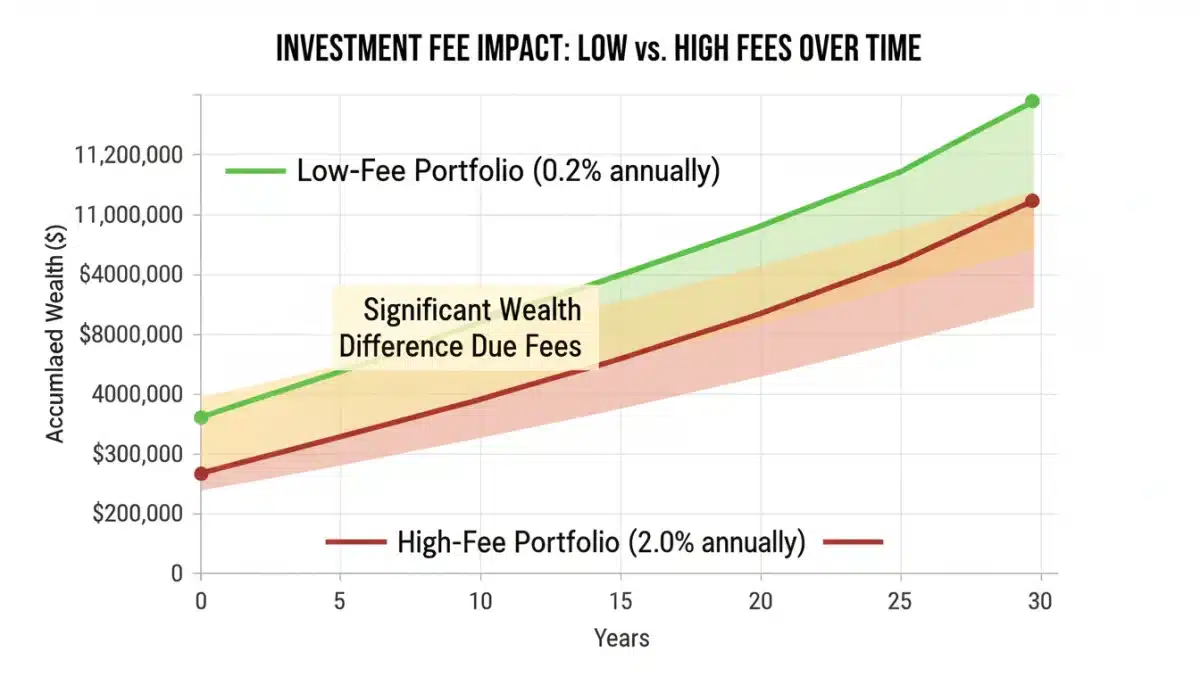
It’s vital to look beyond the headline number. A fund might boast a low expense ratio, but additional costs can subtly eat into your gains. These hidden fees, while seemingly small, compound over decades, making a substantial difference to your final portfolio value.
The True Cost of Ownership
Beyond the stated expense ratio, investors should be aware of several other potential costs. These can include trading costs within the fund, bid-ask spreads, and even certain administrative charges that aren’t always transparently bundled into the main expense ratio. Understanding each component is the first step toward effective cost management.
- Trading Costs: Even passive index funds incur trading costs as they rebalance their portfolios to match the underlying index.
- Bid-Ask Spreads: When buying or selling shares of an ETF (a common type of index fund), you encounter a bid-ask spread, which is the difference between the highest price a buyer is willing to pay and the lowest price a seller is willing to accept.
- Shareholder Fees: Some funds charge fees directly to shareholders, such as redemption fees for selling shares too soon or account maintenance fees.
Ultimately, a comprehensive understanding of all potential fees associated with your index funds is paramount. Simply comparing stated expense ratios can lead to an incomplete picture, potentially costing you valuable returns over the long run. Savvy investors scrutinize every line item, ensuring they’re not leaving money on the table due to overlooked charges.
Unmasking Trading Costs and Portfolio Turnover
While index funds are known for their passive management, they are not entirely static. To accurately track their benchmark index, they must periodically rebalance their portfolios. This rebalancing involves buying and selling securities, which incurs trading costs. These costs, though not explicitly listed in the expense ratio, are borne by the fund and, by extension, its investors.
The frequency and volume of these trades are directly related to the fund’s portfolio turnover rate. A higher turnover rate generally indicates higher trading costs, which can subtly diminish your investment returns. Understanding this dynamic is crucial for evaluating the true cost of an index fund.
Impact of Portfolio Turnover on Returns
Portfolio turnover is a measure of how frequently assets within a fund are bought and sold. Expressed as a percentage, a turnover rate of 100% means the fund replaced all its holdings within a year. While index funds typically have lower turnover than actively managed funds, some can still have significant activity, especially those tracking volatile or frequently updated indexes.
- Transaction Fees: Brokers charge commissions for buying and selling securities, which are passed on to the fund.
- Market Impact Costs: Large trades can move market prices, especially for less liquid securities, leading to less favorable execution prices.
- Tax Implications: For non-tax-advantaged accounts, frequent trading can generate capital gains distributions, which are taxable to investors.
Investors should seek funds with low portfolio turnover rates, as this generally correlates with lower implicit trading costs. These costs, though hidden from the headline expense ratio, can collectively shave off a noticeable percentage from your annual returns. Diligence in researching a fund’s turnover history is a key insider tip for maximizing your investment efficiency.
The Subtle Erosion of Bid-Ask Spreads in ETFs
Exchange-Traded Funds (ETFs), a popular form of index fund, trade like stocks on an exchange throughout the day. This liquidity comes with a cost: the bid-ask spread. When you buy an ETF, you pay the ask price, and when you sell, you receive the bid price. The difference between these two prices is the spread, and it represents a transaction cost that directly impacts your entry and exit points.
While often small on a per-share basis, these spreads can add up, especially for frequent traders or investors dealing with large sums. The impact is more pronounced for less liquid ETFs or those tracking niche markets, where spreads tend to be wider.
The bid-ask spread is a direct cost to the investor, not the fund. It’s an often-overlooked element in the total cost of ownership, yet it can be a significant drag on returns, particularly for short-term investors or those making frequent adjustments to their portfolios.
Minimizing the Impact of Spreads
To mitigate the effect of bid-ask spreads, investors can employ several strategies. Understanding market liquidity and timing your trades can make a difference. Trading during peak market hours, when volume is typically higher, can lead to narrower spreads.
- Trade during peak hours: Mid-day trading often sees higher liquidity and tighter spreads.
- Use limit orders: Instead of market orders, which execute immediately at the prevailing price, limit orders allow you to specify the maximum price you’re willing to pay or the minimum price you’re willing to accept.
- Choose highly liquid ETFs: ETFs with high trading volumes and large assets under management typically have narrower spreads.
The cumulative effect of bid-ask spreads over many transactions or large investments can be substantial. By being strategic about when and how you trade, and by selecting ETFs with favorable liquidity characteristics, you can effectively reduce this hidden cost. This attention to detail can contribute to the 0.2% annual savings target.
Scrutinizing Fund Distributions and Tax Efficiency
Even if an index fund has a low expense ratio and reasonable trading costs, its tax efficiency can significantly affect your net returns, especially in taxable accounts. Index funds, particularly those that track broad market indexes, are generally considered tax-efficient due to their low turnover. However, certain distributions can still trigger taxable events for investors.
Capital gains distributions, for instance, occur when a fund sells securities for a profit and passes those gains on to shareholders. Even if you haven’t sold any shares of the fund, you could still owe taxes on these distributions. Understanding how and when these distributions occur is vital for optimizing your after-tax returns.
Identifying Tax-Inefficient Funds
Some index funds, despite their passive nature, can be less tax-efficient than others. This often happens with funds that track more specialized or actively rebalanced indexes, or those that have experienced significant outflows, forcing them to sell appreciated assets.
- Frequent capital gains distributions: Funds that consistently distribute capital gains are less tax-efficient.
- Tracking specialized indexes: Indexes that frequently change constituents or have specific rebalancing rules can lead to higher turnover and more taxable events.
- Funds with large embedded gains: Older funds or those that have appreciated significantly might have substantial unrealized gains that could be distributed in the future.
For investors in taxable accounts, prioritizing tax-efficient funds is a critical strategy. This involves looking beyond just the expense ratio to consider a fund’s history of capital gains distributions and its underlying index’s methodology. By selecting funds with a strong track record of tax efficiency, you can effectively save on annual tax liabilities, adding to your overall investment gains.
The Overlooked Impact of Cash Drag
Cash drag is a subtle yet pervasive hidden cost in many investment funds, including index funds. It refers to the portion of a fund’s assets held in cash that is not invested in the underlying securities. While a certain amount of cash is necessary for liquidity, excessive cash holdings can dilute returns, especially during bull markets, because that cash isn’t participating in market growth.
Funds may hold cash for various reasons, such as managing redemptions, preparing for rebalancing, or simply due to operational inefficiencies. However, for an index fund whose primary goal is to replicate an index, holding too much cash can lead to underperformance relative to its benchmark.
Assessing a Fund’s Cash Position
Investors can often find information about a fund’s cash holdings in its annual or semi-annual reports. A consistently high cash percentage could be a red flag, indicating potential cash drag. Comparing the cash positions of similar index funds can help identify those that are more efficient in deploying investor capital.
- Review fund reports: Check the fund’s statement of assets and liabilities for its cash holdings.
- Compare to peers: Benchmark the cash percentage against other funds tracking the same index.
- Understand fund strategy: Some specialized indexes might inherently require more cash for rebalancing or specific investment mandates.
Minimizing cash drag is about ensuring that as much of your investment as possible is working for you. Funds that efficiently manage their cash holdings without compromising liquidity are generally more desirable. By paying attention to this often-overlooked factor, investors can gain an edge, contributing to the goal of saving 0.2% on fees annually by maximizing invested capital.
Leveraging Share Classes and Institutional Options
Many mutual funds and some ETFs offer different share classes for the same underlying portfolio. These share classes often come with varying expense ratios and fee structures. Institutional share classes, in particular, are typically designed for large investors, such as pension funds or endowments, and often boast significantly lower expense ratios than their retail counterparts.
While individual investors may not always meet the high minimum investment requirements for institutional shares, exploring options like brokerage platforms that offer access to these classes, or consolidating assets, can unlock substantial savings. This strategy requires a bit of research but can yield considerable benefits over time.
Accessing Lower-Cost Share Classes
The key to leveraging this insider tip is to actively seek out and qualify for lower-cost share classes. This might involve consolidating your investments with a single brokerage, using a financial advisor who has access to institutional shares, or exploring specific platforms that aggregate smaller investor assets to meet minimums.
- Consolidate accounts: Combining your investments into a single brokerage account might help you meet minimums for lower-cost share classes.
- Utilize financial advisors: Some advisors have access to institutional share classes that individual investors might not.
- Explore specific platforms: Certain robo-advisors or investment platforms may offer access to lower-cost fund versions.
For investors with significant assets, or those willing to explore less conventional avenues, gaining access to institutional share classes can be a game-changer. The difference in expense ratios between retail and institutional shares can easily exceed 0.2%, making this one of the most impactful strategies for reducing annual investment costs and maximizing long-term wealth accumulation.
Practical Steps to Achieve 0.2% Annual Savings
Achieving a 0.2% annual saving on your index fund fees might seem like a modest goal, but its cumulative impact over decades can be profound. This isn’t about finding a single magic bullet, but rather implementing a combination of diligent practices and informed choices. The aggregation of small efficiencies can lead to significant financial advantages.
The journey to lower fees begins with a thorough audit of your current investment portfolio. Understanding every line item, from expense ratios to trading costs and tax efficiency, is the foundation for making strategic adjustments. It’s about being an active participant in managing your passive investments.
Your Action Plan for Fee Reduction
To effectively cut down on your investment costs, consider these actionable steps. Each step, though seemingly minor, contributes to the overall goal of optimizing your portfolio’s cost structure and enhancing your long-term returns.
- Regularly review expense ratios: Fund providers often adjust fees; stay informed.
- Prioritize ETFs with high liquidity and low bid-ask spreads: Especially for active traders.
- Opt for tax-efficient funds in taxable accounts: Minimize capital gains distributions.
- Choose funds with low portfolio turnover: Reduces implicit trading costs and potential tax events.
- Explore institutional share classes: If your asset level permits, or through an advisor.
By consistently applying these insider tips and maintaining a vigilant eye on all aspects of your index fund investments, you can realistically achieve and even surpass the goal of saving 0.2% on fees annually. This proactive approach ensures that more of your money remains invested and grows, rather than being eroded by avoidable costs, ultimately bolstering your financial journey.
| Key Point | Brief Description |
|---|---|
| Expense Ratios | Look beyond the headline number for all embedded operational costs. |
| Trading Costs | High portfolio turnover in funds can lead to hidden transaction fees. |
| Bid-Ask Spreads | Transaction costs for ETFs, especially in less liquid markets. |
| Cash Drag | Uninvested cash within a fund can reduce overall returns. |
Frequently Asked Questions About Index Fund Fees
The expense ratio is the annual fee charged by a fund to cover its operating expenses, expressed as a percentage of your investment. It’s crucial because even small percentages can significantly reduce your returns over time due to compounding.
Trading costs, incurred when a fund buys and sells securities to rebalance its portfolio, are not part of the expense ratio but reduce the fund’s overall returns. Funds with higher portfolio turnover typically have greater implicit trading costs, eroding investor gains.
The bid-ask spread is the difference between the buying and selling price of an ETF. To minimize its impact, trade highly liquid ETFs during peak market hours and consider using limit orders instead of market orders for better price control.
Yes, even tax-efficient index funds can generate capital gains distributions, especially in taxable accounts, if they track specialized indexes or experience significant outflows. Reviewing a fund’s distribution history helps identify potential tax inefficiencies.
You can access lower-cost institutional share classes by consolidating your investments with one broker, utilizing a financial advisor with such access, or exploring specific platforms that aggregate assets to meet higher minimums, leading to significant fee savings.
Conclusion
Navigating the landscape of index fund fees requires a keen eye and a proactive approach. While index funds are celebrated for their low costs compared to actively managed funds, a deeper dive reveals several hidden charges that can subtly, yet significantly, impact your long-term returns. By understanding and actively addressing expense ratios, trading costs, bid-ask spreads, tax inefficiencies, and cash drag, investors can unlock substantial annual savings. Implementing the insider tips discussed, such as scrutinizing fund reports, choosing liquid ETFs, and exploring institutional share classes, empowers you to reclaim up to 0.2% or more of your investment value annually. These seemingly small percentages, compounded over decades, translate into a remarkably larger nest egg, proving that vigilance against hidden costs is a cornerstone of intelligent financial planning.