Investing in US Bonds for 2026: Maximizing 5% Yield
Anúncios
Maximizing a 5% yield by investing in US bonds for 2026 requires a strategic approach that balances potential returns with inherent market volatility, demanding careful consideration of interest rate movements and economic indicators.
In an economic landscape frequently characterized by uncertainty and dynamic shifts, the prospect of investing in US bonds for 2026 with a target of maximizing a 5% yield stands out as a compelling opportunity for many investors. As we navigate towards the mid-2020s, understanding the intricacies of the bond market, particularly in a volatile environment, becomes paramount. This guide aims to demystify the complexities, offering a clear roadmap to help you strategize your fixed-income investments effectively.
Anúncios
Understanding the US Bond Market Landscape for 2026
The US bond market is a cornerstone of global finance, offering stability and income potential. However, its performance is deeply intertwined with broader economic forces, especially as we look towards 2026. Factors such as inflation, Federal Reserve policy, and global economic growth prospects will significantly influence bond yields and prices. A thorough understanding of these drivers is the first step in formulating a successful investment strategy.
Anúncios
For investors targeting a 5% yield, the current interest rate environment and future projections are critical. The Federal Reserve’s stance on monetary policy, including potential rate hikes or cuts, will directly impact short-term and long-term bond yields. Economic data, such as employment figures and GDP growth, also provide vital clues about the direction of interest rates and, consequently, bond market performance.
Key Economic Indicators to Monitor
Staying informed about specific economic indicators can empower investors to make more strategic decisions. These indicators offer insights into the health of the economy and potential shifts in monetary policy.
- Inflation Rates: Persistent inflation can erode the purchasing power of fixed income, making higher yields more attractive. Monitoring the Consumer Price Index (CPI) and Producer Price Index (PPI) is essential.
- Federal Reserve Announcements: The Fed’s decisions on the federal funds rate directly influence the cost of borrowing and bond yields. Pay close attention to FOMC meeting minutes and statements.
- GDP Growth: Strong economic growth generally leads to higher interest rates as the Fed may seek to cool an overheating economy. Conversely, slower growth might prompt rate cuts.
- Employment Data: Low unemployment and rising wages can signal inflationary pressures, influencing the Fed’s policy trajectory.
In conclusion, the 2026 US bond market will likely be shaped by a confluence of macroeconomic factors. Diligent monitoring of these indicators will be crucial for investors aiming to achieve their target yield while mitigating risks associated with market volatility.
Identifying Opportunities for a 5% Yield
Achieving a 5% yield in the US bond market by 2026 requires a nuanced approach, as not all bonds offer the same return potential. Investors must look beyond conventional short-term Treasury bills and explore various segments of the fixed-income market to find attractive opportunities. This includes considering different types of bonds, maturities, and issuer creditworthiness.
One area to investigate is corporate bonds, particularly those issued by companies with strong credit ratings but offering slightly higher yields than government bonds due to a small credit risk premium. Municipal bonds, while often offering lower taxable yields, can provide attractive tax-equivalent yields, especially for high-income earners. Additionally, exploring bond funds or exchange-traded funds (ETFs) that focus on specific bond sectors or have active management strategies can also present opportunities.
Exploring Different Bond Types
The bond market is diverse, and understanding the characteristics of various bond types is key to identifying suitable investments for your yield target.
- Treasury Bonds: Generally considered the safest, they offer lower yields but are backed by the full faith and credit of the US government.
- Corporate Bonds: Issued by companies, these offer higher yields than Treasuries to compensate for increased credit risk. Researching the issuer’s financial health is vital.
- Municipal Bonds: Issued by state and local governments, their interest is often tax-exempt at the federal level and sometimes at state and local levels, making their tax-equivalent yield very attractive.
- Agency Bonds: Issued by government-sponsored enterprises (GSEs), these offer yields between Treasuries and corporate bonds, with varying levels of government backing.
Furthermore, assessing the current yield curve is essential. A steep yield curve, where long-term bonds offer significantly higher yields than short-term bonds, might favor longer-duration investments. Conversely, an inverted yield curve could signal impending economic slowdowns, making shorter-duration bonds more appealing. Ultimately, identifying a 5% yield involves a careful balance of risk and reward across the diverse bond landscape.
Navigating Volatility and Mitigating Risks
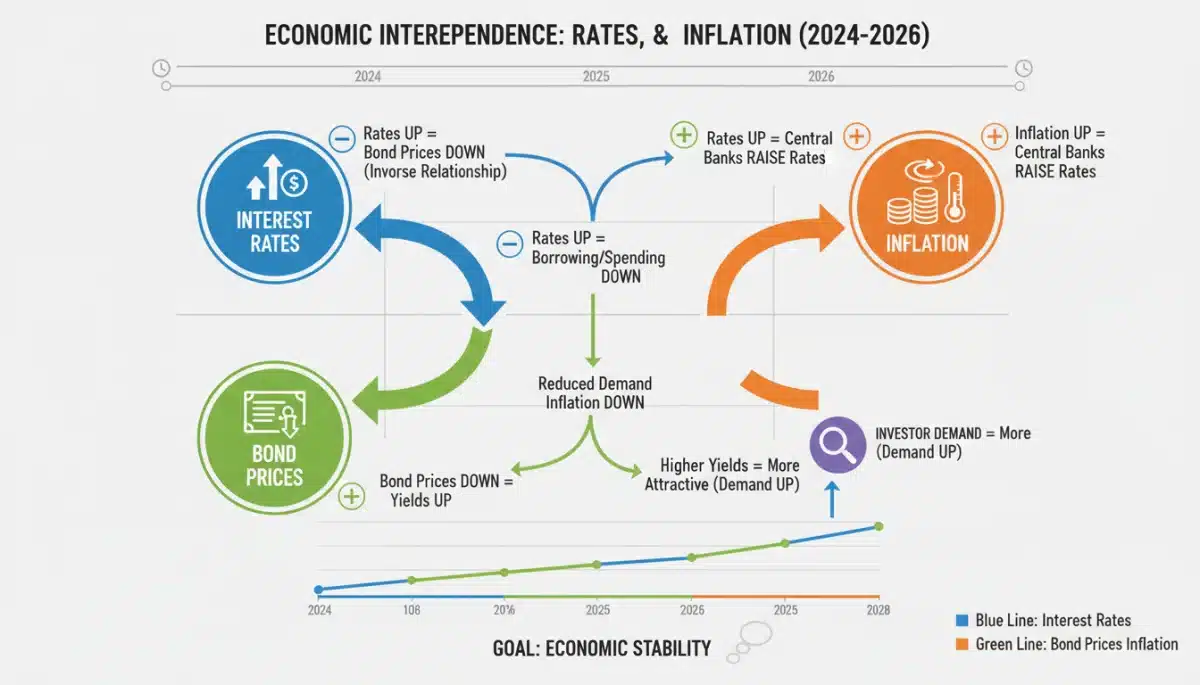
The pursuit of a 5% yield in US bonds by 2026 is inherently linked to navigating a potentially volatile market. Bond prices and yields move inversely, meaning that as interest rates rise, bond prices fall, and vice versa. This sensitivity to interest rate fluctuations, known as interest rate risk, is a primary concern for fixed-income investors. Inflation risk, where rising prices erode the real value of bond payments, also poses a significant challenge.
Credit risk, the possibility of an issuer defaulting on their payments, is another crucial factor, especially when considering corporate or municipal bonds. While US Treasury bonds are considered virtually risk-free in terms of credit, other bond types carry varying degrees of default risk. Understanding and quantifying these risks is not just about protecting capital, but also about ensuring the targeted yield is genuinely achievable and sustainable.
Strategies for Risk Management
Implementing effective risk management strategies is paramount to safeguarding your investment and achieving your yield objectives.
- Diversification: Spreading investments across different types of bonds, maturities, and issuers can help reduce overall portfolio risk.
- Duration Management: Adjusting the duration of your bond portfolio can help manage interest rate risk. Shorter-duration bonds are less sensitive to interest rate changes than longer-duration bonds.
- Credit Quality Assessment: Thoroughly research the creditworthiness of corporate and municipal bond issuers. Credit ratings from agencies like Moody’s and S&P can provide valuable insights.
- Inflation-Protected Securities (TIPS): Consider US Treasury Inflation-Protected Securities (TIPS) which adjust their principal value in line with inflation, offering protection against purchasing power erosion.
By proactively addressing these risks through strategic planning and diversification, investors can enhance their chances of reaching their 5% yield target while minimizing potential losses in a volatile market. It’s about being prepared for various market scenarios and adapting your strategy accordingly.
The Role of the Federal Reserve and Monetary Policy
The Federal Reserve plays an undeniable and often dominant role in shaping the US bond market. Its monetary policy decisions, particularly concerning the federal funds rate, directly influence the short-term interest rates which then ripple through longer-term bond yields. As we look towards 2026, anticipating the Fed’s actions will be crucial for investors seeking to optimize their bond portfolios for a 5% yield.
The Fed’s dual mandate of maximizing employment and maintaining price stability guides its decisions. If inflation remains elevated, the Fed might continue a hawkish stance, potentially leading to higher bond yields. Conversely, signs of economic slowdown or disinflation could prompt a more dovish approach, which might put downward pressure on yields. Understanding the Fed’s communication, often through speeches by its governors and the minutes of Federal Open Market Committee (FOMC) meetings, provides invaluable clues.
Impact of Quantitative Easing and Tightening
Beyond the federal funds rate, the Fed’s balance sheet policies, such as quantitative easing (QE) and quantitative tightening (QT), also significantly affect the bond market.
- Quantitative Easing (QE): Involves the Fed buying large quantities of government bonds and other securities to lower long-term interest rates and stimulate economic activity. This typically drives bond prices up and yields down.
- Quantitative Tightening (QT): The opposite of QE, where the Fed reduces its bond holdings, allowing them to mature without reinvestment or actively selling them. This tends to push bond prices down and yields up.
The trajectory of the Fed’s balance sheet will be a key determinant of bond market conditions leading up to and into 2026. Investors must consider how these large-scale asset purchase and reduction programs could impact their ability to achieve and maintain a 5% yield. Monitoring the Fed’s stance on these tools is as important as tracking interest rate targets.
Building a Diversified Bond Portfolio for 2026
A well-diversified bond portfolio is not merely a recommendation; it’s a necessity when aiming for a specific yield like 5% in a volatile market. Diversification helps to mitigate various risks, ensuring that no single bond or sector disproportionately impacts your overall returns. It involves spreading investments across different types of bonds, maturities, credit qualities, and even geographical regions, although our focus here remains on US bonds.
For a target yield of 5%, a blend of investment-grade corporate bonds, potentially some high-yield (junk) bonds for enhanced return (albeit with higher risk), and perhaps a strategic allocation to municipal bonds for tax advantages could be considered. The specific allocation will depend on an individual’s risk tolerance, time horizon, and overall financial goals. The goal is to create a portfolio whose average yield meets or exceeds the 5% target while keeping risk within acceptable bounds.
Elements of a Strong Bond Portfolio
To construct a robust bond portfolio, consider these key components:
- Maturity Laddering: Investing in bonds with staggered maturity dates can help manage interest rate risk and provide regular cash flow. As bonds mature, the proceeds can be reinvested at prevailing rates.
- Sector Diversification: Don’t put all your capital into one type of bond. Mix Treasury, corporate, municipal, and agency bonds to benefit from different market dynamics.
- Credit Quality Mix: While focusing on investment-grade bonds is generally safer, a small allocation to higher-yielding, below-investment-grade bonds (junk bonds) can boost overall portfolio yield, provided the investor understands and accepts the increased credit risk.
- Geographic Consideration (for broader portfolios): Although the focus is on US bonds, for truly global diversification, one might consider international bonds, but that falls outside the immediate scope of this guide.
Ultimately, building a diversified bond portfolio for 2026 is about creating resilience. It allows you to capture opportunities for a 5% yield while simultaneously protecting against the inevitable market fluctuations that characterize the financial world. Regular review and rebalancing of the portfolio will also be essential to adapt to changing market conditions.
Tax Implications and After-Tax Yields
When discussing a target of maximizing a 5% yield from investing in US bonds for 2026, it is absolutely critical to consider the impact of taxes. A 5% pre-tax yield can look significantly different after federal, state, and local taxes are applied. The effective, or after-tax, yield is what truly matters to an investor’s bottom line. Various types of bonds have different tax treatments, and understanding these nuances can be a game-changer for maximizing your actual return.
For example, interest earned on US Treasury bonds is exempt from state and local income taxes, though it is subject to federal income tax. Corporate bond interest is generally taxable at all levels. Municipal bonds, on the other hand, often offer interest that is exempt from federal income tax, and sometimes also from state and local taxes if the bond is issued in the investor’s state of residence. This preferential tax treatment can make a seemingly lower-yielding municipal bond more attractive on an after-tax basis than a higher-yielding taxable bond.
Optimizing for After-Tax Returns
Strategic choices regarding bond types can significantly enhance your after-tax yield:
- Municipal Bonds for High-Income Earners: For individuals in higher tax brackets, municipal bonds can be particularly effective. A 3% tax-exempt municipal bond might be equivalent to a 5% taxable bond, depending on your tax bracket.
- Tax-Advantaged Accounts: Holding taxable bonds within retirement accounts like 401(k)s or IRAs allows earnings to grow tax-deferred or tax-free, delaying or eliminating tax obligations on interest income.
- Tax-Loss Harvesting: While more applicable to bonds traded on the secondary market that have declined in value, selling bonds at a loss can offset capital gains and potentially a limited amount of ordinary income.
A comprehensive investment strategy for 2026 must therefore include a thorough analysis of the tax implications of each bond investment. Collaborating with a financial advisor who understands tax planning can help optimize your portfolio for the highest possible after-tax yield, ensuring that your efforts to achieve a 5% yield truly translate into greater financial benefit.
Expert Insights and Future Outlook for 2026
As we project towards 2026, the future outlook for US bonds, particularly for those targeting a 5% yield, remains a subject of intense discussion among financial experts. While predicting the market with absolute certainty is impossible, various economists and strategists offer valuable perspectives that can help refine investment strategies. These insights often coalesce around expected inflation trajectories, the Federal Reserve’s long-term policy intentions, and geopolitical stability, all of which will undeniably influence bond yields.
Many experts anticipate that while interest rates may not continue their rapid ascent, they are unlikely to return to the ultra-low levels seen in the pre-pandemic era. This suggests that opportunities for higher yields, potentially around the 5% mark, could persist, especially in certain segments of the market. However, the path to 2026 is unlikely to be smooth, with intermittent periods of volatility expected as economic data evolves and global events unfold. The consensus often points to a need for agility and a well-defined strategy.
Key Predictions and Recommendations
Synthesizing expert opinions reveals several common themes and strategic recommendations for the coming years:
- Cautious Optimism for Yields: Many anticipate that the ‘higher for longer’ interest rate narrative might continue, providing a favorable environment for fixed-income investors seeking elevated yields.
- Focus on Credit Quality: In a volatile environment, prioritizing investment-grade bonds is frequently advised to minimize default risk, even if it means slightly lower yields than speculative-grade debt.
- Active Management: Passive bond investing might not be sufficient to capture a 5% yield consistently. Active management, including tactical allocation shifts, could be more effective.
- Inflation Hedging: Continued attention to inflation-protected securities (TIPS) as a hedge against unexpected price increases is a recurring recommendation.
The journey to maximizing a 5% yield in US bonds by 2026 demands a blend of fundamental analysis, risk management, and an informed perspective on the broader economic and monetary policy landscape. Staying attuned to expert insights and being prepared to adapt your strategy will be crucial for success in a dynamic market environment.
| Key Aspect | Description for 2026 Bonds |
|---|---|
| Yield Target | Strategies to achieve a 5% yield amidst market fluctuations. |
| Market Volatility | Understanding and mitigating interest rate and inflation risks. |
| Diversification | Importance of spreading investments across bond types and maturities. |
| Tax Efficiency | Maximizing after-tax returns through strategic bond choices and accounts. |
Frequently Asked Questions About US Bond Investing for 2026
The primary risks include interest rate risk, where rising rates cause bond prices to fall, and inflation risk, which erodes the purchasing power of fixed payments. Credit risk is also a concern for corporate and municipal bonds.
Achieving a 5% yield often involves a diversified approach, combining investment-grade corporate bonds, potentially some high-yield bonds, and strategically utilizing municipal bonds for tax advantages. Monitoring market conditions is also crucial.
The Federal Reserve’s monetary policy, particularly changes to the federal funds rate and quantitative easing/tightening, directly influences bond yields. Their actions can cause yields to rise or fall across the market.
Yes, municipal bonds can be excellent for maximizing after-tax yield, especially for high-income earners, as their interest is often exempt from federal, and sometimes state and local, income taxes. This makes their effective yield very attractive.
Both have merits. Bond ETFs offer diversification and liquidity, while individual bonds provide predictable cash flow and known maturity dates. Your choice depends on your investment goals, risk tolerance, and desire for active management.
Conclusion
Successfully investing in US bonds for 2026 with a goal of maximizing a 5% yield demands a thoughtful, informed, and adaptive strategy. The journey involves more than just selecting bonds; it requires a deep understanding of economic indicators, Federal Reserve policies, and effective risk management techniques. By diversifying portfolios, meticulously assessing tax implications, and staying attuned to expert insights, investors can navigate the inherent volatility of the bond market. While the pursuit of a specific yield target presents challenges, a well-executed plan can position investors to achieve their financial objectives in the evolving fixed-income landscape.