Unlocking Preferred Stock Dividends: 6%+ Yields in 2026

Anúncios
Investors can unlock substantial income through preferred stock dividends by strategically identifying securities with 6%+ yields in 2026, understanding market nuances, and employing robust selection criteria to mitigate risks and enhance portfolio stability.
Anúncios
Unlocking Preferred Stock Dividends: An Insider’s Guide to 6%+ Yields in 2026
In the dynamic landscape of financial markets, understanding how to maximize investment income is paramount. This guide delves into the world of preferred stock dividends, offering an insider’s perspective on how to potentially achieve and sustain 6%+ yields by 2026. For those seeking stable income streams, preferred stocks present a unique and often overlooked opportunity.
Anúncios
Understanding Preferred Stocks and Their Appeal
Preferred stocks represent a hybrid security, blending characteristics of both common stocks and bonds. They offer fixed dividend payments, similar to bond coupons, but trade on exchanges like common stocks. Their appeal lies primarily in these consistent income streams, which are often higher than those offered by common stock dividends.
Unlike common stock dividends, preferred dividends are typically cumulative, meaning if a company misses a payment, it must pay preferred shareholders all missed dividends before paying common shareholders. This provides an added layer of security for income-focused investors.
Key Features of Preferred Stock
Preferred stocks come with several distinguishing features that make them attractive to certain investors. Understanding these characteristics is crucial for successful investment.
- Fixed Dividend Payments: Most preferred stocks pay a fixed dividend rate, providing predictable income. This makes them ideal for retirement planning or supplementing regular income.
- Priority in Liquidation: In the event of a company’s bankruptcy or liquidation, preferred shareholders have a higher claim on assets than common shareholders, though still subordinate to bondholders.
- No Voting Rights: Generally, preferred shareholders do not have voting rights in corporate matters, a trade-off for their dividend priority and stability.
- Callability: Many preferred stocks are callable, meaning the issuer can repurchase them at a specified price after a certain date. This is a crucial factor to consider when assessing long-term yield potential.
The inherent stability and predictable income of preferred stocks make them a cornerstone for many income-oriented portfolios. Their unique position in a company’s capital structure offers a balance of risk and reward that can be highly beneficial.
Analyzing Market Conditions for 6%+ Yields in 2026
Achieving 6%+ yields from preferred stock dividends by 2026 requires a keen understanding of prevailing market conditions and future economic trends. Interest rates, inflation, and corporate credit quality are all significant factors that influence preferred stock pricing and yields.
As we look towards 2026, the trajectory of interest rates will be a primary driver. Generally, when interest rates rise, the prices of existing fixed-income securities, including preferred stocks, tend to fall, pushing their yields higher. Conversely, falling interest rates can make existing preferred stocks with higher fixed dividends more attractive, increasing their prices and lowering their yields.
Interest Rate Environment and Its Impact
The Federal Reserve’s monetary policy will play a pivotal role. Anticipating whether the Fed will continue to tighten or begin to ease will be critical for preferred stock investors. A sustained period of higher interest rates could create opportunities for higher yields, but also introduce price volatility.
- Rising Rate Scenarios: In a rising rate environment, newly issued preferred stocks often come with higher dividend rates to attract investors. Existing preferred stocks with lower fixed rates may see their market prices decline, increasing their effective yield to maturity.
- Falling Rate Scenarios: If interest rates decline, callable preferred stocks are at a higher risk of being called by the issuer, as they can refinance at a lower cost. This can cut short an investor’s income stream.
Inflation also erodes the purchasing power of fixed dividend payments. Investors must consider the real yield after accounting for inflation. Companies with strong balance sheets and consistent earnings are better positioned to maintain dividend payments even under inflationary pressures.
Evaluating these macroeconomic factors allows investors to position themselves strategically, identifying preferred stock opportunities that align with their income goals and risk tolerance for 2026.
Strategies for Identifying High-Yield Preferred Stocks
Successfully identifying preferred stocks that offer 6%+ yields by 2026 involves a combination of fundamental analysis and market awareness. It’s not just about chasing the highest yield, but rather finding sustainable yields from fundamentally sound companies.
One effective strategy is to screen for preferred stocks issued by companies in stable, regulated industries such as utilities, banking, and insurance. These sectors often have more predictable cash flows, which supports consistent dividend payments. However, even within these sectors, due diligence is essential.
Key Selection Criteria
When searching for preferred stocks, several criteria should guide your selection process:
- Issuer Credit Quality: Assess the financial health of the issuing company. Look at credit ratings from agencies like S&P, Moody’s, or Fitch. A strong credit rating indicates a lower risk of dividend suspension or default.
- Yield to Call vs. Yield to Maturity: Understand the difference. If a preferred stock is callable, the yield to call (YTC) is more relevant if it’s likely to be called. The yield to maturity (YTM) is applicable if it’s held until a specified maturity date or indefinitely if perpetual. Focus on the lower of the two to be conservative.
- Cumulative vs. Non-Cumulative: Prioritize cumulative preferred stocks. If the company skips a dividend payment, they are obligated to pay all missed dividends before common shareholders receive anything. This offers greater protection for income investors.
- Fixed-to-Floating Rate: Some preferred stocks start with a fixed dividend and then switch to a floating rate tied to an interest rate benchmark (e.g., LIBOR or SOFR). These can offer protection in rising interest rate environments.
Additionally, pay attention to the stock’s trading volume and liquidity. Highly liquid preferred stocks are easier to buy and sell without significantly impacting their price. This flexibility is valuable, especially if market conditions change.
Risks and Considerations for Preferred Stock Investors
While preferred stock dividends offer attractive income potential, they are not without risks. A comprehensive understanding of these risks is crucial for making informed investment decisions and protecting your capital.
One primary risk is interest rate sensitivity. As discussed, rising interest rates can depress preferred stock prices. This means that while your dividend income may be stable, the market value of your principal investment can fluctuate. Duration risk, which measures a security’s sensitivity to interest rate changes, is an important concept to grasp.
Navigating Potential Pitfalls
Several other factors warrant careful consideration:
- Call Risk: Many preferred stocks are callable. If interest rates fall, companies may call their preferred shares to reissue new ones at a lower dividend rate. This can force investors to reinvest their capital at lower prevailing yields, potentially disrupting their income stream.
- Credit Risk: The financial health of the issuing company directly impacts its ability to pay dividends. A deterioration in the issuer’s credit quality can lead to dividend suspensions or even default, resulting in capital loss. Diversification across multiple issuers can help mitigate this risk.
- Liquidity Risk: Some preferred stocks, especially those from smaller issuers or with unique terms, may trade less frequently. This can make it difficult to sell your shares quickly without affecting the price. Always check the average daily trading volume.
- Inflation Risk: Fixed dividend payments, while stable, can lose purchasing power over time due to inflation. This is a particular concern for long-term investors relying solely on fixed income.
It is important to remember that preferred stocks are generally subordinate to bonds in a company’s capital structure. This means bondholders get paid first in the event of bankruptcy. While preferred shareholders have priority over common shareholders, it’s still a risk to acknowledge.
Building a Diversified Preferred Stock Portfolio
Diversification is a cornerstone of prudent investing, and it applies equally to preferred stock portfolios. Relying on a single issuer or a narrow sector exposes investors to unnecessary concentration risk. A well-diversified portfolio helps mitigate the impact of adverse events affecting any single holding.
Building a diversified preferred stock portfolio involves spreading investments across different issuers, industries, and preferred stock types. This approach helps to smooth out returns and reduce overall portfolio volatility, even when aiming for high yields like 6%+.
Strategies for Effective Diversification
Consider these approaches when constructing your preferred stock portfolio:
- Industry Diversification: Invest in preferred stocks from various sectors, such as financial institutions, utilities, real estate investment trusts (REITs), and industrials. This reduces the impact if one industry faces headwinds.
- Issuer Diversification: Avoid putting too much capital into preferred stocks from a single company. Even strong companies can face unexpected challenges. Holding preferred stocks from multiple issuers spreads this risk.
- Preferred Stock Type Diversification: Mix different types of preferred stocks. Include cumulative and non-cumulative (though cumulative is generally preferred), fixed-rate and fixed-to-floating rate preferreds. This can help navigate different interest rate environments.
- Geographic Diversification: While the focus here is on the U.S. market, for a broader portfolio, consider preferred stocks from international issuers, though this introduces currency and political risks.
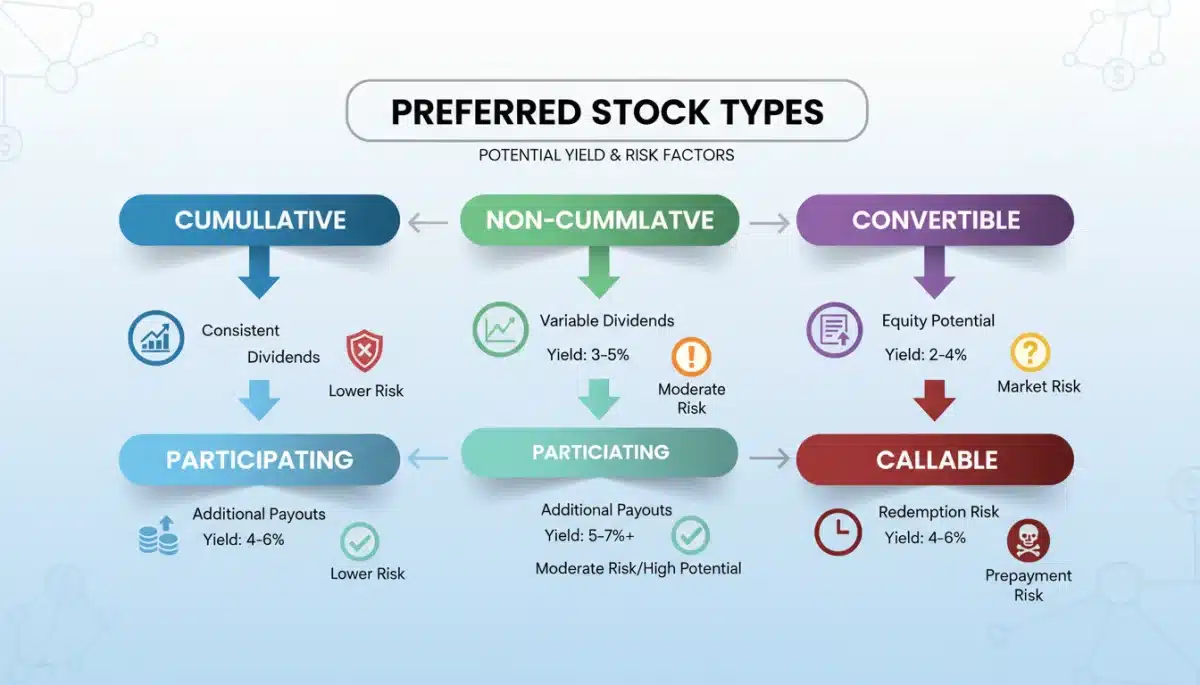
Furthermore, consider staggering call dates if you invest in callable preferreds. This way, if one preferred stock is called, you won’t have all your capital returned at once, allowing for more flexible reinvestment. Regularly reviewing and rebalancing your portfolio ensures it remains aligned with your risk tolerance and income objectives.
The Outlook for Preferred Stock Dividends in 2026
As we project towards 2026, several trends could shape the landscape for preferred stock dividends and the pursuit of 6%+ yields. The interplay of economic growth, inflation, and central bank policies will be paramount in determining opportunities and challenges for income investors.
Economists generally anticipate a period of more normalized interest rates compared to the ultra-low rates of the past decade. This environment could be favorable for preferred stock investors, as higher benchmark rates may lead to higher coupon rates on new preferred issuances or more attractive entry points for existing securities. However, this also implies a need for careful management of interest rate risk for existing holdings.
Anticipated Trends and Opportunities
Several factors suggest a promising, yet nuanced, outlook for preferred stock dividends:
- Sustained Demand for Income: With an aging population and continued demand for stable income streams, preferred stocks are likely to remain a popular choice for investors. This consistent demand can provide a floor for prices.
- Corporate Issuance: Companies may continue to utilize preferred stock as a financing tool, especially if equity markets become more volatile or if they seek to optimize their capital structure without diluting common shareholders too much. New issuances could offer attractive yields.
- Sector-Specific Performance: Certain sectors, like financial institutions, which are major issuers of preferred stock, will be influenced by regulatory changes and the broader economic health of the U.S. economy. A robust banking sector generally translates to reliable preferred dividends.
- Technological Advancements: While not directly impacting preferred dividends, technological advancements in financial analysis tools can empower investors to better screen for and evaluate preferred stock opportunities, enhancing their ability to find those 6%+ yields efficiently.
The key to success in 2026 will be adaptability and a proactive approach to research. Monitoring economic indicators, corporate earnings, and central bank communications will allow investors to adjust their strategies and capitalize on emerging opportunities in the preferred stock market. The potential for strong, stable income remains a significant draw.
Maximizing Your Preferred Stock Returns
Beyond simply identifying high-yield preferred stocks, maximizing your overall returns involves strategic management of your portfolio and a keen eye on market dynamics. It’s about optimizing both income and potential capital appreciation, while carefully managing risks.
One approach is to consider tax implications. Preferred stock dividends are often qualified dividends, meaning they are taxed at lower capital gains rates for eligible investors. Understanding your individual tax situation and structuring your investments accordingly can significantly enhance your after-tax returns.
Advanced Investment Tactics
To truly maximize returns, consider these advanced tactics:
- Laddering Preferreds: Similar to bond ladders, you can create a preferred stock ladder by investing in preferreds with different call dates or maturity dates. This helps mitigate call risk and provides a more predictable stream of reinvestment opportunities.
- Monitoring Credit Spreads: Keep an eye on credit spreads, which are the difference in yield between preferred stocks of varying credit qualities. Widening spreads can indicate increasing credit risk in the market, while tightening spreads might suggest improving economic conditions.
- Reinvestment Strategies: Develop a disciplined approach to reinvesting your dividends. Compounding returns can significantly boost your long-term wealth. Whether reinvesting into more preferred shares or diversifying into other assets, a plan is crucial.
- Utilizing Preferred Stock ETFs/Mutual Funds: For investors who prefer a more hands-off approach or desire instant diversification, preferred stock exchange-traded funds (ETFs) or mutual funds can be an excellent option. These funds hold a basket of preferred stocks, spreading risk and often providing professional management.
Furthermore, staying informed about company-specific news and industry trends is vital. A sudden change in a company’s financial outlook could impact its preferred stock dividends. Regular review and adjustment of your preferred stock holdings are essential to ensure they continue to meet your income and return objectives.
The Future of Preferred Stock Investing
The landscape for preferred stock investing is continuously evolving, influenced by global economic shifts, regulatory changes, and technological advancements. Looking ahead, the role of preferred stocks in diversified portfolios is likely to remain significant, particularly for those prioritizing income and capital preservation.
One emerging trend is the increasing focus on environmental, social, and governance (ESG) factors in investment decisions. While less prevalent for preferred stocks compared to common equities, some issuers are beginning to incorporate ESG considerations into their overall corporate strategy, which could indirectly influence the attractiveness and long-term stability of their preferred offerings.
Innovation and Adaptation
The future may also bring innovations in preferred stock structures:
- Hybrid Structures: Expect to see more complex hybrid structures that combine features of traditional preferreds with other financial instruments, potentially offering new risk-reward profiles.
- Digitalization: The increasing digitalization of financial markets could lead to more efficient trading platforms and better data analytics for preferred stock investors, making it easier to identify opportunities and manage portfolios.
- Regulatory Environment: Changes in financial regulations, especially for banks and insurance companies, could impact the issuance and terms of preferred stocks. Staying abreast of these regulatory shifts will be important.
For investors aiming for 6%+ yields in 2026 and beyond, the ability to adapt to these changes will be key. Continuous learning, coupled with a disciplined investment approach, will enable them to navigate the complexities of the preferred stock market successfully. The fundamental appeal of stable, high-income streams from preferred stock dividends is likely to endure, making them a valuable component of a well-rounded investment strategy.
| Key Aspect | Brief Description |
|---|---|
| Yield Focus | Targeting preferred stocks with 6%+ dividend yields by 2026 for substantial income. |
| Market Analysis | Understanding interest rate trends and economic forecasts to identify opportune entry points. |
| Risk Management | Mitigating call, credit, and interest rate risks through diversification and careful selection. |
| Diversification | Spreading investments across various issuers and sectors to enhance portfolio resilience. |
Frequently Asked Questions About Preferred Stock Dividends
Preferred stocks offer fixed, often higher, dividend payments compared to common stocks, providing predictable income streams. They also hold priority over common stock in dividend payments and asset claims during liquidation, making them attractive for income-focused investors seeking stability.
Interest rates significantly affect preferred stock yields. When rates rise, existing preferred stock prices typically fall, increasing their effective yield. Conversely, falling rates can make high-yield preferreds more attractive, potentially leading to price increases but also higher call risk.
Call risk is the possibility that an issuer repurchases preferred shares, often when interest rates drop. Investors can manage this by checking call dates and prices, focusing on preferreds with longer call protection, or diversifying across multiple preferred stocks with staggered call dates to mitigate reinvestment risk.
No, preferred stock dividends are not guaranteed. While they have priority over common stock dividends, a company facing severe financial distress may suspend preferred dividend payments. Cumulative preferreds offer more protection as missed payments must be paid eventually, unlike non-cumulative ones.
Identifying sustainable 6%+ yields involves analyzing the issuer’s credit quality, financial stability, and industry outlook. Look for companies with strong balance sheets and consistent earnings. Also, assess the preferred stock’s specific terms, such as cumulative features and call provisions, to ensure the yield is robust and likely to persist.
Conclusion
Navigating the world of preferred stock dividends to achieve 6%+ yields by 2026 requires a blend of astute market analysis, diligent research, and strategic portfolio management. While the allure of stable and high income is strong, understanding the inherent risks—such as interest rate sensitivity, call risk, and credit risk—is paramount. By prioritizing diversification, selecting financially sound issuers, and staying informed about macroeconomic trends, investors can position themselves to unlock significant income potential. The disciplined pursuit of knowledge and a proactive investment approach will be the keys to success in this specialized segment of the financial markets.