Building a Diversified Bond Portfolio in 2026: 5-Asset Classes
Anúncios
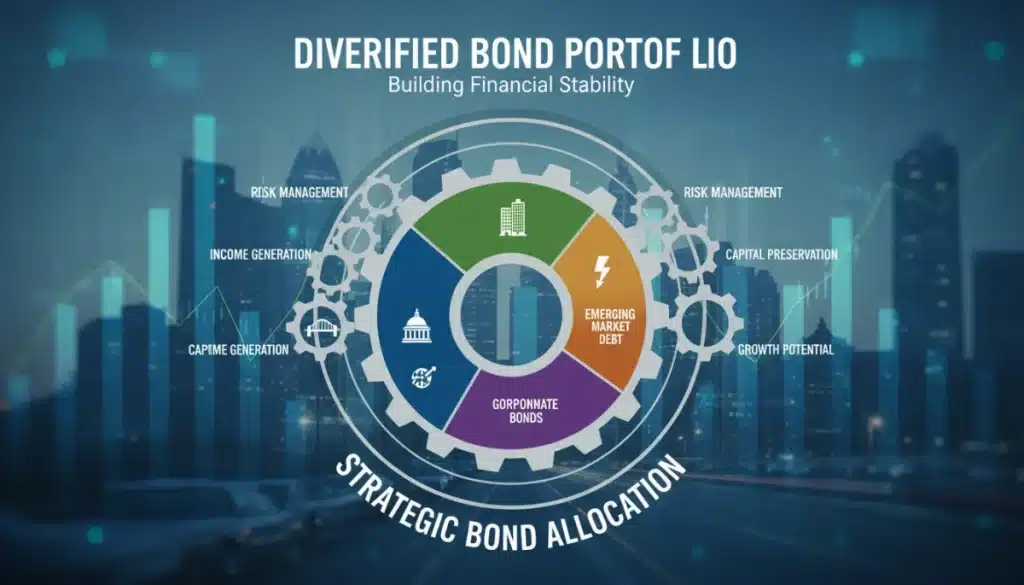
Building a diversified bond portfolio in 2026 requires a strategic 5-asset class approach to navigate market complexities, aiming for stability, income, and capital preservation amidst evolving economic landscapes.
Anúncios
In an ever-evolving financial landscape, the art of building a diversified bond portfolio in 2026 is more crucial than ever for investors seeking stability and income. This article delves into a practical 5-asset class approach designed to fortify your investments against market volatility and ensure long-term financial health. Get ready to explore actionable strategies that can redefine your fixed-income allocations.
Anúncios
Understanding the Need for Bond Diversification in 2026
The year 2026 presents a unique set of economic challenges and opportunities, making thoughtful bond diversification indispensable. Traditional fixed-income strategies may no longer suffice in an environment influenced by fluctuating interest rates, inflation concerns, and geopolitical shifts. A well-diversified bond portfolio acts as a crucial ballast, protecting capital and providing consistent income streams when other asset classes might falter.
Diversification within bonds means spreading your investments across various types of fixed-income securities, reducing the impact of any single bond or sector performing poorly. This strategic allocation helps to smooth out returns and lower overall portfolio risk, aligning with the core principles of sound financial planning. It’s not just about owning different bonds; it’s about owning bonds that react differently to various market conditions, thus creating a more resilient portfolio.
Why Traditional Approaches Fall Short
- Interest Rate Sensitivity: Many traditional bond funds are highly sensitive to interest rate changes, which can lead to significant capital losses during periods of rising rates.
- Inflation Erosion: Long-duration bonds can suffer from inflation, as the purchasing power of future fixed payments diminishes over time.
- Credit Risk Concentration: Over-reliance on a single type of issuer (e.g., corporate bonds) can expose investors to undue credit risk during economic downturns.
By acknowledging these shortcomings, investors can proactively seek broader diversification. The goal is to construct a portfolio that can weather multiple economic scenarios, providing a reliable source of income and capital preservation. This proactive stance is what distinguishes successful fixed-income investing in the modern era.
Ultimately, the need for bond diversification in 2026 stems from the desire to achieve more predictable returns and safeguard wealth. It’s about building a robust financial foundation that can withstand unforeseen market turbulence, ensuring that your investment objectives remain attainable.
Asset Class 1: U.S. Treasury Bonds – The Foundation of Stability
U.S. Treasury bonds are often considered the bedrock of any diversified bond portfolio due to their unparalleled safety and liquidity. Issued by the U.S. government, these bonds carry virtually no credit risk, making them a cornerstone for investors prioritizing capital preservation. In 2026, their role remains vital as a safe haven asset, especially during periods of market uncertainty.
Treasury bonds come in various maturities, from short-term Treasury bills to long-term Treasury bonds, allowing investors to tailor their exposure to interest rate risk. Their inverse relationship with equity markets often means they perform well when stocks decline, providing a crucial hedge within a broader investment portfolio. This counter-cyclical behavior is a key reason for their inclusion in a diversified strategy.
Key Characteristics of Treasury Bonds
- Credit Quality: Highest possible credit rating, backed by the full faith and credit of the U.S. government.
- Liquidity: Highly liquid market, allowing for easy buying and selling.
- Role in Portfolio: Primary function is capital preservation and reducing overall portfolio volatility.
While yields on Treasury bonds might sometimes appear lower compared to other fixed-income options, their risk-reducing qualities are invaluable. They serve as a stabilizing force, providing a predictable income stream and acting as a defensive asset during economic contractions. For investors looking to anchor their bond portfolio with maximum security, U.S. Treasuries are an indispensable component.
Their inclusion in a 2026 portfolio is not merely about returns, but about creating a resilient base that can absorb shocks from other, more volatile asset classes. This foundational stability is essential for achieving long-term financial goals with confidence.
Asset Class 2: Investment-Grade Corporate Bonds – Balancing Risk and Return
Moving beyond government-backed securities, investment-grade corporate bonds offer a compelling blend of higher yields than Treasuries with relatively strong credit quality. These bonds are issued by established corporations with solid financial health, making them a suitable option for investors seeking enhanced income without taking on excessive risk. In 2026, they represent a vital component for optimizing the risk-reward profile of a diversified bond portfolio.
The credit ratings of investment-grade corporate bonds, typically BBB- or higher by agencies like S&P and Moody’s, indicate a low probability of default. This allows investors to earn a ‘credit spread’ – an additional yield above comparable Treasury bonds – as compensation for the slightly elevated credit risk. This spread can significantly boost overall portfolio income, especially in a low-interest-rate environment.
Factors to Consider with Corporate Bonds
- Credit Research: While investment-grade, understanding the financial health of the issuing company is still important.
- Sector Diversification: Spreading investments across different industries can mitigate sector-specific risks.
- Yield Advantage: Offers higher income potential compared to government bonds.
The performance of investment-grade corporate bonds is often tied to the overall economic health and corporate earnings. During periods of economic expansion, their values tend to rise, and their yields remain attractive. Conversely, during economic downturns, credit spreads can widen, and some bonds may experience price declines. Therefore, careful selection and ongoing monitoring are essential.
By strategically allocating a portion of your portfolio to investment-grade corporate bonds, you can enhance your income generation while still maintaining a strong emphasis on credit quality. This asset class plays a crucial role in providing a balanced approach to fixed-income investing, sitting comfortably between the absolute safety of Treasuries and the higher risk/reward of other bond types.

Asset Class 3: High-Yield Bonds – Strategic Income Enhancement
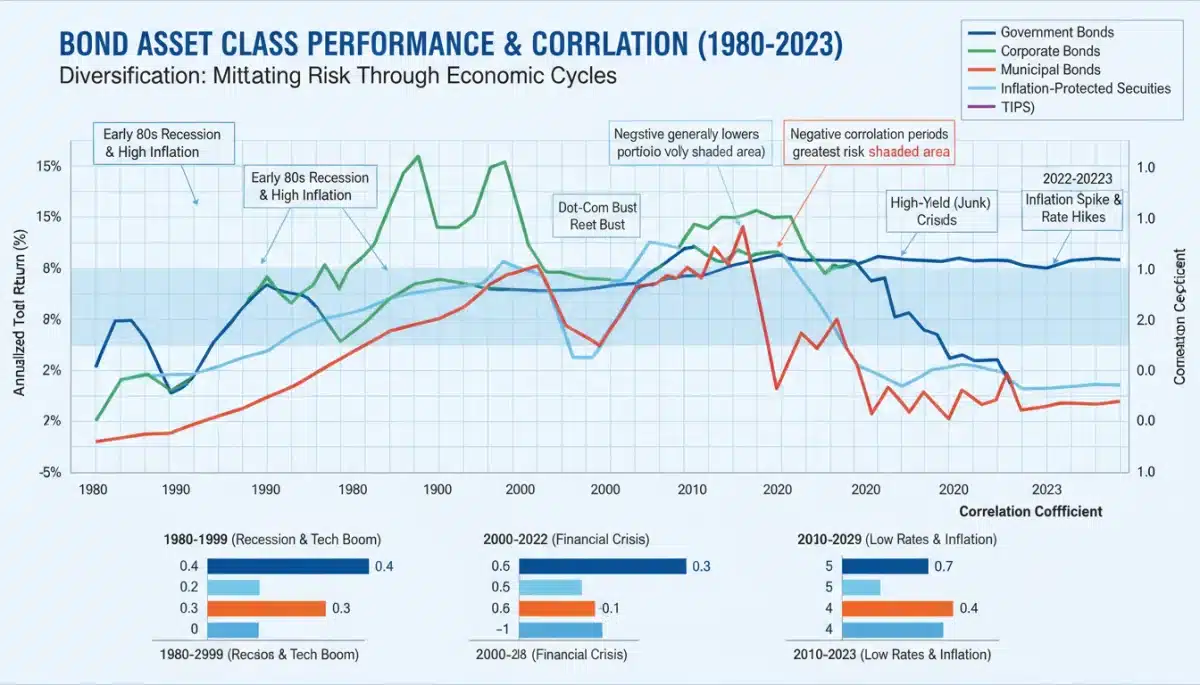
High-yield bonds, often referred to as ‘junk bonds,’ represent a more aggressive component of a diversified bond portfolio, offering significantly higher yields in exchange for increased credit risk. These bonds are issued by companies with lower credit ratings (BB+ or below), indicating a higher probability of default compared to investment-grade corporate bonds. In 2026, a carefully managed allocation to high-yield bonds can provide substantial income enhancement, but it requires a discerning approach.
The appeal of high-yield bonds lies in their attractive income potential, which can significantly boost the overall yield of a fixed-income portfolio. However, investors must be prepared for greater price volatility and the potential for capital losses, particularly during economic contractions or periods of market stress. Their performance tends to be more correlated with equity markets than with traditional fixed income, making them a ‘hybrid’ asset class.
Managing Risk in High-Yield Investments
- Diversification: Spreading investments across many different high-yield issuers and sectors is paramount.
- Credit Analysis: Thorough research into the financial health and debt servicing capacity of each issuer is critical.
- Economic Outlook: High-yield bonds perform best in strong economic environments with low default rates.
Given their higher risk profile, high-yield bonds should typically constitute a smaller portion of a conservative bond portfolio. However, for investors with a greater risk tolerance and a desire for enhanced income, they can play a valuable role in boosting overall returns. Active management and a focus on quality within the high-yield universe are essential to mitigate potential downsides.
When incorporating high-yield bonds, it’s crucial to view them as a strategic tool for income enhancement rather than a primary source of stability. Their inclusion should be balanced against the more conservative elements of the portfolio, ensuring that the overall risk remains within acceptable limits for the investor’s objectives.
Asset Class 4: Municipal Bonds – Tax-Advantaged Income
Municipal bonds, or ‘munis,’ are debt securities issued by state and local governments to finance public projects such as schools, hospitals, and infrastructure. Their distinctive feature, and primary appeal, is that the interest income they generate is often exempt from federal income tax and, in many cases, from state and local taxes for residents of the issuing state. This tax-advantaged status makes them particularly attractive for high-income earners in 2026.
Munis come in two main forms: general obligation (GO) bonds, backed by the full faith and credit and taxing power of the issuer, and revenue bonds, which are repaid from the revenue generated by the specific project they finance. While generally considered safe, their credit quality can vary significantly depending on the issuer’s financial health. Therefore, careful due diligence is necessary to assess the underlying credit risk.
Benefits of Municipal Bonds
- Tax Exemption: Federal tax exemption on interest income, often state and local as well.
- Diversification: Offers diversification from corporate and Treasury bonds, as their risks are tied to municipal finances.
- Steady Income: Provides a reliable stream of tax-free income, particularly valuable for those in higher tax brackets.
The tax-equivalent yield of municipal bonds can be substantially higher than their nominal yield, especially for investors in top tax brackets. This calculation is crucial for comparing munis to taxable bonds. For example, a 3% tax-free municipal bond might be equivalent to a 5% taxable bond for someone in a 40% tax bracket. This makes them a powerful tool for optimizing after-tax returns.
Incorporating municipal bonds into a diversified bond portfolio in 2026 can significantly enhance net income, especially for individuals facing higher tax burdens. Their unique tax benefits, coupled with generally strong credit quality, make them a strategic choice for a well-rounded fixed-income allocation.
Asset Class 5: International Bonds – Global Diversification and Currency Benefits
The final asset class for a truly diversified bond portfolio in 2026 is international bonds. These include sovereign bonds issued by foreign governments and corporate bonds from non-U.S. companies. Investing in international bonds provides geographical diversification, reducing concentration risk associated with a single country’s economic or political events. It also opens up opportunities for higher yields that may not be available domestically.
Beyond geographical diversification, international bonds offer potential currency benefits. If the U.S. dollar weakens relative to the currency in which a foreign bond is denominated, the returns from that bond, when converted back to dollars, will be enhanced. Conversely, a strengthening dollar can diminish returns. This currency exposure adds another layer of diversification and potential return, but also introduces an additional layer of risk.
Considerations for International Bond Investing
- Currency Risk: Fluctuations in exchange rates can impact returns significantly. Hedging strategies can mitigate this.
- Credit Risk: Varies widely depending on the issuer and country; emerging market bonds, for example, carry higher risk.
- Interest Rate Regimes: Different countries have different monetary policies, offering diversification from U.S. interest rate cycles.
International bonds can be categorized further into developed market bonds (e.g., from Europe, Japan) and emerging market bonds. Emerging market bonds typically offer higher yields to compensate for greater credit and political risks. A balanced approach might involve a mix of both, tailored to an investor’s risk appetite.
For a truly global and resilient diversified bond portfolio, international bonds are essential. They provide access to different economic cycles, interest rate environments, and currency movements, which can act as powerful diversifiers against domestic market fluctuations. Careful selection and consideration of currency hedging are key to harnessing their benefits effectively in 2026.
Constructing Your 5-Asset Class Bond Portfolio
Building a diversified bond portfolio in 2026 using these five asset classes requires a thoughtful allocation strategy tailored to individual financial goals, risk tolerance, and time horizon. There is no one-size-fits-all solution; the optimal mix will depend on your specific circumstances. However, the principle remains consistent: spread your risk across different types of bonds to enhance stability and potential returns.
A common approach begins with a strong foundation in U.S. Treasury bonds for safety, followed by a substantial allocation to investment-grade corporate bonds for enhanced income. High-yield bonds and international bonds can then be added in smaller, strategic proportions to boost overall yield and diversification, while municipal bonds offer tax efficiency for suitable investors. Regular rebalancing is also crucial to maintain your desired asset allocation as market conditions change.
Practical Steps for Portfolio Construction
- Assess Your Risk Tolerance: Determine how much risk you are comfortable taking, as this will dictate your allocation to higher-yield, higher-risk bonds.
- Define Your Investment Horizon: Longer horizons may allow for more aggressive allocations, while shorter horizons favor greater stability.
- Consider Your Tax Situation: High-income earners will find municipal bonds particularly attractive due to their tax-exempt status.
- Utilize ETFs and Mutual Funds: These vehicles can provide instant diversification across hundreds or thousands of bonds, making it easier to implement a multi-asset class strategy without purchasing individual bonds.
Monitoring the economic outlook and interest rate environment is also vital. For instance, in a rising interest rate environment, shorter-duration bonds across all asset classes might be preferred to mitigate interest rate risk. Conversely, during periods of economic slowdown, longer-duration government bonds may offer better capital preservation.
By systematically constructing and regularly reviewing a bond portfolio that incorporates U.S. Treasuries, investment-grade corporate bonds, high-yield bonds, municipal bonds, and international bonds, investors can create a robust and resilient fixed-income strategy for 2026 and beyond. This comprehensive approach ensures that your portfolio is well-equipped to navigate diverse market conditions.
| Asset Class | Primary Role in Portfolio |
|---|---|
| U.S. Treasury Bonds | Capital preservation, low credit risk, safe haven. |
| Investment-Grade Corporate Bonds | Higher yields than Treasuries, strong credit quality. |
| High-Yield Bonds | Strategic income enhancement, higher risk/reward. |
| Municipal Bonds | Tax-exempt income, state and local government funding. |
Frequently Asked Questions About Bond Diversification
A 5-asset class approach is crucial in 2026 due to evolving interest rates, inflation, and market volatility. It ensures broad diversification across different bond types, minimizing risk concentration and enhancing stability, income, and capital preservation in various economic conditions.
U.S. Treasury bonds are considered the safest fixed-income asset due to zero credit risk. They act as a safe haven during market downturns, providing capital preservation and liquidity, which helps to offset potential losses from more volatile assets in a diversified portfolio.
Municipal bonds offer tax-exempt interest income at the federal level, and often at state and local levels for residents. This makes them highly attractive for high-income earners, significantly boosting after-tax returns and providing diversification from other bond types.
High-yield bonds carry higher credit risk and greater price volatility compared to investment-grade bonds. They are more susceptible to economic downturns and default, requiring thorough credit analysis and significant diversification to mitigate these increased risks.
International bonds provide geographical diversification, reducing reliance on a single country’s economy. They also offer potential currency benefits if foreign currencies strengthen against the U.S. dollar, accessing different interest rate cycles and enhancing overall portfolio resilience.
Conclusion
Building a diversified bond portfolio in 2026 is an active and dynamic process, demanding a strategic approach that extends beyond traditional fixed-income allocations. By embracing a 5-asset class framework—incorporating U.S. Treasuries, investment-grade corporate bonds, high-yield bonds, municipal bonds, and international bonds—investors can construct a robust portfolio designed to navigate the complexities of modern financial markets. This multifaceted strategy not only aims to provide consistent income and capital preservation but also enhances resilience against unforeseen economic shifts. Regular review, rebalancing, and an understanding of each asset class’s unique role are paramount to achieving long-term financial stability and growth in your fixed-income investments.