Robo-Advisors vs. Human Planners: 2026 Cost-Benefit Analysis
Anúncios
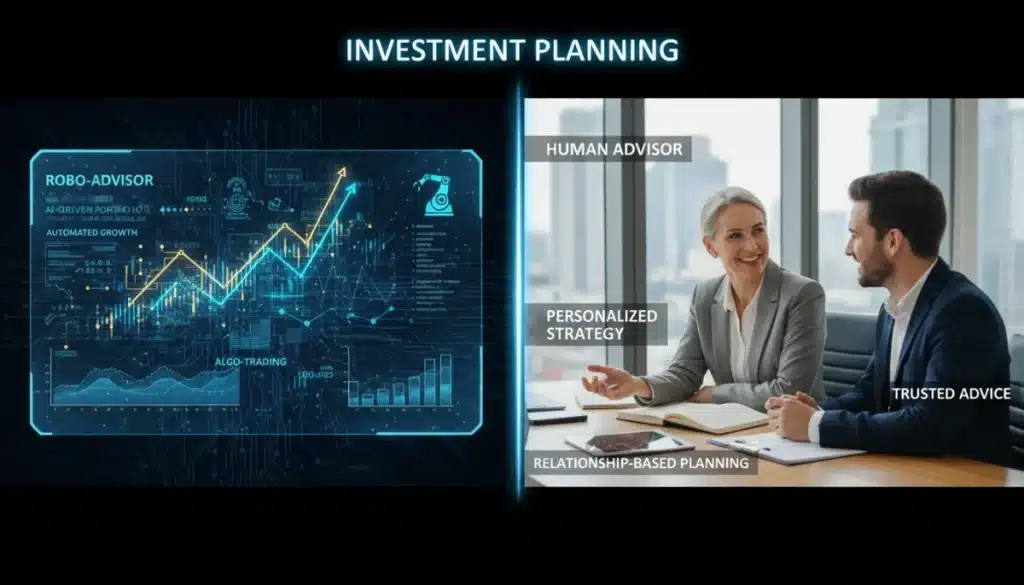
A 2026 cost-benefit analysis of robo-advisors versus human financial planners reveals that the optimal choice hinges on individual financial complexity, desired personalization, and budget considerations.
Anúncios
In the rapidly evolving financial landscape of 2026, the choice between automated and human guidance for wealth management has never been more critical. This comprehensive Robo-Advisors vs. Human Financial Planners: A 2026 Cost-Benefit Analysis will explore the nuances, advantages, and drawbacks of each option, helping you navigate your investment journey with clarity.
Anúncios
The Rise of Robo-Advisors: Efficiency and Accessibility
Robo-advisors have dramatically reshaped the investment advisory industry by offering automated, algorithm-driven financial planning services. Their appeal lies in their efficiency and accessibility, making professional investment management available to a broader audience, including those with smaller portfolios.
These platforms typically use sophisticated algorithms to construct and manage diversified portfolios based on an investor’s risk tolerance, financial goals, and time horizon. The process is often streamlined, requiring minimal human intervention once the initial setup is complete.
Defining Robo-Advisory Services
Robo-advisors are digital platforms that provide automated, algorithm-driven financial planning services with little to no human supervision. They are designed to simplify investing and reduce costs.
- Automated portfolio rebalancing
- Tax-loss harvesting capabilities
- Goal-based planning features
- Low minimum investment requirements
The Accessibility Factor
One of the most significant advantages of robo-advisors is their low barrier to entry. Many platforms require minimal initial investments, making them ideal for young investors or those just starting to build wealth. This democratizes access to professional-grade financial advice.
Robo-advisors operate 24/7, allowing investors to access their accounts and make adjustments at their convenience. This flexibility is particularly attractive in today’s fast-paced digital world, where immediate access to information and services is often expected.
In summary, robo-advisors offer a compelling solution for investors seeking cost-effective, accessible, and efficient portfolio management. Their automated nature ensures consistent application of investment strategies, removing emotional biases from financial decisions.
Human Financial Planners: The Value of Personalization
While robo-advisors offer undeniable benefits, human financial planners continue to hold a significant place in the advisory landscape, especially for individuals with complex financial situations or those who prefer a personalized touch. Human advisors provide tailored advice that extends beyond mere investment management.
They can delve into intricate aspects of personal finance, such as estate planning, tax optimization, and complex wealth transfer strategies, offering a holistic view that automated systems often cannot replicate. The interpersonal relationship and trust built with a human advisor are also invaluable for many clients.
Beyond Investment Management
A human financial planner’s role extends far beyond just managing investments. They act as comprehensive financial guides, addressing a wide array of client needs.
- Estate planning and legacy considerations
- Behavioral coaching during market volatility
- Complex tax planning and optimization
- Retirement income strategies
The ability to adapt to unforeseen life events, such as career changes, family expansions, or health crises, is another area where human advisors excel. They can provide empathetic guidance and adjust financial plans dynamically, considering the emotional and practical implications of such events.
For high-net-worth individuals, business owners, or those facing unique financial challenges, the nuanced advice and strategic foresight offered by a human planner can be indispensable. They can coordinate with other professionals, such as attorneys and accountants, to ensure a cohesive financial strategy.
Ultimately, human financial planners offer a level of personalization and comprehensive support that is difficult for automated systems to match. Their value proposition centers on bespoke advice, emotional intelligence, and the ability to navigate complex financial scenarios with a human touch.
Cost-Benefit Analysis: Fees and Returns in 2026
Understanding the cost structures and potential returns associated with both robo-advisors and human financial planners is paramount in 2026. While robo-advisors are generally known for their lower fees, the perceived higher cost of human advisors can be justified by the added value they provide in specific circumstances.
The decision often boils down to a trade-off between cost efficiency and the depth of service. Investors must carefully evaluate their financial needs against the fee structures to determine the most beneficial option for their unique situation.
Robo-Advisor Fee Structures
Robo-advisors typically charge a percentage of assets under management (AUM), which is significantly lower than traditional advisors. These fees usually range from 0.25% to 0.50% annually.
For example, a portfolio of $100,000 might incur an annual fee of $250 to $500. This cost-effectiveness is a major draw for investors looking to maximize their returns by minimizing expenses.
Some robo-advisors also offer premium tiers that include limited access to human advisors, bridging the gap between fully automated and traditional services. These hybrid models come with slightly higher fees but still remain competitive.
Human Financial Planner Compensation Models
Human financial planners employ various compensation models, which can include AUM fees, hourly rates, flat fees for specific services, or commissions. AUM fees for human advisors generally range from 0.5% to 1.5% or more, depending on the advisor’s experience and the complexity of services.
While these fees are higher, they often cover a broader range of services, including estate planning, tax strategies, and personalized financial coaching. For a $100,000 portfolio, an annual AUM fee could range from $500 to $1,500.
The benefit of a human advisor often lies in their ability to identify and implement complex strategies that can lead to greater long-term savings or increased returns, effectively offsetting their higher fees. Their expertise in navigating intricate tax codes or optimizing legacy planning can yield substantial financial advantages.
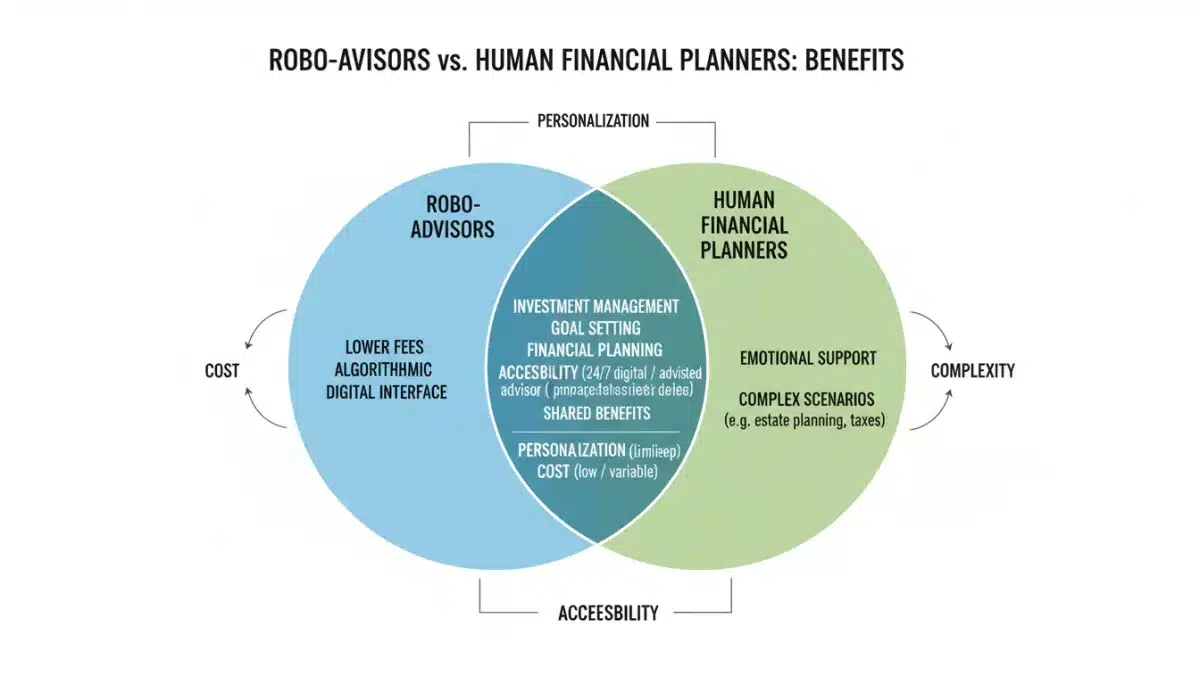
In conclusion, the cost-benefit analysis reveals that robo-advisors offer a low-cost entry point for basic investment management, while human financial planners, despite higher fees, provide comprehensive, personalized advice that can be invaluable for complex financial situations. The optimal choice depends on an investor’s specific needs and the value they place on personalized guidance.
Technological Advancements and Future Outlook
The financial technology (fintech) landscape is continually evolving, with both robo-advisors and human financial planners leveraging new technologies to enhance their services. In 2026, artificial intelligence (AI) and machine learning (ML) are playing increasingly significant roles, blurring the lines between automated and human advice.
Robo-advisors are becoming more sophisticated, incorporating predictive analytics and hyper-personalization, while human advisors are using advanced software to streamline operations and provide more data-driven insights. This technological integration is transforming how financial advice is delivered and consumed.
AI in Robo-Advisory Platforms
AI algorithms are enabling robo-advisors to offer more dynamic portfolio adjustments and personalized recommendations. They can analyze vast amounts of market data in real-time, identifying trends and risks that might be overlooked by human analysis.
- Predictive analytics for market movements
- Enhanced risk assessment models
- Personalized financial goal tracking
- Natural language processing for client interactions
The integration of AI also allows for more sophisticated tax-loss harvesting and rebalancing strategies, potentially leading to better after-tax returns for investors. These advancements make robo-advisors an even more formidable option for efficient wealth management.
Human Advisors Embracing Technology
Human financial planners are not immune to technological shifts; instead, they are embracing them to augment their services. CRM systems, financial planning software, and data analytics tools empower advisors to manage client relationships more effectively and offer deeper insights.
Virtual meeting platforms and secure digital communication channels have also become standard, allowing advisors to serve clients remotely and efficiently. This blend of human expertise with technological tools creates a powerful advisory model.
The future outlook suggests a hybrid approach becoming more prevalent, where investors benefit from the efficiency of technology combined with the nuanced advice of human experts. This evolution will likely cater to a wider spectrum of financial needs and preferences.
In conclusion, technological advancements are continually refining both robo-advisory and human financial planning services. AI and ML are making robo-advisors more intelligent and personalized, while human advisors are leveraging technology to enhance their analytical capabilities and client engagement, leading to a more integrated future for financial advice.
Risk Management and Behavioral Coaching
Effective risk management and behavioral coaching are critical components of successful long-term financial planning. While both robo-advisors and human financial planners address risk, their approaches differ significantly, particularly when it comes to managing investor emotions during market fluctuations.
Understanding these differences is crucial for investors deciding which service best aligns with their comfort level and need for emotional support during challenging economic times. The psychological aspect of investing cannot be overstated.
Robo-Advisors and Risk Assessment
Robo-advisors excel at quantitative risk assessment, using algorithms to determine an investor’s risk tolerance based on questionnaires and financial data. They then construct portfolios designed to align with that risk profile, automatically rebalancing to maintain the desired asset allocation.
Their strength lies in removing emotional biases from investment decisions. During market downturns, robo-advisors stick to their predefined strategies, preventing impulsive selling or buying that can harm long-term returns. This systematic approach ensures discipline.
However, robo-advisors lack the ability to provide real-time emotional support or behavioral coaching during periods of extreme market volatility. While they can send automated alerts, they cannot offer the reassurance or personalized guidance that a human advisor can.
Human Planners and Behavioral Coaching
Human financial planners provide invaluable behavioral coaching, helping clients navigate market ups and downs with a steady hand. They can calm fears, explain market dynamics, and prevent clients from making rash decisions driven by emotion.
- Providing emotional support during market corrections
- Educating clients on long-term investing principles
- Helping clients stick to their financial plan
- Identifying and mitigating cognitive biases
This human element is particularly beneficial during periods of significant economic uncertainty, where a trusted advisor can provide perspective and reinforce long-term objectives. The ability to listen, empathize, and offer tailored advice based on a client’s unique psychological profile is a distinct advantage.
In conclusion, while robo-advisors offer systematic, emotion-free risk management, human financial planners provide critical behavioral coaching and emotional support, which can be invaluable for preventing costly mistakes driven by fear or greed. The choice depends on an investor’s need for personal reassurance and guidance in managing investment risks.
Choosing Your Path: Factors to Consider
Deciding between a robo-advisor and a human financial planner in 2026 involves a careful consideration of various personal and financial factors. There is no one-size-fits-all answer; the optimal choice depends on an individual’s financial complexity, investment goals, budget, and preferred level of interaction.
It’s essential to perform a thorough self-assessment of your needs and preferences before committing to either service. This thoughtful approach will ensure that your chosen path aligns perfectly with your financial aspirations.
Financial Complexity and Net Worth
For investors with straightforward financial situations, such as a single income stream, minimal debt, and clear retirement goals, a robo-advisor can be an excellent, cost-effective solution. Their automated systems are well-suited for managing basic investment portfolios.
However, as financial complexity increases – involving multiple income sources, significant assets, complex tax situations, or business ownership – the need for a human financial planner becomes more apparent. These scenarios often require nuanced advice and strategic planning that automated systems struggle to provide.
Desired Level of Personalization and Interaction
If you prefer a hands-off approach to investing and are comfortable with digital interactions, a robo-advisor is likely a good fit. They offer convenience and efficiency without the need for frequent meetings or discussions.
Conversely, if you value a personal relationship, face-to-face discussions, and bespoke advice tailored to your evolving life circumstances, a human financial planner will be more suitable. The ability to ask questions, discuss concerns, and receive empathetic guidance is a significant draw.
- Preference for digital vs. human interaction
- Need for emotional support during market volatility
- Desire for comprehensive financial planning beyond investments
- Comfort level with technology for financial management
Your comfort level with technology also plays a role. While most robo-advisor platforms are user-friendly, some individuals may prefer the traditional interaction and paper-based reporting often associated with human advisors.
In conclusion, the choice between robo-advisors and human financial planners hinges on your financial complexity, net worth, and desired level of personalization. A careful evaluation of these factors will guide you toward the advisory service that best supports your financial journey.
Hybrid Models: The Best of Both Worlds?
As the financial advisory landscape evolves, hybrid models are emerging as a compelling option, seeking to combine the cost-efficiency and technological prowess of robo-advisors with the personalized guidance and expertise of human financial planners. These models represent a significant step forward in catering to a broader range of investor needs.
Hybrid services aim to offer a flexible solution that can adapt as an investor’s financial situation changes, providing a scalable approach to wealth management that was previously unavailable. This blended approach might be the future of financial advice.
How Hybrid Models Work
Hybrid models typically offer automated portfolio management with the added benefit of access to human financial advisors for specific needs or consultations. This means clients can enjoy lower management fees while still having a professional to turn to for complex questions or life events.
Many platforms structure these services with tiered pricing, where basic automated services are offered at a low cost, and additional access to human advisors comes with slightly higher fees or on an as-needed basis.
Benefits of a Blended Approach
The primary benefit of a hybrid model is its ability to offer a balanced solution. Investors get the efficiency and low cost of automated investing for their core portfolio, coupled with the strategic advice and emotional support of a human expert when it matters most.
- Cost-effective investment management
- Access to human advice for complex issues
- Scalability as financial needs evolve
- Combines technological efficiency with human empathy
This approach can be particularly beneficial for individuals whose financial situations are evolving. For instance, a young professional starting with a robo-advisor might transition to a hybrid model as their wealth grows and their financial planning needs become more intricate, without having to switch providers entirely.
Furthermore, hybrid models can provide a sense of security and peace of mind, knowing that a human expert is available to review plans or provide guidance during market volatility, even if the day-to-day management is automated.
In conclusion, hybrid models offer a promising solution by merging the strengths of both robo-advisors and human financial planners. They provide a flexible, scalable, and comprehensive approach to financial advice, potentially offering the best of both worlds for a diverse range of investors.
| Key Aspect | Description in 2026 |
|---|---|
| Cost Efficiency | Robo-advisors offer lower fees (0.25-0.50% AUM) compared to human planners (0.5-1.5%+ AUM). |
| Personalization | Human planners provide bespoke advice for complex situations; robo-advisors offer algorithm-driven personalization. |
| Behavioral Coaching | Human advisors excel in emotional support during market volatility; robo-advisors maintain disciplined, automated strategies. |
| Technological Integration | Both leverage AI/ML; robo-advisors for automation, human planners for enhanced insights and client management. |
Frequently Asked Questions About Financial Planning
The primary advantage of a robo-advisor is its cost-efficiency and accessibility. They offer automated investment management at significantly lower fees than traditional human advisors, making professional-grade financial advice available to a broader range of investors, including those with smaller portfolios.
You should consider a human financial planner if you have complex financial needs, such as estate planning, tax optimization, or business finances. They also provide invaluable personalized advice, emotional support during market fluctuations, and holistic financial guidance beyond just investments.
Yes, hybrid financial advisory models are highly effective as they combine the best aspects of both worlds. They offer the cost-efficiency and automated management of robo-advisors while providing access to human experts for personalized advice on complex issues or during significant life events, offering flexibility and comprehensive support.
Robo-advisors typically charge annual fees ranging from 0.25% to 0.50% of assets under management (AUM). Human financial planners generally have higher AUM fees, usually between 0.5% and 1.5% or more, reflecting the broader scope of personalized services and expertise they provide.
In 2026, AI enhances both robo-advisors and human planners. For robo-advisors, AI enables predictive analytics and hyper-personalization. For human planners, AI streamlines operations, offers data-driven insights, and improves client management, leading to more efficient and sophisticated financial advice delivery.
Conclusion
The debate between robo-advisors and human financial planners in 2026 is not about one being inherently superior to the other, but rather about identifying the best fit for an individual’s unique financial journey. Robo-advisors offer an accessible, cost-effective, and efficient solution for straightforward investment needs, leveraging advanced algorithms to manage portfolios with discipline. Conversely, human financial planners provide invaluable personalized advice, comprehensive financial planning beyond investments, and crucial behavioral coaching, particularly beneficial for complex financial situations and during market volatility. The emergence of hybrid models further blurs these lines, offering a flexible solution that combines the strengths of both, providing automated efficiency with human oversight. Ultimately, the optimal choice hinges on a thorough assessment of one’s financial complexity, desired level of personalization, budget, and comfort with technology. By understanding the distinct advantages and evolving capabilities of each option, investors can make an informed decision that aligns with their long-term financial goals and ensures a secure financial future.