Early Childhood Education 2026: Cognitive Development Insights
Anúncios
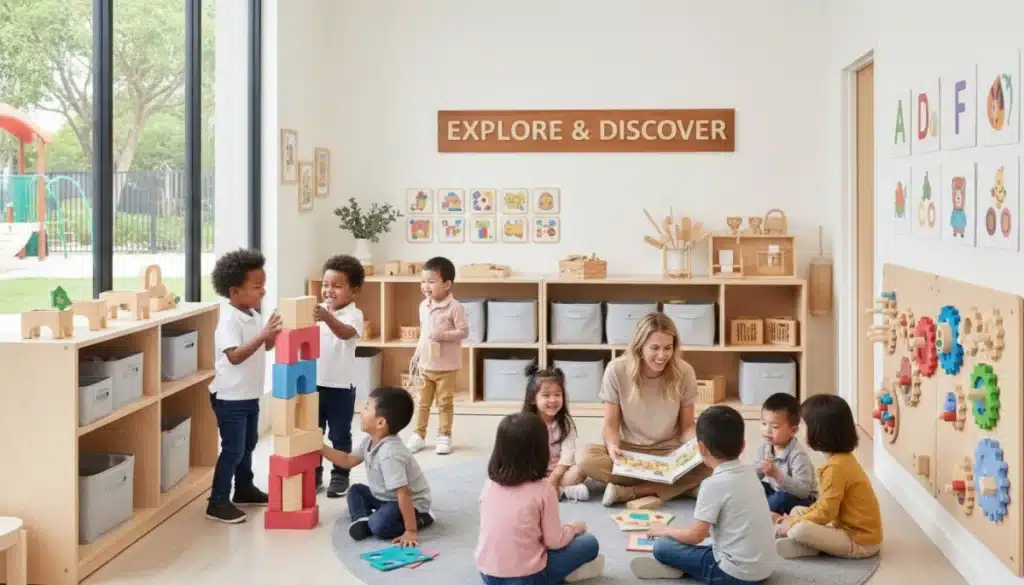
New research into early childhood cognitive development in 2026 highlights the critical importance of responsive environments and tailored interventions to foster optimal brain growth and learning foundations before age five.
In the dynamic landscape of learning, early childhood cognitive development continues to be a field of intense research and innovation. As we step into 2026, new studies are continually reshaping our understanding of how young minds develop, particularly before the age of five. This period is a foundational stage, where experiences profoundly influence future learning capabilities, social-emotional intelligence, and overall well-being. Educators, parents, and policymakers are increasingly recognizing the necessity of incorporating evidence-based practices to support this crucial developmental window. This article delves into the most recent findings and their implications for early childhood education, offering a glimpse into the future of nurturing our youngest learners.
Anúncios
The Neuroscience of Early Learning
Understanding the brain’s rapid development in the first five years is paramount to effective early childhood education. Recent neuroscientific research has provided unprecedented insights into how neural pathways are formed and strengthened, emphasizing the brain’s remarkable plasticity during this period. The intricate interplay between genetics and environmental stimuli shapes cognitive architecture, influencing everything from language acquisition to problem-solving skills.
Anúncios
Advanced imaging techniques now allow researchers to observe brain activity in real-time, revealing how specific experiences, such as interactive play or exposure to rich linguistic environments, stimulate particular brain regions. These findings underscore the importance of diverse and engaging learning opportunities that cater to various developmental domains simultaneously.
Brain Plasticity and Critical Periods
Neuroscience confirms that the early years represent critical periods for certain types of learning. While the brain retains plasticity throughout life, the ease and efficiency with which new connections are made are significantly higher in early childhood. This means that foundational skills, such as language and early mathematical concepts, are absorbed with remarkable speed.
- Synaptic Pruning: The process where unused neural connections are eliminated, making the brain more efficient.
- Myelination: The formation of a myelin sheath around nerve fibers, increasing the speed of nerve impulses.
- Experience-Dependent Plasticity: How the brain changes in response to specific experiences and environmental interactions.
These biological processes highlight why early interventions and high-quality educational programs have such a profound and lasting impact. Investing in early childhood education is not merely beneficial; it is a neurobiological imperative that sets the stage for lifelong learning and adaptability.
In conclusion, the latest neuroscientific research solidifies the understanding that the early years are a unique window for cognitive development. Educators and parents must leverage this period by providing stimulating environments that foster robust neural growth, ultimately laying a strong foundation for future academic and life success.
Play-Based Learning: Beyond Entertainment
Long considered a cornerstone of early childhood education, play-based learning is gaining even more scientific backing in 2026. New research confirms that play is not merely a recreational activity but a sophisticated mechanism through which children develop critical cognitive, social, and emotional skills. Structured and unstructured play environments both contribute significantly to a child’s holistic development.
Studies reveal that through play, children learn to negotiate, solve problems, understand cause and effect, and develop symbolic thinking. These are fundamental cognitive processes that underpin more formal learning later in life. The freedom inherent in play allows children to experiment without fear of failure, fostering resilience and creativity.
The Role of Imaginative Play
Imaginative play, in particular, has been identified as a powerful tool for cognitive advancement. When children engage in pretend play, they are actively constructing narratives, assigning roles, and manipulating abstract concepts. This process strengthens executive functions, including working memory, cognitive flexibility, and self-regulation.
- Enhanced Problem-Solving: Children encounter and resolve conflicts within their play scenarios.
- Language Development: Role-playing encourages rich vocabulary use and complex sentence structures.
- Emotional Regulation: Expressing and understanding emotions through character play.
- Social Skills: Collaborating and sharing with peers during group play.
The latest findings suggest that educators should prioritize integrating various forms of play into the curriculum, moving beyond a simplistic view of play as just fun. It is a vital educational strategy that nurtures a broad spectrum of cognitive abilities, preparing children for the complexities of a rapidly changing world.
Ultimately, play-based learning is increasingly recognized as an indispensable component of early childhood education, providing a rich, natural context for cognitive development that extends far beyond simple entertainment.
Technology’s Evolving Role in Early Learning
The integration of technology into early childhood education continues to be a subject of intense debate and research. In 2026, new studies are providing clearer guidelines on how digital tools can be effectively and safely incorporated to support cognitive development in children under five. The emphasis is shifting from passive screen time to interactive, educational applications that promote active engagement and learning.
Research indicates that well-designed educational apps and interactive platforms can enhance specific cognitive skills, such as early literacy, numeracy, and problem-solving. However, the key lies in thoughtful implementation and adult mediation, ensuring that technology serves as a supplement to, rather than a replacement for, hands-on experiences and social interaction.
Balancing Screen Time with Hands-On Exploration
The consensus among researchers is that a balanced approach is crucial. While technology offers exciting possibilities, excessive or unguided screen time can detract from vital real-world interactions and physical play. Educators are exploring hybrid models that seamlessly blend digital learning with traditional methods.
- Interactive Storybooks: Enhancing literacy and vocabulary through engaging digital narratives.
- Educational Games: Developing problem-solving and critical thinking skills in a fun format.
- Creative Tools: Fostering artistic expression and fine motor skills through drawing and building apps.
The future of technology in early childhood education involves leveraging its potential to personalize learning experiences and provide immediate feedback, while always prioritizing a child’s holistic development and ensuring meaningful human connection. This careful integration is key to maximizing benefits and mitigating potential drawbacks.
In summary, technology’s role in early learning is maturing, with research guiding us toward a balanced, interactive approach that supports cognitive development without compromising essential hands-on and social experiences.
The Power of Language and Communication
Language development is a cornerstone of cognitive growth, and new research in 2026 continues to highlight the profound impact of early linguistic experiences. The quantity and quality of language exposure a child receives before age five significantly predict their future academic success and overall cognitive abilities. It’s not just about hearing words; it’s about engaging in rich, responsive conversations.
Studies show that children from environments with frequent, back-and-forth verbal interactions develop stronger neural networks for language processing. This ‘conversational turn-taking’ is more impactful than simply being exposed to a high volume of words passively. It fosters vocabulary acquisition, grammatical understanding, and the ability to express complex thoughts.
Responsive Communication Strategies
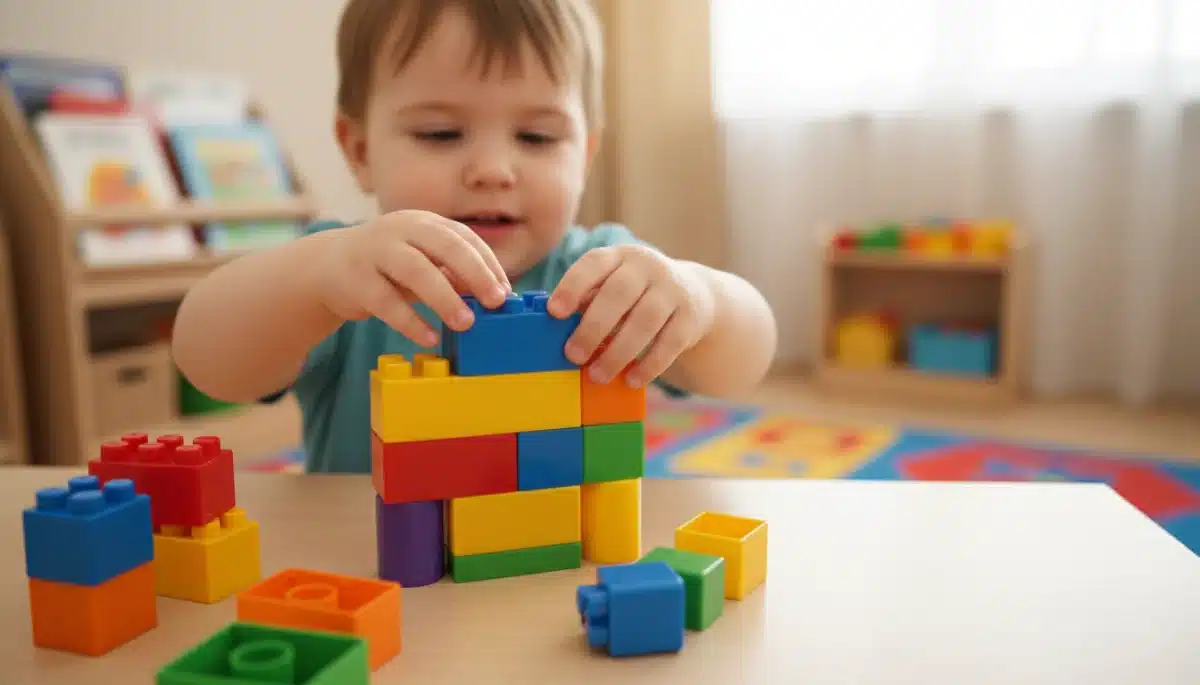
Educators and parents are encouraged to adopt responsive communication strategies that actively engage children in dialogue. This includes asking open-ended questions, expanding on a child’s utterances, and providing clear, descriptive language during daily activities. The goal is to create a dynamic linguistic environment where children feel empowered to communicate and explore.
- Dialogic Reading: Engaging children in conversations about books, asking questions, and connecting stories to their experiences.
- Descriptive Narration: Verbally describing actions and objects during play to enrich vocabulary.
- Prompting and Expanding: Encouraging children to elaborate on their thoughts and ideas.
These strategies not only boost language skills but also enhance cognitive functions like memory, attention, and executive function. The emphasis on quality interactions rather than mere exposure is a critical takeaway from recent research, underscoring the social nature of language learning.
Ultimately, fostering robust language and communication skills through responsive interactions remains a powerful strategy for supporting strong cognitive development in early childhood, impacting a child’s entire learning trajectory.
Social-Emotional Learning and Cognitive Links
Emerging research in 2026 strongly emphasizes the inseparable link between social-emotional development and cognitive function in early childhood. It is increasingly clear that a child’s ability to regulate emotions, build relationships, and understand social cues directly impacts their capacity to learn and engage with academic content. Emotional well-being provides the stable foundation upon which cognitive skills can flourish.
Studies highlight that children with strong social-emotional competencies are better able to focus, persist at challenging tasks, and collaborate effectively with peers. These skills are crucial for navigating classroom environments and for developing higher-order thinking abilities. Conversely, emotional distress or underdeveloped social skills can hinder cognitive progress.
Nurturing Emotional Intelligence
Early childhood educators are now integrating explicit social-emotional learning (SEL) into their curricula, recognizing its direct impact on cognitive outcomes. This involves teaching children to identify and express their feelings, develop empathy, and resolve conflicts constructively. Creating a safe and supportive classroom environment is foundational to SEL success.
- Emotion Coaching: Guiding children through their emotions and teaching coping strategies.
- Empathy Building: Encouraging children to understand others’ perspectives and feelings.
- Conflict Resolution: Teaching peaceful methods for solving disagreements.
The latest findings suggest that interventions supporting social-emotional skills in early childhood yield long-term benefits, not only for mental health but also for academic achievement. This integrated approach acknowledges the whole child, understanding that learning is not purely an intellectual pursuit but deeply intertwined with emotional and social well-being.
In conclusion, the strong connection between social-emotional learning and cognitive development is undeniable. By prioritizing emotional intelligence and social skills, early childhood education can create a more fertile ground for all aspects of a child’s cognitive growth.
Personalized Learning Approaches
The concept of personalized learning is gaining significant traction in early childhood education as research in 2026 underscores the unique developmental pathways of each child. Moving away from a one-size-fits-all model, educators are increasingly adopting approaches that tailor learning experiences to individual needs, interests, and developmental stages. This customization is proving to be highly effective in optimizing cognitive outcomes.
New data suggests that when learning activities are aligned with a child’s readiness and preferred learning style, engagement levels increase dramatically, leading to deeper understanding and skill acquisition. This requires keen observation from educators to identify individual strengths and areas for growth, and then adapt the curriculum accordingly.
Differentiated Instruction and Responsive Teaching
Personalized learning in early childhood often manifests through differentiated instruction and responsive teaching. This means providing varied activities, materials, and support levels to meet diverse learners within the same classroom. It also involves continuous assessment to inform instructional decisions and adjust strategies as children progress.
- Interest-Based Activities: Designing learning centers and projects around children’s current fascinations.
- Flexible Grouping: Grouping children based on specific learning needs or interests, which can change frequently.
- Individualized Feedback: Providing specific, constructive feedback tailored to each child’s efforts and progress.
The goal is to empower children to take ownership of their learning journey, fostering intrinsic motivation and a lifelong love of discovery. Personalized approaches acknowledge that while developmental milestones are generally consistent, the path to reaching them is highly individualized, requiring flexibility and adaptability from educators.
Ultimately, personalized learning is becoming a hallmark of effective early childhood education, ensuring that every child receives the tailored support and challenges necessary to thrive cognitively and reach their full potential.
| Key Research Area | Key Finding/Implication |
|---|---|
| Neuroscience of Learning | Early brain plasticity demands rich, diverse stimuli for optimal neural development. |
| Play-Based Pedagogy | Play is crucial for executive function, problem-solving, and social-emotional skills. |
| Language & Communication | Responsive, conversational interactions are key to advanced linguistic and cognitive growth. |
| Personalized Learning | Tailored approaches to meet individual needs maximize engagement and cognitive outcomes. |
Frequently Asked Questions About Early Childhood Cognitive Development
The period from birth to age five is widely recognized as the most critical for cognitive development. During these years, the brain undergoes rapid growth and forms billions of neural connections, laying the essential groundwork for future learning, language acquisition, and problem-solving abilities. Experiences during this time profoundly shape a child’s cognitive architecture.
Play-based learning supports cognitive development by engaging children in active exploration and discovery. It fosters executive functions like planning and problem-solving, enhances creativity, develops language skills through imaginative scenarios, and improves social negotiation. This holistic approach makes learning enjoyable and deeply embedded, rather than rote memorization.
In 2026, technology in early childhood education is seen as a supplementary tool, focusing on interactive and educational applications. It can enhance literacy, numeracy, and critical thinking when used thoughtfully and with adult guidance. The key is balancing screen time with hands-on activities and social interactions to ensure holistic development.
Responsive communication, characterized by back-and-forth verbal exchanges, is crucial because it actively engages children in dialogue. This type of interaction significantly boosts vocabulary, grammatical understanding, and the ability to express complex thoughts. It strengthens neural pathways for language processing more effectively than passive language exposure, enhancing overall cognitive development.
Social-emotional skills are intrinsically linked to cognitive development. Children with strong emotional regulation and social competencies can focus better, persist in challenging tasks, and collaborate effectively. A secure emotional foundation allows cognitive abilities to flourish, making social-emotional learning a vital component for overall academic and developmental success before age five.
Conclusion
The landscape of early childhood cognitive development continues to evolve with groundbreaking research shaping our understanding and practices. As we navigate 2026, the emphasis remains firmly on creating rich, responsive, and individualized environments that honor the unique developmental journey of each child. From the profound insights of neuroscience revealing brain plasticity to the enduring power of play, responsive communication, and integrated social-emotional learning, the evidence is clear: investing in high-quality early childhood education yields unparalleled returns. By embracing personalized learning approaches and thoughtfully integrating technology, we can empower our youngest learners to build robust cognitive foundations, fostering a generation prepared for lifelong curiosity, resilience, and success. The future of education begins long before kindergarten, and the latest research provides a compelling roadmap for nurturing these critical early years.