Micro-Credentials: US Professional Development by 2026
Anúncios
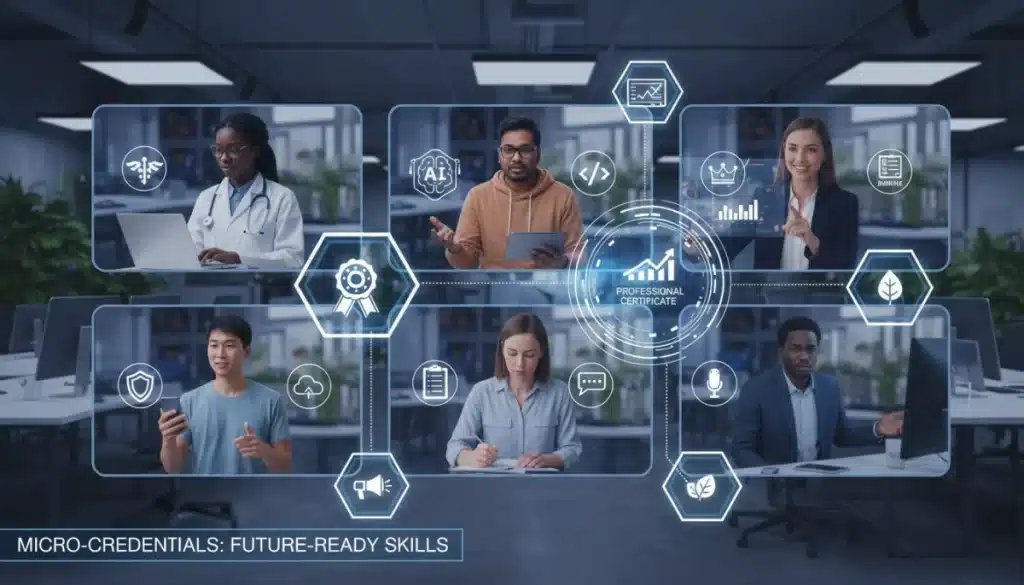
Micro-credentials are rapidly reshaping US professional development, offering flexible, targeted skill acquisition that addresses evolving workforce needs and provides a dynamic alternative to traditional education by 2026.
Anúncios
The landscape of professional growth is undergoing a significant transformation, moving rapidly beyond the classroom: the rise of micro-credentials in US professional development by 2026. This shift reflects a critical need for agile, relevant, and accessible learning experiences. Traditional long-form degrees are increasingly complemented, and sometimes even supplanted, by focused digital certifications that deliver precise skills employers demand.
Anúncios
The evolving landscape of US professional development
The traditional model of professional development, often characterized by multi-year degrees or extensive certification programs, is facing an undeniable evolution. The pace of technological change and market demands now requires a more nimble approach to skill acquisition. Professionals across the United States are seeking ways to upskill and reskill efficiently, without necessarily committing to the time and financial investment of conventional higher education.
This evolving landscape is driven by several factors, including the rapid obsolescence of certain skills, the emergence of new industries, and a workforce that values flexibility. Employers, too, are recognizing the value of targeted training that directly addresses specific competency gaps within their organizations. This creates a fertile ground for alternative learning pathways to flourish, making continuous learning an imperative rather than an option.
The shift from degrees to skills
For decades, a university degree was the gold standard for career advancement. While degrees still hold significant value, particularly in foundational knowledge, the emphasis is increasingly shifting towards demonstrable skills. Companies are less concerned with where someone learned a skill and more focused on whether they possess it. This paradigm shift empowers individuals to curate their learning journeys based on immediate career needs and industry trends.
- Focus on practical application: Micro-credentials often emphasize hands-on learning and real-world projects.
- Employer-driven content: Many micro-credential programs are developed in collaboration with industry leaders.
- Validation of specific competencies: They provide clear evidence of proficiency in a particular skill.
The move towards skill-based hiring is a significant catalyst for the growth of micro-credentials. It allows individuals to build a portfolio of certified skills that can be more impactful in the job market than a general degree alone. This also democratizes access to specialized training, as these programs are often more affordable and accessible than traditional university courses.
What exactly are micro-credentials?
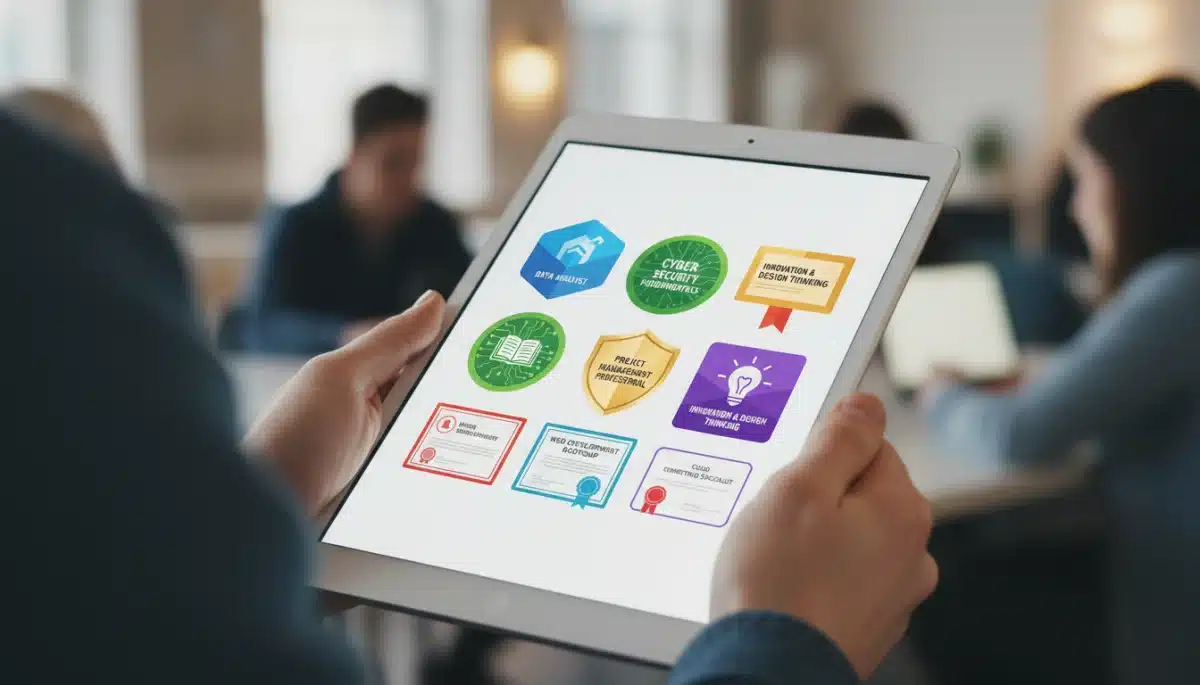
Micro-credentials are essentially verified certifications of specific skills or competencies. They represent a focused achievement, often much shorter in duration than a traditional degree or diploma, and are designed to be highly relevant to current industry needs. Think of them as digital badges or certificates that confirm mastery in a particular area, whether it’s proficiency in a software program, a specific project management methodology, or a particular data analysis technique.
These credentials are typically earned through online courses, bootcamps, or specialized training modules offered by universities, professional organizations, and tech companies. Their value lies in their specificity and their ability to quickly validate an individual’s readiness for particular tasks or roles. They are a direct response to the demand for just-in-time learning that can be integrated seamlessly into a busy professional’s life.
Key characteristics of micro-credentials
Understanding the core attributes of micro-credentials helps in appreciating their growing impact. They differ significantly from traditional academic units in their scope, delivery, and assessment methods.
- Targeted learning: Focused on a single skill or a small cluster of related skills.
- Flexible delivery: Often online, self-paced, and modular, fitting into diverse schedules.
- Stackable: Can be combined to build broader qualifications or specialized expertise.
- Verified assessment: Involves clear, often competency-based, evaluation of learning outcomes.
These characteristics make micro-credentials an attractive option for both learners and employers. For learners, they offer a clear path to skill acquisition without extensive time commitments. For employers, they provide a reliable indicator of specific capabilities, streamlining hiring and professional development initiatives. The rise of micro-credentials in US professional development by 2026 is predicated on these inherent advantages.
The drivers behind their rapid adoption
The rapid adoption of micro-credentials in the US professional development landscape is not accidental; it’s a strategic response to several converging forces. The core drivers include the accelerating pace of technological change, the widening skills gap in critical industries, and the increasing demand from both employees and employers for flexible, efficient, and relevant learning solutions.
The COVID-19 pandemic also played a significant role, accelerating the shift to online learning and highlighting the need for adaptable workforces. This period underscored the importance of rapid reskilling and upskilling to meet new economic realities, further cementing the role of agile learning pathways.
Addressing the skills gap
One of the most compelling reasons for the surge in micro-credentials is their effectiveness in closing the pervasive skills gap. Many industries, particularly in technology, healthcare, and advanced manufacturing, face a shortage of qualified professionals with specific, in-demand skills. Traditional education often struggles to keep pace with these rapidly evolving requirements.
Micro-credentials offer a direct solution by providing highly specialized training that can be developed and updated much faster than traditional curricula. This allows individuals to acquire critical skills like cybersecurity analysis, cloud computing proficiency, or advanced data visualization in a matter of weeks or months, directly addressing industry needs.
Flexibility and accessibility for learners
Modern professionals often juggle demanding careers, family responsibilities, and personal commitments. The rigid schedules and extensive time commitments of traditional programs are often prohibitive. Micro-credentials, with their modular, online, and often self-paced formats, offer unparalleled flexibility.
- Learn anytime, anywhere: Online platforms enable learning around personal schedules.
- Affordable alternatives: Generally less expensive than full degrees or long-term certifications.
- Personalized learning paths: Learners can choose credentials that directly align with their career goals.
This accessibility democratizes professional development, allowing a broader range of individuals to participate in upskilling and reskilling, regardless of their geographical location or financial constraints. This inclusiveness is a key factor in the projected continued rise of micro-credentials in US professional development by 2026.
Impact on the US workforce and economy
The widespread adoption of micro-credentials is poised to have a profound impact on the US workforce and economy. By fostering a culture of continuous learning and skill adaptation, these credentials contribute to a more agile, competitive, and resilient labor market. This translates into tangible benefits for individuals, employers, and the national economy.
For individuals, micro-credentials offer enhanced career mobility, increased earning potential, and greater job security in an ever-changing professional landscape. For businesses, they provide a cost-effective and efficient means to develop their talent pipeline, ensuring their workforce possesses the cutting-edge skills necessary for innovation and growth. Economically, a more skilled workforce drives productivity and maintains global competitiveness.
Empowering individual career growth
Micro-credentials empower individuals to take charge of their professional trajectories. Instead of being limited by a single degree, professionals can continuously add new, verified skills to their repertoire, making them more versatile and adaptable. This is particularly beneficial for those looking to pivot careers or advance within their current fields.
The ability to quickly acquire and validate new skills means that career changes or promotions become more attainable. It also boosts confidence and engagement, as employees feel supported in their professional journey. This empowerment is a significant factor in employee retention and satisfaction.
Boosting organizational agility and competitiveness
For organizations, micro-credentials are a strategic tool for maintaining agility and competitiveness. In an era where technological advancements can rapidly disrupt industries, having a workforce that can quickly adapt and acquire new capabilities is invaluable. Companies can implement targeted micro-credential programs to upskill teams in specific areas, rather than relying on external hires or lengthy, generic training.
- Rapid skill deployment: Quickly train employees on new software or methodologies.
- Customized training: Develop programs tailored to specific departmental needs.
- Cost-effective talent development: Reduce reliance on expensive external recruitment.
This proactive approach to talent development ensures that businesses remain at the forefront of innovation and can respond effectively to market shifts. The rise of micro-credentials in US professional development by 2026 is therefore not just about individual learning but about national economic strength.
Challenges and considerations for widespread adoption
While the benefits of micro-credentials are clear, their path to widespread and universally recognized adoption is not without challenges. These include issues of standardization, quality assurance, employer recognition, and ensuring equitable access across diverse populations. Addressing these considerations will be crucial for micro-credentials to fully realize their potential in transforming US professional development.
Without clear frameworks for quality and recognition, there’s a risk of credential proliferation that could confuse both learners and employers. Ensuring that these credentials hold consistent value and are understood by the broader job market is paramount for their long-term success and integration into mainstream professional development.
Ensuring quality and standardization
One of the primary concerns revolves around the quality and standardization of micro-credentials. With numerous providers entering the market, ensuring that each credential represents a consistent level of rigor and actual skill mastery is vital. Without this, employers may become skeptical of their value, undermining the entire ecosystem.
Efforts are underway by educational institutions, industry bodies, and government agencies to establish best practices and accreditation standards for micro-credentials. This will help build trust and ensure that these credentials are seen as reliable indicators of competence. The development of common frameworks for assessing learning outcomes is also a key area of focus.
Employer recognition and integration
Another significant hurdle is ensuring widespread employer recognition. While many progressive companies are already embracing micro-credentials, others may still be more familiar with traditional degrees. Educating employers about the value, rigor, and specific skills validated by these credentials is an ongoing process.
- Clear articulation of skills: Providers must clearly define what skills a credential validates.
- Industry partnerships: Collaboration with employers to design relevant programs.
- Demonstrating ROI: Showcasing how credentialed employees contribute to business success.
The goal is to integrate micro-credentials seamlessly into hiring processes and internal promotion pathways. As more success stories emerge and standards solidify, employer confidence and acceptance are expected to grow, further solidifying the rise of micro-credentials in US professional development by 2026.
The future outlook: micro-credentials by 2026
Looking ahead to 2026, the trajectory for micro-credentials in US professional development is one of continued growth and integration. They are not merely a passing trend but a fundamental shift in how skills are acquired, validated, and valued in the modern economy. We can anticipate several key developments that will solidify their place as an essential component of lifelong learning.
The future will likely see greater collaboration between educational institutions and industries, leading to more robust and employer-aligned micro-credential offerings. Furthermore, technological advancements, particularly in AI and personalized learning platforms, will enhance the delivery and effectiveness of these programs, making them even more tailored to individual needs and career goals.
Integration with traditional education and career pathways
By 2026, micro-credentials will likely be more deeply integrated into both traditional higher education and established career pathways. Universities are increasingly offering micro-credentials as standalone programs or as components of broader degrees, allowing students to earn specialized skills alongside their academic studies. This hybrid approach offers the best of both worlds: foundational knowledge combined with practical, in-demand competencies.
We will also see clearer pathways where a series of stackable micro-credentials can lead to recognized professional certifications or even academic credits. This creates a flexible ladder for continuous learning and career advancement, breaking down the rigid boundaries between formal and informal education.
Personalized learning and AI-driven platforms
The future of micro-credentials will be heavily influenced by advances in personalized learning and artificial intelligence. AI-driven platforms will be able to assess an individual’s existing skills, identify gaps, and recommend highly customized micro-credential pathways. This level of personalization will make learning more efficient, engaging, and directly relevant to each learner’s unique needs and career aspirations.
- Adaptive learning paths: AI will adjust content based on learner progress and performance.
- Skill gap analysis: AI tools will identify precise skills needed for career advancement.
- Automated credentialing: Streamlined processes for earning and verifying credentials.
These technological enhancements will make micro-credentials even more accessible and impactful, ensuring that the US workforce remains highly skilled and adaptable. The rise of micro-credentials in US professional development by 2026 will be characterized by these innovations, making continuous learning a more integral and personalized experience for everyone.
| Key Aspect | Description |
|---|---|
| Flexibility & Accessibility | Offer online, modular learning fitting diverse schedules and budgets. |
| Skill Gap Solution | Directly address specific industry skill shortages with targeted training. |
| Economic Impact | Boost workforce agility, competitiveness, and individual career growth. |
| Future Outlook | Increased integration with education, AI-driven personalization, and standardization. |
Frequently asked questions about micro-credentials
The main advantage is their targeted nature and flexibility. Micro-credentials focus on specific, in-demand skills, allowing professionals to quickly acquire relevant competencies without the extensive time and financial commitment of a full degree. They are often self-paced and online, fitting easily into busy schedules.
By 2026, micro-credentials will significantly enhance job seekers’ marketability. They will provide verifiable proof of specific skills, making candidates more attractive to employers looking for precise competencies. This will enable faster career pivots and advancements, especially in rapidly evolving industries.
Recognition is growing rapidly, especially among forward-thinking companies and those in tech-driven sectors. While not universally recognized yet, efforts are underway to standardize quality and promote their value. As more industries face skill gaps, employer acceptance of these agile credentials is increasing steadily.
Yes, a key feature of micro-credentials is their stackability. Learners can combine multiple related credentials to build broader expertise or even work towards larger qualifications or academic credits. This allows for personalized learning pathways tailored to individual career goals and industry demands.
Technology is fundamental. Online learning platforms, digital badging, and AI-driven personalized learning tools facilitate their delivery, assessment, and verification. AI will increasingly tailor learning paths, identify skill gaps, and make credential acquisition more efficient and effective for diverse learners.
Conclusion
The trajectory of professional development in the United States is unequivocally shifting towards more agile, skill-focused pathways, with micro-credentials at the forefront. By 2026, these targeted learning units will have solidified their position as indispensable tools for individuals seeking to remain competitive and for organizations striving for innovation. Their ability to deliver precise skills, offer unparalleled flexibility, and address critical workforce gaps makes them a powerful force for economic growth and individual empowerment. As standards evolve and integration with traditional education deepens, micro-credentials will continue to redefine lifelong learning, moving well beyond the confines of the traditional classroom to build a more skilled, adaptable, and resilient American workforce.