Pension Benefits in 2026: Navigating Regulations for Secure Retirement

Anúncios
Understanding the evolving landscape of pension benefits in 2026 is crucial for Americans to effectively plan and secure their retirement amidst new regulations and economic shifts.
Anúncios
As we approach 2026, the landscape of retirement planning, particularly concerning pension benefits in 2026, is undergoing significant transformations. These changes demand careful attention from anyone looking to secure their financial future. Staying informed about the latest regulations is not just advisable; it’s essential for making sound decisions.
Anúncios
Understanding the Evolving Pension Landscape
The world of pension benefits is rarely static, and 2026 is poised to bring several important updates. These changes often stem from legislative efforts to adapt to economic shifts, demographic trends, and the evolving needs of retirees. Being aware of these adjustments is the first step toward effective retirement planning.
For many Americans, pension plans remain a cornerstone of their retirement security. However, the move from traditional defined-benefit plans to defined-contribution plans has altered how individuals accrue and access their retirement funds. The regulations in 2026 aim to address some of these complexities, offering both new challenges and opportunities.
Key Legislative Changes Impacting Pensions
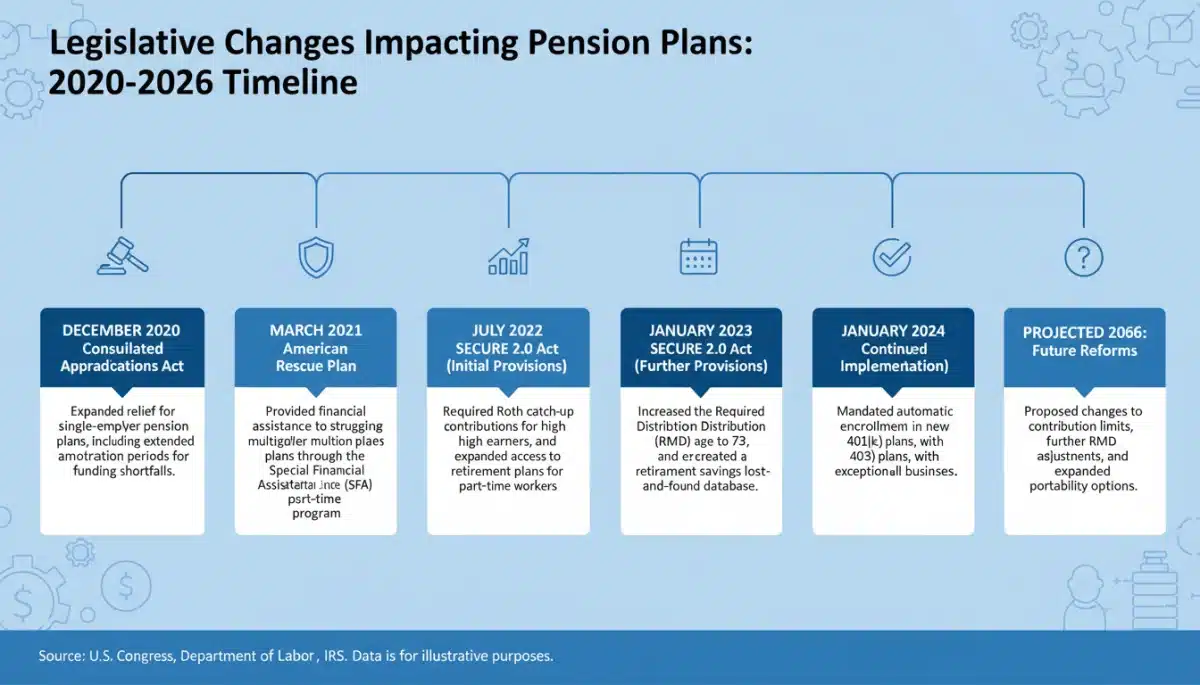
Several legislative acts and proposed bills have been shaping the future of pension benefits. Understanding their impact is critical for both current retirees and those planning for retirement. These changes can affect everything from contribution limits to withdrawal rules.
- SECURE Act 2.0: Building on its predecessor, SECURE Act 2.0 introduced a range of provisions designed to enhance retirement savings. This includes expanding automatic enrollment in 401(k) plans and increasing catch-up contribution limits for older workers.
- Inflation Adjustments: Annual inflation adjustments to contribution and benefit limits are crucial. These adjustments ensure that pension benefits retain their purchasing power, a vital consideration in a fluctuating economy.
- Rules for Part-Time Workers: New regulations are making it easier for long-term part-time employees to participate in employer-sponsored retirement plans, broadening access to pension benefits.
These legislative shifts are not merely technical adjustments; they represent a concerted effort to strengthen the retirement system. Staying updated on these changes allows individuals to adapt their financial strategies accordingly.
The broader economic environment also plays a significant role in how pension benefits are perceived and utilized. Interest rates, market performance, and inflation all influence the real value of retirement savings. Therefore, a holistic approach to understanding pension benefits in 2026 involves not only regulatory knowledge but also economic awareness.
Navigating Defined-Benefit vs. Defined-Contribution Plans
The distinction between defined-benefit (DB) and defined-contribution (DC) plans is fundamental to understanding pension benefits. While DB plans, often seen in the public sector, promise a specific payout in retirement, DC plans, like 401(k)s, rely on contributions and investment performance.
In 2026, the regulatory environment continues to favor DC plans, though efforts are being made to strengthen DB plans where they exist. Understanding the nuances of each type is crucial for individuals to manage their expectations and plan effectively for their post-employment years.
For those with DB plans, understanding the solvency of their plan and the guarantees provided by the Pension Benefit Guaranty Corporation (PBGC) is paramount. For DC plan participants, the focus shifts to investment choices, contribution rates, and fee structures.
Optimizing Defined-Contribution Plans
Maximizing the potential of a defined-contribution plan in 2026 involves several proactive steps. These include consistent contributions, strategic investment decisions, and regular reviews of your portfolio.
- Maxing Out Contributions: If feasible, contributing the maximum allowed by law, especially taking advantage of catch-up contributions for those aged 50 and over, significantly boosts retirement savings.
- Diversifying Investments: A well-diversified portfolio helps mitigate risk and can lead to more stable growth over the long term. Consider consulting a financial advisor to tailor a strategy to your risk tolerance and goals.
- Monitoring Fees: High fees can erode investment returns over time. Regularly review the fees associated with your plan’s investment options and choose cost-effective funds when possible.
The flexibility of DC plans places more responsibility on the individual, but it also offers greater control. Proactive engagement with your plan is key to ensuring it aligns with your retirement aspirations.
The regulations in 2026 might introduce new tools or incentives for managing DC plans, such as enhanced employer matching programs or simplified investment options. Staying informed about these potential enhancements can provide additional avenues for growing your retirement nest egg.
Impact of Economic Trends on Pension Benefits
Economic forces are powerful determinants of the real value and sustainability of pension benefits. Inflation, interest rates, and market volatility can all either enhance or diminish the financial security offered by these plans. Understanding these dynamics is crucial for forward-thinking retirees.
In 2026, forecasts suggest continued vigilance regarding inflation and interest rate movements. These factors directly influence investment returns for DC plans and the actuarial soundness of DB plans. A proactive approach to financial planning must consider these broader economic indicators.
Inflation’s Role in Retirement Security
Inflation, the rate at which the general level of prices for goods and services is rising, can significantly erode the purchasing power of fixed pension benefits. While some pension plans offer cost-of-living adjustments (COLAs), not all do, making inflation a critical concern.
- COLAs for DB Plans: For those with defined-benefit pensions, understanding if your plan includes COLAs and how they are calculated is vital. This can make a substantial difference in maintaining your lifestyle in retirement.
- Impact on DC Plans: For defined-contribution plans, inflation underscores the importance of growth-oriented investments. Your portfolio needs to grow at a rate that outpaces inflation to ensure your savings retain their value.
- Healthcare Costs: Inflation particularly impacts healthcare costs, which tend to rise faster than general inflation. This necessitates robust planning for medical expenses in retirement.
Preparing for inflation means building a diversified portfolio that includes assets designed to perform well during inflationary periods, such as real estate or inflation-protected securities. It also means having a realistic outlook on future expenses.
The economic climate of 2026 will undoubtedly influence the strategies individuals employ to protect their pension benefits. Staying informed about economic forecasts and consulting with financial professionals can help in making informed decisions.
Strategies for Maximizing Your Pension Benefits
Beyond understanding the regulations and economic trends, proactive strategies are essential for maximizing your pension benefits in 2026. This involves making informed decisions throughout your working life and into retirement. Every choice, from contribution rates to withdrawal strategies, can have a significant impact.
Effective planning often requires a long-term perspective, considering not only immediate financial needs but also future goals. The goal is to create a robust financial foundation that provides security and flexibility during your retirement years.
Key Optimization Tactics
Maximizing pension benefits is not a one-size-fits-all endeavor; it requires tailoring strategies to individual circumstances. However, some universal tactics can significantly enhance your retirement outlook.
- Early and Consistent Contributions: The power of compound interest means that contributions made early in your career have the most significant impact on your final pension balance. Consistent contributions, even small ones, add up over time.
- Employer Match Programs: Always take full advantage of any employer matching contributions. This is essentially free money and significantly boosts your retirement savings without additional effort on your part.
- Catch-Up Contributions: If you are aged 50 or older, utilize catch-up contributions to accelerate your savings. These higher contribution limits allow you to make up for lost time or simply supercharge your retirement fund.
Beyond these foundational steps, consider rebalancing your investment portfolio periodically to ensure it remains aligned with your risk tolerance and retirement timeline. As you approach retirement, a more conservative approach might be warranted to protect accumulated assets.
Understanding the tax implications of your pension benefits is also a critical strategy. Consulting with a tax advisor can help you develop a tax-efficient withdrawal strategy that minimizes your tax burden in retirement.
Planning for Retirement Withdrawals in 2026
The way you withdraw your pension benefits can significantly impact their longevity and your overall financial well-being in retirement. In 2026, new regulations or clarifications might influence optimal withdrawal strategies. It’s crucial to understand these rules to avoid penalties and maximize your income.
Retirement withdrawal planning involves more than just taking money out; it’s about creating a sustainable income stream. This often means balancing immediate needs with the long-term goal of not outliving your savings.
Understanding RMDs and Tax Implications
Required Minimum Distributions (RMDs) are a key consideration for many retirees. These rules dictate when you must start withdrawing from certain retirement accounts and the minimum amount you must take out each year.
- RMD Age Changes: Recent legislation has pushed back the age for RMDs, offering more flexibility for retirees. Be aware of the specific age applicable to your situation in 2026.
- Taxable Income: Most distributions from traditional pension plans and 401(k)s are considered taxable income. Planning for these taxes is crucial to avoid unpleasant surprises.
- Roth Conversions: For some, converting traditional IRA or 401(k) assets to a Roth account before retirement can be a valuable strategy to manage future tax liabilities on withdrawals.
Beyond RMDs, consider the sequence of withdrawals from different accounts. Drawing from taxable accounts first, then tax-deferred, and finally tax-free (like Roth accounts) can be a tax-efficient strategy for many. However, this depends heavily on individual circumstances and should be discussed with a financial advisor.
The rules governing withdrawals can be complex and are subject to change. Staying informed about the 2026 regulations will enable you to make the most advantageous decisions for your retirement income.
The Future Outlook for Pension Benefits
The future of pension benefits is dynamic, shaped by ongoing legislative debates, economic forecasts, and societal shifts. While challenges exist, there are also continuous efforts to strengthen the retirement system and provide more secure options for future generations. Understanding this outlook can help individuals prepare for what lies ahead.
The focus remains on ensuring that Americans have access to adequate resources for a dignified retirement. This involves balancing the needs of current retirees with the sustainability of the system for future workers.
Potential Reforms and Innovations
Discussions around pension reform are ongoing, with various proposals aimed at enhancing retirement security. These could include new types of retirement plans, increased portability of benefits, or further incentives for savings.
- Lifetime Income Options: There’s a growing emphasis on incorporating lifetime income options, such as annuities, into employer-sponsored plans. This aims to provide a guaranteed income stream throughout retirement.
- Financial Literacy Initiatives: Governments and private organizations are increasingly investing in financial literacy programs to empower individuals to make more informed retirement planning decisions.
- Technology’s Role: Advancements in financial technology are making it easier for individuals to track their retirement savings, manage investments, and access personalized financial advice.
While the specifics of future reforms are yet to be fully determined, the overarching trend points towards a more robust and flexible retirement savings landscape. Staying engaged with these developments will be beneficial for all.
The landscape of pension benefits in 2026 and beyond will continue to evolve. By remaining informed, proactive, and adaptable, individuals can confidently navigate these changes and secure a comfortable and fulfilling retirement.
| Key Aspect | Brief Description |
|---|---|
| Legislative Changes | Updates like SECURE Act 2.0 enhance retirement savings through expanded access and increased contribution limits. |
| Plan Types | Distinction between defined-benefit and defined-contribution plans remains crucial for planning. |
| Economic Impact | Inflation and interest rates significantly affect the real value and sustainability of pension benefits. |
| Withdrawal Strategies | Understanding RMDs and tax implications is vital for optimizing retirement income. |
Frequently Asked Questions About Pension Benefits in 2026
Key changes in 2026 include continued implementation of SECURE Act 2.0 provisions, such as expanded automatic enrollment and increased catch-up contributions. Inflation adjustments to limits and new rules for part-time workers are also significant, aiming to broaden access and enhance retirement savings for many Americans.
Inflation can erode the purchasing power of your pension benefits, especially if your plan does not include cost-of-living adjustments (COLAs). For defined-contribution plans, it underscores the need for investments that outpace inflation to maintain the real value of your savings in retirement.
A defined-benefit plan promises a specific payout in retirement, often based on salary and years of service. A defined-contribution plan, like a 401(k), relies on contributions from you and your employer, with retirement income dependent on investment performance. Most private sector plans are now defined-contribution.
To maximize your 401(k) in 2026, aim to contribute the maximum allowed by law, especially if you are eligible for catch-up contributions (age 50 and older). Always take advantage of employer matching programs, as this is a significant boost to your retirement savings and essentially free money.
RMDs are the minimum amounts you must withdraw from your retirement accounts once you reach a certain age, which has recently been pushed back. These distributions are generally taxable income, and understanding the current age requirements and calculation methods is crucial to avoid penalties and manage your retirement income.
Conclusion
Navigating the complex world of pension benefits in 2026 requires diligence and foresight. The evolving regulatory landscape, coupled with dynamic economic conditions, underscores the importance of proactive retirement planning. By staying informed about legislative changes, understanding different plan types, and implementing strategic contribution and withdrawal methods, individuals can significantly enhance their financial security. A well-informed approach ensures that your retirement years are as comfortable and worry-free as possible, allowing you to fully enjoy the fruits of your labor.