2026 SAT/ACT: What US Students Need to Know for Optimal Scores

Anúncios
Understanding the evolving formats and content of the 2026 SAT and ACT is paramount for US students aiming to achieve competitive scores and navigate the college application process effectively.
Anúncios
For high school students across the United States, the path to higher education often involves navigating standardized tests like the SAT and ACT. As we approach 2026, it’s crucial to understand how these exams are evolving. This guide on Decoding the 2026 SAT/ACT: What US Students Need to Know for Optimal Scores will equip you with the essential knowledge to prepare effectively.
Anúncios
Understanding the Evolving Landscape of Standardized Testing
The world of college admissions is dynamic, and standardized tests like the SAT and ACT are no exception. For students in the US targeting higher education in 2026 and beyond, anticipating these changes is not just helpful, it’s essential for strategic preparation. Both tests have undergone significant shifts in recent years, with a clear trend towards digital formats and adaptive testing.
These changes are designed to reflect modern educational practices and student learning styles, but they also introduce new challenges and opportunities for test-takers. Staying informed about the latest modifications is the first step toward building a successful test preparation strategy. The goal remains the same: to demonstrate readiness for college-level work, but the means to achieve that goal are continually refined.
The Shift to Digital: What It Means for You
The most prominent change impacting both the SAT and ACT is the move to a digital format. While the SAT has fully embraced this transition, the ACT is also moving in that direction, offering digital options. This shift brings several implications for students.
- Adaptive Testing: The digital SAT is adaptive, meaning the difficulty of subsequent sections adjusts based on performance in earlier sections. This can impact pacing and strategy.
- Shorter Test Durations: Digital tests are generally shorter, reducing test fatigue and allowing for more focused effort during the exam.
- Integrated Tools: Digital platforms often include built-in calculators, timers, and annotation tools, which students should practice using beforehand.
Understanding these technological shifts is as important as mastering the content. Familiarity with the digital interface can significantly reduce anxiety and improve performance on test day. Practice tests taken on a similar digital platform are invaluable.
In conclusion, the evolving landscape of standardized testing demands a proactive approach from students. Recognizing the shift to digital and understanding its implications will lay a strong foundation for effective preparation and ultimately, optimal scores on the 2026 SAT and ACT.
Key Changes to the Digital SAT for 2026 Test-Takers
The digital SAT is not just a paper test on a screen; it represents a fundamental redesign of the exam. For US students planning to take the SAT in 2026, understanding these specific changes is critical. The College Board has implemented modifications aimed at making the test more accessible, secure, and relevant to modern education.
These changes affect everything from the test’s length and structure to the types of questions asked and how they are delivered. A thorough grasp of these adjustments will allow students to tailor their study plans more effectively, focusing on the skills and formats that will be directly assessed on test day.
Structure and Content Modifications
The digital SAT has a streamlined structure compared to its paper-and-pencil predecessor. It is now divided into two main sections: Reading and Writing, and Math. Both sections are shorter and feature a more concise number of questions.
- Reading and Writing: This section integrates reading comprehension with grammar and editing skills. Passages are shorter, and each passage is followed by only one question, making it more efficient.
- Math: The math section now allows calculator use on all questions. It focuses on a broader range of mathematical concepts, emphasizing problem-solving and data analysis.
The adaptive nature of the digital SAT is a significant change. After the first module of each section, the difficulty of the second module adjusts based on the student’s performance. This means that a strong performance early on can lead to more challenging questions later, potentially allowing for a higher score ceiling.
Students should also be aware that the digital SAT is scored on the same 1600-point scale as the previous version, ensuring continuity for college admissions. However, the path to that score is now different. Familiarity with the adaptive format through practice is paramount.
In summary, the digital SAT for 2026 is a more efficient, adaptive exam. Students need to understand its new structure, content focus, and the implications of its adaptive nature to prepare effectively and achieve their best possible scores.
Anticipated Updates and Considerations for the 2026 ACT
While the SAT has fully transitioned to a digital format, the ACT has also been evolving, offering digital options and continually reviewing its content and structure. For US students preparing for the ACT in 2026, it’s important to be aware of the current state of the exam and any potential future developments. The ACT aims to remain a relevant and reliable measure of college readiness, adapting to educational shifts.
Understanding the ACT’s current format and anticipating any further changes will help students make informed decisions about which test to take and how to best prepare. The core subject areas remain consistent, but the delivery and specific question types can see subtle yet impactful modifications.
Digital ACT Availability and Format
The ACT offers a digital version in some testing centers and for school-day testing. While it is not universally digital in the same way the SAT is, its availability is growing. Students should check if a digital ACT is an option in their region and consider practicing on that format if available.
The digital ACT generally mirrors the paper version in terms of content and structure: English, Math, Reading, Science, and an optional Writing section. The main difference lies in the testing experience, which includes on-screen navigation, tools, and potentially different pacing strategies due to the digital interface.
One key consideration for the ACT, both paper and digital, is its non-adaptive nature. Unlike the digital SAT, the ACT presents questions in a linear fashion, with all students receiving the same set of questions in each section. This means consistent pacing and endurance across a longer test format are crucial.
Students should also be aware that the ACT continues to emphasize a broad range of high school curriculum topics, particularly in its Science section, which tests data interpretation and scientific reasoning rather than specific scientific knowledge. Staying updated with official ACT announcements regarding test dates, formats, and any content adjustments is always recommended.
To conclude, while the ACT’s evolution is perhaps less dramatic than the SAT’s, students must still consider the growing availability of digital options and the consistent emphasis on comprehensive subject matter. Strategic preparation means understanding these nuances and practicing accordingly for optimal performance.
Strategic Preparation for Optimal Scores on Both Exams
Achieving optimal scores on the 2026 SAT or ACT requires more than just content knowledge; it demands a strategic approach to preparation. For US students, this means understanding the unique demands of each test and tailoring study habits to maximize efficiency and effectiveness. A well-thought-out plan can significantly reduce stress and improve outcomes.
Effective test preparation is not about endless hours of studying, but about smart studying. It involves identifying strengths and weaknesses, practicing with official materials, and developing robust test-taking strategies. The goal is to build confidence and competence before test day.
Tailoring Your Study Plan
The first step in strategic preparation is to decide which test aligns best with your strengths. Taking diagnostic tests for both the SAT and ACT can provide valuable insights. Once you’ve chosen your primary test, or if you plan to take both, tailor your study plan accordingly.
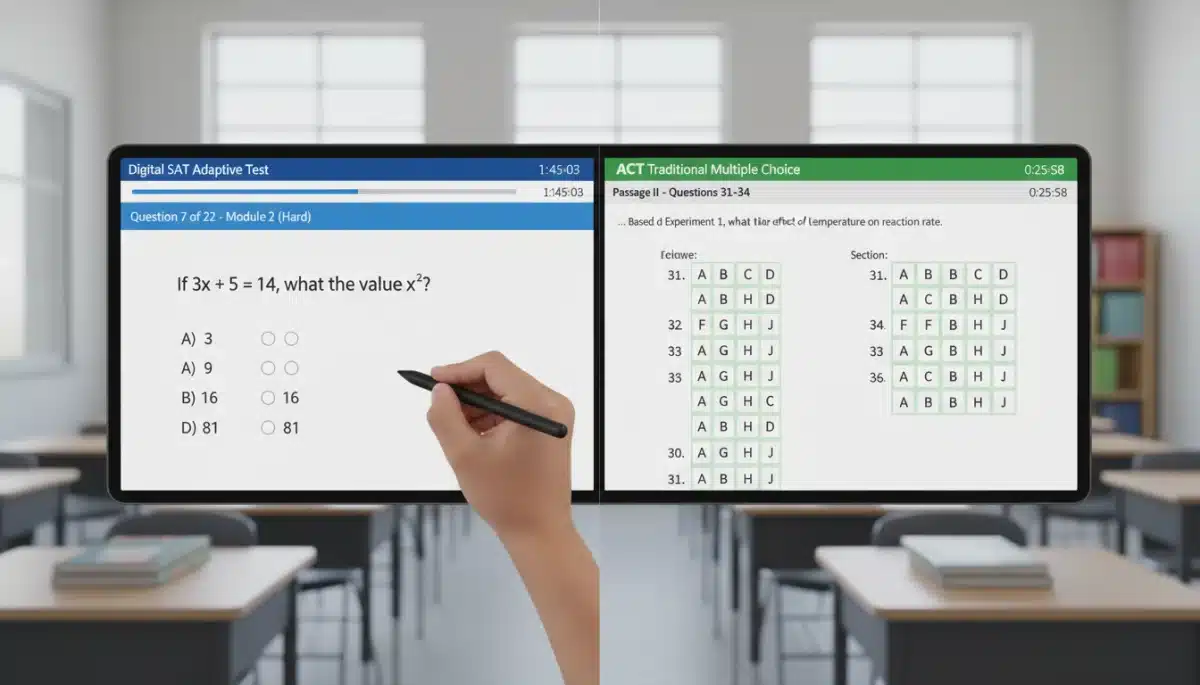
For the digital SAT, focus on:
- Adaptive Practice: Utilize official College Board digital practice tests that mimic the adaptive format.
- Pacing for Shorter Sections: Develop efficient reading and problem-solving strategies for the more concise modules.
- Integrated Reading/Writing: Practice questions that combine comprehension with grammatical accuracy.
For the ACT, focus on:
- Time Management: Practice completing sections within strict time limits, as the ACT is known for its fast pace.
- Science Reasoning: Develop strong data interpretation and analytical skills for the unique Science section.
- Comprehensive Review: Ensure a solid grasp of all core high school subjects, as the ACT covers a broader range of content.
Regardless of the test, consistent practice with official materials is non-negotiable. Reviewing incorrect answers thoroughly to understand the underlying concepts and common traps is also crucial. Consider working with a tutor or joining a study group for personalized feedback and motivation.
In conclusion, strategic preparation is the cornerstone of optimal scores. By understanding the specific demands of the SAT and ACT, tailoring your study plan, and consistently practicing with purpose, US students can approach their 2026 exams with confidence and achieve their desired results.
The Role of Test-Optional Policies in 2026 Admissions
The landscape of college admissions has been significantly shaped by the rise of test-optional policies, a trend that continues to evolve as we approach 2026. For US students, understanding the implications of these policies is as important as preparing for the SAT or ACT. Many institutions have adopted a test-optional stance, giving applicants more flexibility in how they present their academic profile.
This shift reflects a broader re-evaluation of standardized tests’ role in predicting college success and promoting equity in admissions. While test scores can still be a valuable component of an application, they are no longer universally required, leading to new considerations for students.
Navigating Test-Optional vs. Test-Required
It’s crucial for students to research the specific policies of each college they are interested in. Some institutions remain test-required, while others are test-optional, and a few are even test-blind (meaning they won’t consider scores even if submitted).
- Test-Optional: This means you have a choice. If you feel your scores accurately reflect your abilities and strengthen your application, you can submit them. If not, you can choose not to, and your application will be evaluated based on other factors like GPA, essays, recommendations, and extracurriculars.
- Test-Required: For these schools, submitting SAT or ACT scores is a mandatory part of the application process.
- Test-Blind: These schools do not consider test scores at all, regardless of whether they are submitted.
For students applying to test-optional schools, the decision to submit scores should be strategic. Generally, if your scores are at or above the average for admitted students at a particular institution, submitting them can strengthen your application. If your scores are below that average, opting not to submit might be a better strategy, allowing other aspects of your application to shine.
The rise of test-optional policies means that other components of your college application, such as your academic transcript, personal essays, letters of recommendation, and extracurricular involvement, carry even more weight. Students should focus on presenting a well-rounded and compelling profile regardless of their test-taking strategy.
In conclusion, test-optional policies offer flexibility but also require careful consideration. US students in 2026 must research individual college requirements and strategically decide whether submitting SAT or ACT scores will best enhance their overall application.
Maximizing Your Potential: Beyond the Score
While achieving optimal scores on the 2026 SAT or ACT is a significant goal for many US students, it’s essential to remember that these tests are just one piece of a much larger puzzle. Maximizing your potential for college admissions involves a holistic approach that extends far beyond a single score. Colleges are increasingly looking for well-rounded individuals who demonstrate intellectual curiosity, resilience, and a positive impact on their communities.
Focusing solely on test preparation can sometimes overshadow other crucial aspects of personal and academic development. A balanced approach ensures that students are not only prepared for standardized tests but also for the rigors and opportunities of higher education itself.
Cultivating a Strong Overall Application
To truly maximize your potential, consider these elements as equally important as your test scores:
- Academic Rigor: Challenge yourself with demanding coursework. Taking AP, IB, or honors classes demonstrates intellectual curiosity and readiness for college-level work.
- Extracurricular Engagement: Participate in activities that genuinely interest you, whether it’s sports, clubs, volunteering, or part-time work. Leadership roles and sustained commitment are particularly valued.
- Compelling Essays: Your personal statement and supplemental essays are opportunities to showcase your unique voice, experiences, and perspectives. They allow admissions committees to get to know you beyond your grades and scores.
- Strong Recommendations: Cultivate positive relationships with teachers and counselors who can write insightful and supportive letters of recommendation.
- Demonstrated Interest: For some colleges, showing genuine interest through campus visits (virtual or in-person), attending information sessions, or interacting with admissions officers can be beneficial.
These components collectively paint a comprehensive picture of who you are as a student and as an individual. They highlight your passions, your character, and your potential contributions to a college community. Admissions committees seek students who will not only succeed academically but also enrich the campus environment.
Ultimately, maximizing your potential means investing in your overall growth and presenting your authentic self in your college applications. While scores are important, they are part of a broader narrative that showcases your unique strengths and aspirations. A holistic approach ensures you are well-prepared for both the admissions process and future academic success.
| Key Aspect | Description for 2026 |
|---|---|
| Digital SAT Format | Adaptive, shorter test with integrated Reading/Writing and full calculator Math section. |
| ACT Considerations | Non-adaptive, growing digital availability, emphasizes speed and broad curriculum knowledge. |
| Strategic Prep | Tailored study plans, official practice tests, and understanding adaptive vs. linear formats. |
| Test-Optional Policies | Requires research into each college’s policy to decide if submitting scores is beneficial. |
Frequently Asked Questions About 2026 SAT/ACT
The most significant change is the full transition to a digital, adaptive format. The test is shorter, features integrated Reading and Writing sections with one question per passage, and allows calculator use on all Math problems. This adaptive nature means question difficulty adjusts based on performance.
While the ACT offers digital testing options, especially for school-day administrations, it is not universally digital in the same way the SAT is. Its digital availability is growing, but students should check their local testing centers for specific options. The core content remains consistent across formats.
Take diagnostic tests for both exams to see which format and content better suit your strengths. Consider the SAT’s adaptive nature and integrated verbal sections versus the ACT’s faster pace, Science section, and broader curriculum coverage. Your preferred colleges’ requirements might also influence your decision.
Test-optional policies mean you have a choice to submit scores. Research each college’s specific stance. If your scores are strong (at or above the average for admitted students), submitting them can enhance your application. If not, focus on strengthening other application components like essays and GPA.
Always start with official practice materials from the College Board for the SAT and ACT.org for the ACT. Khan Academy offers free, high-quality SAT prep. Reputable test prep companies and experienced tutors can also provide personalized guidance and strategies for both exams.
Conclusion
Navigating the 2026 SAT and ACT landscape requires diligence and strategic planning from US students. Understanding the digital SAT’s adaptive format and the ACT’s continued evolution is crucial. Beyond test scores, a holistic application emphasizing academic rigor, extracurricular involvement, and compelling personal narratives will ultimately maximize your college admission potential. By staying informed and preparing thoughtfully, students can confidently approach their standardized tests and achieve their higher education goals.