Q1 2026 Market Volatility: 5 Strategies to Protect Your Portfolio

Anúncios
Investors can navigate potential Q1 2026 market volatility by implementing diversified strategies, hedging techniques, and maintaining a long-term perspective to safeguard their portfolios against economic shifts.
Anúncios
As we approach the first quarter of 2026, the financial landscape appears poised for potential turbulence. Understanding and preparing for Q1 2026 market volatility is not just advisable, it’s essential for safeguarding your financial future. This period often brings unique challenges and opportunities, requiring investors to be agile and strategic.
Anúncios
Understanding the Landscape: Why Q1 2026 Might Be Volatile
The beginning of a new year often brings with it renewed market dynamics, influenced by a confluence of economic indicators, geopolitical events, and corporate earnings reports. Q1 2026 is shaping up to be particularly interesting, with several factors indicating a potential for increased market swings. Investors need to be aware of these underlying currents to make informed decisions and adjust their strategies accordingly.
Global economic shifts, such as interest rate policies from major central banks, evolving inflation trends, and supply chain adjustments, often culminate in significant market reactions. Additionally, political developments, both domestic and international, can introduce uncertainty that directly impacts investor sentiment and asset prices. Recognizing these potential catalysts for volatility is the first step in building a resilient portfolio.
Key Economic Indicators to Watch
Several economic data points will be crucial in shaping market sentiment during Q1 2026. Keeping an eye on these can provide early signals of impending volatility or stability.
- Inflation Rates: Persistent or resurgent inflation can pressure central banks to tighten monetary policy, impacting equity and bond markets.
- Employment Data: Strong or weakening job reports can signal economic health or distress, influencing consumer spending and corporate profits.
- GDP Growth: Quarterly GDP figures provide a broad overview of economic performance, guiding market expectations for future growth.
Furthermore, corporate earnings season, typically in full swing during Q1, can lead to sector-specific volatility. Companies reporting weaker-than-expected results or providing cautious outlooks can trigger broad market sell-offs, while strong performances can fuel rallies. Understanding these triggers allows for a more proactive approach to portfolio management.
In essence, Q1 2026 could be a period where macro and microeconomic factors converge, creating an environment ripe for market fluctuations. Being prepared means not just observing these factors but understanding their potential implications for various asset classes and investment strategies. It’s about moving from reactive to proactive in your financial planning.
Strategy 1: Diversification Beyond the Obvious
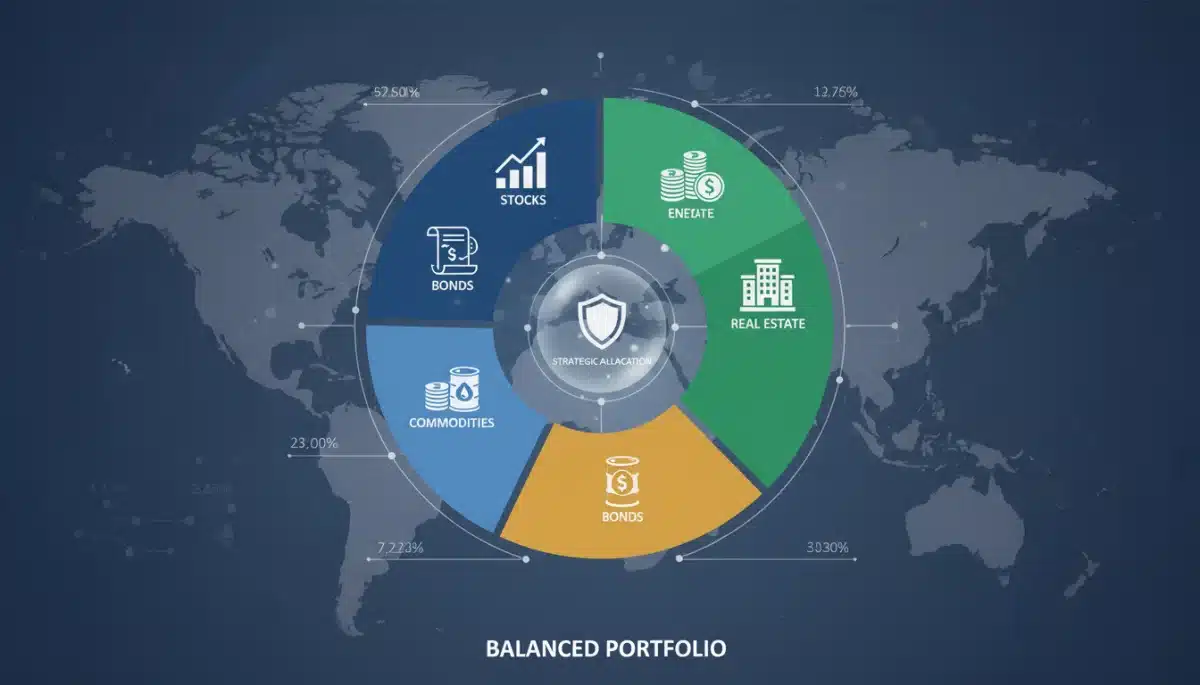
Diversification is a foundational principle of investing, often cited but not always fully implemented, especially when markets enter periods of volatility. For Q1 2026, simply holding a mix of stocks and bonds might not be enough. True diversification involves looking beyond traditional asset classes and considering how different investments perform under varying economic conditions.
A well-diversified portfolio aims to reduce overall risk by spreading investments across various asset types, industries, geographies, and even investment styles. This approach ensures that if one segment of the market underperforms, others might compensate, thus smoothing out returns and protecting capital. The key is not just to diversify, but to diversify intelligently, understanding the correlations between your chosen assets.
Expanding Your Asset Allocation
Consider broadening your portfolio to include assets that historically have a low correlation with traditional stocks and bonds, especially during downturns. This might involve exploring alternative investments that can offer protection during volatile periods.
- Real Estate (REITs): Real Estate Investment Trusts can offer income and potential capital appreciation, often reacting differently to market pressures than equities.
- Commodities: Gold, silver, and other commodities can serve as a hedge against inflation and currency devaluation, acting as safe havens during economic uncertainty.
- Alternative Funds: These include hedge funds, private equity, and managed futures, which employ diverse strategies to generate returns and manage risk, often with less correlation to public markets.
Geographic diversification also plays a crucial role. While the US market might face specific headwinds, other international markets could offer growth opportunities or stability. Investing in emerging markets, for example, can provide exposure to different economic cycles and growth drivers, though with increased risk. The goal is to build a portfolio that can weather storms from multiple directions, ensuring no single event or market condition can derail your entire financial plan.
Ultimately, effective diversification for Q1 2026 market volatility means constructing a portfolio that is robust against a variety of potential scenarios. It’s about thinking strategically about how each component of your portfolio will react to different market pressures, thereby enhancing its overall resilience.
Strategy 2: Rebalancing and Risk Assessment
As market conditions evolve, so too should your portfolio’s allocation. Rebalancing is the process of adjusting your portfolio back to its original target asset allocation. This is a critical step, especially when anticipating periods like Q1 2026 market volatility, as it ensures your risk exposure remains aligned with your comfort level and financial goals.
Over time, certain assets in your portfolio may grow faster than others, causing your allocation to drift from your intended targets. For instance, if equities have performed exceptionally well, they might now represent a larger percentage of your portfolio than initially planned, increasing your overall risk. Rebalancing involves selling some of the outperforming assets and buying more of the underperforming ones to restore balance. This disciplined approach forces you to ‘buy low and sell high’ periodically, a key tenet of successful investing.
Conducting a Thorough Risk Assessment
Before rebalancing, it’s vital to reassess your personal risk tolerance and financial objectives. Market volatility can be unnerving, and what felt comfortable during stable times might feel too risky when markets are turbulent. Evaluate your current financial situation, time horizon, and ability to withstand potential losses.
Consider these aspects during your risk assessment:
- Time Horizon: How long until you need access to your funds? A longer horizon allows for more risk.
- Financial Goals: Are you saving for retirement, a down payment, or another specific goal? Your goals dictate the necessary growth and acceptable risk.
- Emotional Resilience: How will you react to significant market downturns? Understanding your emotional capacity for risk is crucial.
Based on this assessment, you might decide to adjust your target allocation, perhaps shifting towards more conservative assets if your risk tolerance has decreased, or maintaining a more aggressive stance if your long-term goals demand it and you can handle the short-term fluctuations. Regularly scheduled rebalancing, perhaps quarterly or semi-annually, helps maintain discipline and keeps your portfolio aligned with your strategic objectives, making it more resilient against unexpected market movements in Q1 2026.
Strategy 3: Defensive Sectors and Quality Investments
During periods of anticipated market volatility, such as Q1 2026, shifting focus towards defensive sectors and high-quality investments can provide a crucial buffer for your portfolio. These types of investments tend to be less susceptible to economic downturns and market fluctuations, offering a degree of stability when broader markets are experiencing turbulence.
Defensive sectors typically include industries that provide essential goods and services, demand for which remains relatively constant regardless of the economic climate. Companies within these sectors often exhibit stable earnings, consistent dividends, and strong balance sheets, making them attractive during uncertain times. Investing in these areas can help mitigate losses and preserve capital.
Identifying Resilient Investments
When looking for defensive plays, consider sectors that are less cyclical and more resilient to economic shocks. These industries often have predictable revenue streams and strong market positions.
- Consumer Staples: Companies producing everyday necessities like food, beverages, and household goods tend to perform well as consumers continue to purchase these items even during economic slowdowns.
- Utilities: Providers of electricity, water, and gas offer stable demand and often regulated returns, making them less volatile than other sectors.
- Healthcare: Demand for healthcare services and products is generally inelastic, providing a steady revenue stream for pharmaceutical companies, hospitals, and medical device manufacturers.
Beyond sector selection, focusing on ‘quality’ within any investment is paramount. Quality companies are characterized by strong fundamentals: low debt, consistent profitability, robust cash flow, and competitive advantages. These attributes make them more resilient to adverse economic conditions and better positioned to recover when markets eventually stabilize. For Q1 2026 market volatility, seeking out established companies with a proven track record of weathering economic storms can significantly enhance your portfolio’s defensive posture. This strategy is not about avoiding risk entirely, but about strategically positioning your assets to minimize downside exposure while maintaining potential for long-term growth.
Strategy 4: Utilizing Hedging and Derivatives Prudently
For more sophisticated investors, employing hedging strategies and derivatives can be a powerful tool to protect against potential Q1 2026 market volatility. These instruments allow investors to mitigate specific risks by taking offsetting positions in related assets. While they can be complex and carry their own risks, when used prudently, they can provide valuable portfolio protection.
Hedging essentially acts as an insurance policy for your investments. It involves using financial instruments to offset the risk of adverse price movements in an asset you own. For example, if you hold a significant position in a stock that you believe might decline in value during a volatile period, you can use derivatives to limit that potential loss without selling your underlying shares.
Common Hedging Instruments
Several types of derivatives can be used for hedging, each with its own characteristics and applications. Understanding these can help you select the most appropriate tool for your specific needs.
- Options (Puts): Buying put options gives you the right, but not the obligation, to sell an asset at a predetermined price (the strike price) before a certain date. This strategy can limit downside risk on stock holdings.
- Futures Contracts: These agreements to buy or sell an asset at a future date for a predetermined price can be used to lock in prices for commodities or currencies, protecting against adverse price swings.
- Inverse ETFs: These exchange-traded funds are designed to move in the opposite direction of a particular index or asset. They can be used to profit from market downturns or hedge against portfolio declines.
It’s crucial to approach hedging with caution and a thorough understanding of the instruments involved. Derivatives can amplify both gains and losses, and improper use can lead to significant financial setbacks. For retail investors, consulting with a financial advisor experienced in derivatives is highly recommended. The goal of using these tools during Q1 2026 market volatility is not to speculate, but to strategically protect existing portfolio value, providing a layer of defense against unpredictable market movements. Used wisely, hedging can be a sophisticated component of a robust risk management strategy.
Strategy 5: Maintaining Liquidity and a Long-Term View
Amidst the potential for Q1 2026 market volatility, two often-overlooked but crucial strategies are maintaining adequate liquidity and steadfastly adhering to a long-term investment perspective. These principles serve as foundational pillars that can help investors navigate short-term turbulence without derailing their broader financial goals.
Liquidity refers to how easily an asset can be converted into cash without significantly affecting its market price. During volatile periods, having readily accessible cash or highly liquid assets can be invaluable. It provides the flexibility to cover unexpected expenses without being forced to sell investments at a loss, and it also positions you to take advantage of buying opportunities that arise during market downturns. A common recommendation is to have an emergency fund covering 3-6 months of living expenses in a high-yield savings account or similar liquid vehicle.
The Power of Patience and Perspective
While short-term market swings can be unsettling, history consistently shows that markets tend to recover and grow over the long term. Reacting impulsively to daily news or temporary dips often leads to poor decision-making, such as selling at the bottom or buying at the peak out of fear or greed. A long-term view encourages investors to look beyond immediate fluctuations and focus on their ultimate financial objectives.
Consider these long-term principles:
- Compounding Returns: The magic of compounding works best over extended periods, allowing your investments to grow exponentially.
- Market Resilience: Despite numerous crises, global markets have always recovered and reached new highs over decades.
- Emotional Discipline: A long-term mindset helps in filtering out market noise and avoiding emotionally driven investment decisions.
For Q1 2026 market volatility, this means resisting the urge to panic sell or make drastic portfolio changes based on short-term forecasts. Instead, focus on the underlying fundamentals of your investments and your personal financial plan. If your long-term goals remain unchanged, and your portfolio is well-diversified and aligned with your risk tolerance, staying the course is often the most prudent strategy. Maintaining liquidity provides the practical means to do so, ensuring you can meet immediate needs without compromising your long-term investment strategy.
| Strategy | Brief Description |
|---|---|
| Diversification | Spread investments across various asset classes, industries, and geographies to reduce overall risk. |
| Rebalancing & Risk Assessment | Adjust portfolio to target allocations and reassess personal risk tolerance periodically. |
| Defensive Sectors | Invest in stable industries like consumer staples, utilities, and healthcare for resilience. |
| Liquidity & Long-Term View | Maintain cash reserves and focus on long-term goals to avoid impulsive reactions to short-term swings. |
Frequently Asked Questions About Market Volatility
Market volatility refers to periods of rapid and often unpredictable price movements in financial markets. For investments, this means greater uncertainty regarding short-term returns. While it presents risks, it also creates opportunities for investors who can remain calm and execute well-planned strategies, such as buying quality assets at lower prices.
While no one can predict the future with certainty, several economic indicators and geopolitical factors suggest a potential for increased volatility in Q1 2026. These include ongoing inflation concerns, central bank policies, and global supply chain adjustments. Investors should prepare for potential market swings rather than assume stability.
During volatile periods, it’s generally advisable to rebalance your portfolio more frequently than during stable times, perhaps quarterly or semi-annually. However, avoid over-rebalancing, which can incur excessive transaction costs. The key is to ensure your asset allocation remains aligned with your risk tolerance and long-term financial goals.
Defensive stocks typically offer more stability during market downturns because they represent companies providing essential goods and services. While generally safer, no investment is entirely risk-free. Their performance can still be affected by specific company issues or broader economic shocks, so diversification within defensive sectors is still important.
Panicking and pulling all your money out of the market during increased volatility is often detrimental. This can lock in losses and cause you to miss potential market recoveries. Instead, focus on your long-term strategy, maintain diversification, and consider consulting a financial advisor. Staying invested, if appropriate for your goals, often yields better long-term results.
Conclusion
Navigating the potential Q1 2026 market volatility requires a thoughtful, proactive approach rather than reactive panic. By embracing strategies such as intelligent diversification, diligent portfolio rebalancing, focusing on defensive sectors, prudently utilizing hedging tools, and maintaining both liquidity and a steadfast long-term perspective, investors can significantly enhance their portfolio’s resilience. The financial landscape is ever-evolving, but with a well-considered plan, you can protect your investments and position yourself for continued growth, even amidst uncertainty. Remember, informed decisions and emotional discipline are your greatest assets in turbulent times.