Q1 2026: Capitalizing on Seasonal Stock Market Trends
Anúncios
The first quarter of 2026 offers a critical three-month window for investors to strategically capitalize on well-documented seasonal stock market trends, leveraging historical patterns for potential gains.
Anúncios
As we approach the new year, savvy investors are already looking ahead to identify potential opportunities. The first quarter of 2026, often referred to as a pivotal seasonal stock trends window, presents a unique set of historical patterns that could significantly influence investment strategies. Understanding these recurring market behaviors is not just academic; it can be a cornerstone of a robust and proactive financial plan.
Anúncios
Understanding Seasonal Market Anomalies
Seasonal market anomalies refer to recurring patterns in stock market performance tied to specific times of the year. These aren’t mere superstitions but observations derived from decades of market data, often influenced by psychological factors, institutional behaviors, and economic cycles. Recognizing these patterns in Q1 can provide a distinct edge.
Historically, the first quarter has shown tendencies that differ from other periods. These can range from broad market movements to specific sector performances, offering various avenues for strategic investment. The challenge lies in discerning which patterns remain relevant and how to integrate them into a forward-looking strategy.
The January Effect and Its Evolution
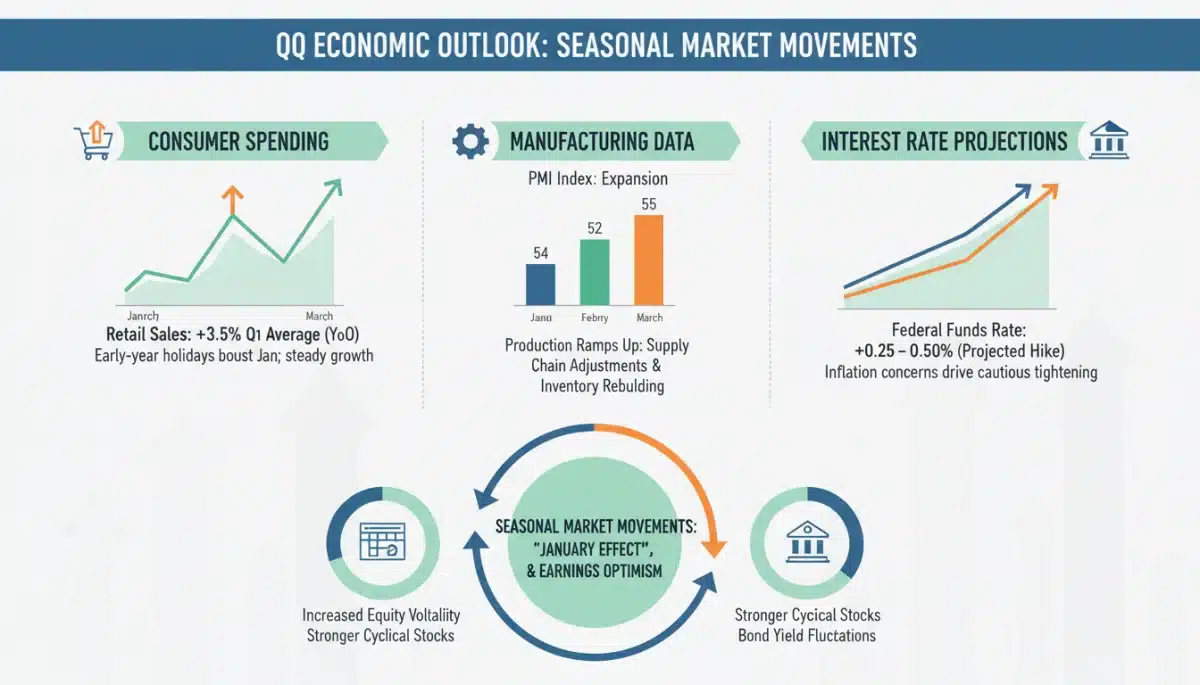
One of the most famous seasonal anomalies is the “January Effect,” where small-cap stocks tend to outperform large-cap stocks during the first month of the year. This phenomenon is often attributed to year-end tax-loss selling in December, followed by reinvestment in January. However, its intensity has varied over time.
- Historical Basis: Rooted in tax-loss harvesting by investors selling losers in December to offset capital gains.
- Modern Context: While still observable, the effect has become less pronounced due to increased market efficiency and institutional trading.
- Strategic Adaptation: Investors might look for undervalued small-cap opportunities in late December or early January, focusing on quality companies rather than speculative plays.
Beyond the January Effect, other seasonal factors like holiday spending impact retail sectors, and the start of new corporate fiscal years can influence investment decisions. Understanding these nuances is vital for making informed choices.
In conclusion, seasonal market anomalies are not guarantees but rather probabilities based on historical data. They serve as valuable guideposts, prompting deeper analysis into underlying economic and behavioral drivers. For Q1 2026, a careful examination of these patterns is warranted.
Key Economic Drivers for Q1 2026
The performance of the stock market in any given quarter is inextricably linked to broader economic conditions. For Q1 2026, several key economic drivers will likely shape the investment landscape, influencing everything from corporate earnings to consumer sentiment. A thorough understanding of these factors is essential for strategic planning.
Anticipating how these drivers will unfold allows investors to position their portfolios advantageously. This involves not only monitoring official economic reports but also interpreting their potential impact on various market segments.
Inflation, Interest Rates, and Monetary Policy
Central bank policies, particularly regarding interest rates, exert a significant influence on market valuations. If inflation remains elevated, central banks might continue a hawkish stance, potentially dampening growth-oriented sectors. Conversely, signs of easing inflation could lead to more accommodative policies, boosting market confidence.
- Inflation Outlook: Monitor CPI and PPI reports closely for any shifts in inflationary pressures.
- Federal Reserve Stance: Pay attention to Fed statements and meeting minutes for clues on future rate decisions.
- Impact on Sectors: Higher rates tend to favor financial stocks and value sectors, while lower rates can benefit growth and technology.
Consumer spending and business investment are also critical indicators. Strong consumer confidence typically translates to robust retail sales, benefiting consumer discretionary stocks. Similarly, increased business capital expenditure can signal economic expansion and support industrial and technology sectors.
Geopolitical events, though unpredictable, can introduce significant volatility. While these are harder to forecast, their potential impact on supply chains, commodity prices, and investor sentiment should always be considered in any quarterly outlook. Diversification and risk management become even more crucial in such environments.
Ultimately, Q1 2026 economic drivers will dictate much of the market’s direction. By staying attuned to inflation, interest rates, consumer behavior, and global events, investors can better anticipate market movements and adjust their strategies accordingly.
Sector-Specific Opportunities in Q1 2026
While broad market trends are important, drilling down into sector-specific opportunities can uncover more targeted investment potential within the first quarter of 2026. Certain sectors historically perform better or face unique catalysts during this period, making them attractive for focused attention.
Identifying these sectors requires not just historical analysis but also an understanding of current economic conditions and future outlooks. This blend of retrospective and prospective analysis is key to successful sector rotation.
Technology and Innovation
The technology sector often experiences renewed interest at the start of a new year, driven by innovation cycles and corporate spending on digital transformation. Companies that are at the forefront of emerging technologies like AI, quantum computing, or sustainable tech solutions could see significant investor attention.
- AI Integration: Look for companies successfully integrating AI across various industries, not just pure AI plays.
- Cybersecurity Demands: Increased digital reliance continues to fuel demand for robust cybersecurity solutions.
- Sustainable Tech: Investment in renewable energy and green technologies often gains momentum with new year sustainability goals.
Consumer discretionary stocks, particularly those related to travel, leisure, and big-ticket purchases, can also see a boost post-holiday season, especially if consumer confidence remains high and savings rates are favorable. The anticipation of spring and summer travel plans might begin to influence airline, hotel, and experience-based company valuations.
Healthcare and biotechnology sectors often have their own unique catalysts, such as new drug approvals, clinical trial results, or significant mergers and acquisitions. These events are less tied to general seasonal patterns but can create substantial Q1 opportunities for investors tracking industry-specific news.
In summary, Q1 2026 provides a fertile ground for sector-specific plays. By carefully analyzing the unique drivers and historical tendencies of technology, consumer discretionary, and healthcare, investors can refine their portfolio for targeted growth.
Strategic Approaches for Q1 Investing
Capitalizing on Q1 2026’s seasonal stock trends requires more than just identifying patterns; it demands a well-defined strategic approach. Investors need to consider various methodologies to effectively navigate the market and maximize their potential returns while managing risk.
A diversified strategy that combines historical insights with forward-looking analysis is often the most prudent path. This involves active management and a willingness to adapt to changing market conditions.
Portfolio Rebalancing and Asset Allocation
The beginning of a new year is an opportune time for portfolio rebalancing. This involves adjusting the weighting of assets in a portfolio back to its original targets. If certain asset classes have outperformed, they may now represent a larger portion of the portfolio than desired, increasing risk.
- Risk Assessment: Re-evaluate your risk tolerance and adjust your asset allocation accordingly.
- Sector Rotation: Consider rotating into sectors historically strong in Q1, or those with strong fundamental catalysts.
- Diversification: Ensure your portfolio remains diversified across different asset classes, geographies, and market capitalizations.
Consider the role of alternative investments or defensive plays, especially if the economic outlook remains uncertain. Commodities like gold or certain real estate investments can act as hedges against inflation or market volatility, providing stability to a portfolio during potentially turbulent periods.
Another crucial aspect is utilizing a disciplined entry and exit strategy. Avoid making impulsive decisions based on short-term fluctuations. Instead, set clear price targets and stop-loss orders to protect capital and lock in gains. This systematic approach helps mitigate emotional biases that can often derail investment plans.
Ultimately, a successful Q1 investing strategy hinges on meticulous planning, continuous monitoring, and a flexible mindset. By rebalancing, strategically allocating assets, and employing disciplined trading techniques, investors can better position themselves for the opportunities that the three-month window of Q1 2026 presents.
Risk Management in Seasonal Trading
While the allure of capitalizing on seasonal stock trends in Q1 2026 is strong, it’s paramount to approach such strategies with a robust risk management framework. No market pattern is guaranteed, and unforeseen events can always disrupt historical norms. Prudent risk management is the bedrock of sustainable investing.
Ignoring potential pitfalls can lead to significant losses, eroding any gains made from seasonal insights. Therefore, integrating protective measures into your investment plan is just as important as identifying opportunities.
Diversification and Hedging Strategies
Diversifying remains the cornerstone of risk management. Spreading investments across different asset classes, industries, and geographical regions can mitigate the impact of poor performance in any single area. For Q1, this means not solely relying on one seasonal trend or sector.
- Asset Class Diversity: Include a mix of stocks, bonds, and potentially real estate or commodities.
- Geographic Diversification: Don’t limit investments to a single country; explore international markets.
- Sector Spreading: Even within a seasonal play, diversify across multiple companies in different sub-sectors.
Hedging strategies, such as using options or inverse ETFs, can also protect against downside risk. For example, buying put options on specific stocks or market indices can offer insurance against unexpected market downturns. However, these strategies require a deeper understanding and come with their own costs and complexities.
Setting clear stop-loss orders is a simple yet effective way to limit potential losses. Before entering a trade, determine the maximum loss you are willing to accept and place an order to automatically sell if the price falls to that level. This prevents small corrections from turning into substantial capital impairments.
In conclusion, while Q1 2026 may offer compelling seasonal opportunities, robust risk management is non-negotiable. Through diversification, strategic hedging, and disciplined use of stop-loss orders, investors can safeguard their capital and navigate market uncertainties with greater confidence.
Historical Precedents and Future Projections
Examining historical precedents provides a foundation for understanding potential Q1 2026 seasonal stock trends, but it’s crucial to acknowledge that past performance is not indicative of future results. Market dynamics evolve, and new variables constantly emerge. Therefore, a balanced approach combining historical analysis with forward-looking projections is essential.
The lessons from previous first quarters can inform our expectations, but they must be tempered with an understanding of the current economic and geopolitical environment.
Learning from Past Q1 Performances
Reviewing market performance during past first quarters can reveal patterns in sector leadership, volatility levels, and overall market direction. For instance, some years might show strong small-cap rallies, while others might be dominated by large-cap growth stocks. Identifying these nuances helps in shaping expectations.
- Decade-Specific Trends: Analyze Q1 performance across different decades to see how macroeconomic shifts influenced seasonal patterns.
- Event Impact: Study how major global events (e.g., recessions, pandemics, technological booms) altered typical Q1 behaviors.
- Sector Rotation History: Observe which sectors consistently led or lagged during previous first quarters under similar economic conditions.
Forecasting Q1 2026 requires considering current macroeconomic forecasts, including GDP growth, corporate earnings expectations, and inflation projections. Analyst consensus reports and economic indicators can offer valuable insights into the anticipated trajectory of the economy and, consequently, the stock market.
Technological advancements and regulatory changes also play a significant role. New innovations can create unexpected growth areas, while changes in government policy can impact entire industries. Staying informed about these developments is crucial for refining future projections and identifying emerging opportunities or risks.
Ultimately, while history offers valuable context for Q1 2026, a dynamic approach that integrates current data, expert forecasts, and an awareness of potential disruptions is necessary. This allows investors to build a comprehensive outlook that is both informed by the past and prepared for the future.
| Key Point | Brief Description |
|---|---|
| Seasonal Anomalies | Recurring market patterns like the “January Effect” offer historical insights for Q1 2026. |
| Economic Drivers | Inflation, interest rates, and consumer spending will shape Q1 market performance. |
| Sector Opportunities | Technology, consumer discretionary, and healthcare may present targeted growth areas. |
| Risk Management | Diversification and hedging are crucial for mitigating potential losses in a volatile market. |
Frequently Asked Questions About Q1 2026 Market Trends
The “January Effect” refers to a historical tendency for small-cap stocks to outperform large-cap stocks in January, often linked to year-end tax-loss selling. While its intensity has diminished due to market efficiency, it remains a pattern investors monitor for potential opportunities in Q1 2026, especially in undervalued small-cap segments.
Key economic indicators for Q1 2026 include inflation data (CPI, PPI), Federal Reserve statements on interest rates, consumer confidence reports, and retail sales figures. These provide crucial insights into economic health and monetary policy direction, directly impacting market sentiment and sector performance.
Historically, sectors like technology, consumer discretionary (post-holiday spending), and sometimes financials (if interest rates are favorable) have shown strength in Q1. However, performance can vary based on the broader economic climate. For 2026, watch for innovation in tech and resilience in consumer spending.
Risk management is vital. Diversify your portfolio across various asset classes and sectors, even within seasonal plays. Consider using hedging strategies like options or setting clear stop-loss orders to limit potential downsides. Never rely solely on historical patterns without considering current market fundamentals and economic forecasts.
Geopolitical events, while unpredictable, can significantly disrupt seasonal trends by introducing unexpected volatility. They can impact supply chains, commodity prices, and overall investor confidence. While seasonal patterns provide a baseline, always remain vigilant for geopolitical developments and be prepared to adjust your strategy accordingly.
Conclusion
The first quarter of 2026 stands as a critical period for investors to leverage historical seasonal stock market trends. While patterns like the “January Effect” offer valuable insights, a comprehensive strategy must integrate a deep understanding of evolving economic drivers, sector-specific catalysts, and robust risk management. By combining historical analysis with forward-looking projections and disciplined execution, investors can strategically position their portfolios to potentially capitalize on the unique opportunities presented by this three-month window. Staying informed and adaptable will be key to navigating the complexities and maximizing returns in the dynamic financial landscape of Q1 2026.